← All women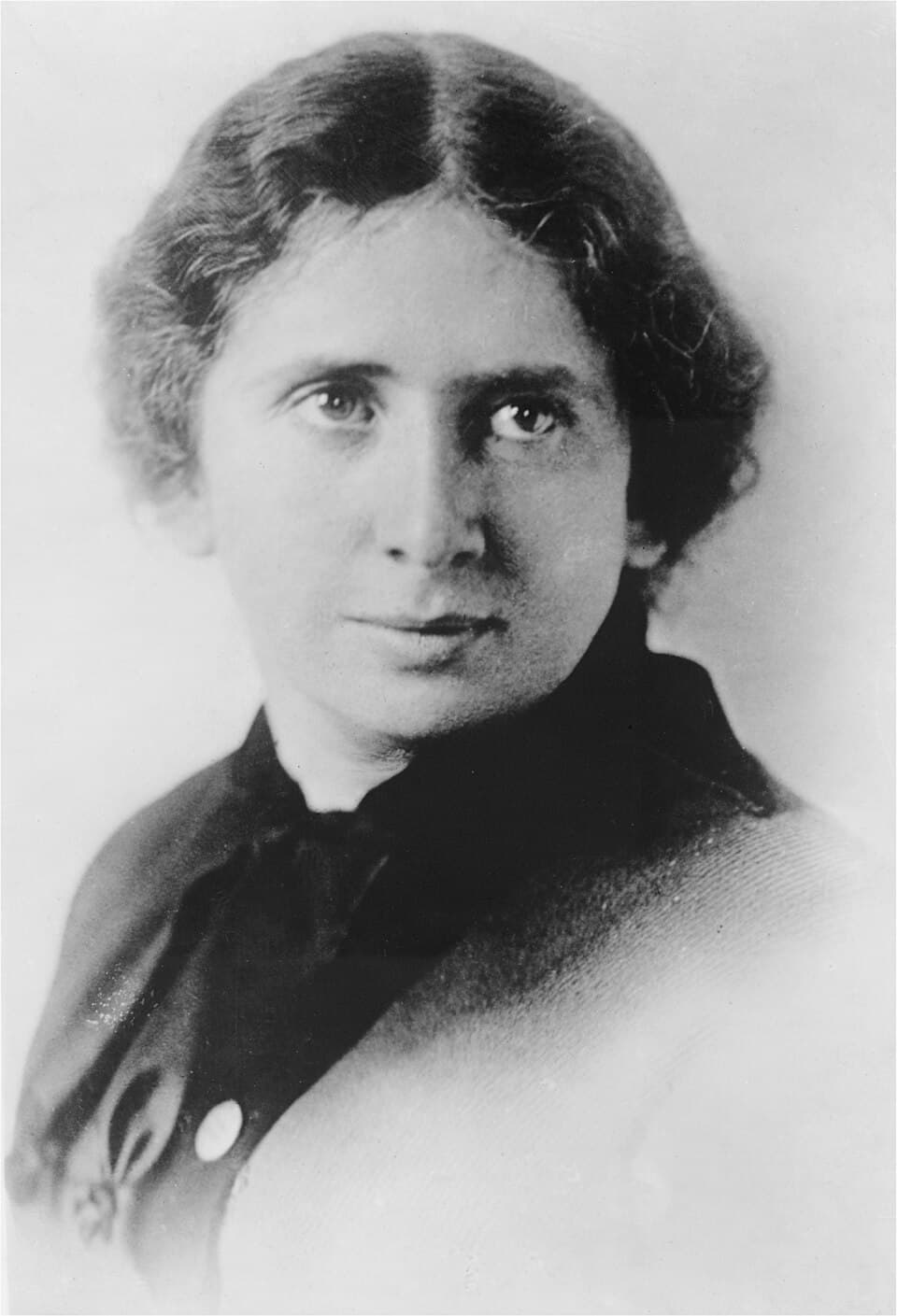
American, Polish · Activism · Politics · Law
Rose Schneiderman
April 6, 1882 – August 12, 1972
Early Life and Immigration
Rose Schneiderman was born on April 6, 1882, in the small town of Saven (also spelled Sawin), located in Congress Poland, then under the control of the Russian Empire. She was the eldest of four children born to Samuel Schneiderman, a tailor, and Deborah Rothman Schneiderman, in an Orthodox Jewish household. Facing the pervasive antisemitism and economic hardship common to Jewish communities in the Russian Pale of Settlement, the Schneiderman family emigrated to the United States in 1890, settling on the Lower East Side of Manhattan, New York City—then one of the most densely populated and impoverished immigrant neighborhoods in the nation.
Tragedy struck the family early in their American life: Rose's father died of meningitis just a year after their arrival, in 1891, leaving Deborah to raise four young children largely on her own. The family's poverty was severe enough that Rose's mother was forced to place her three younger siblings temporarily in an orphanage while she worked to support the family, a painful experience that stayed with Rose throughout her life. Rose herself, despite showing strong intellectual curiosity and a particular love of reading, was compelled to leave school at the age of thirteen to help support her family financially.
Her first jobs were as a errand and department store clerk, but by 1898, at age sixteen, she found more stable and lucrative work as a lining stitcher in the cap-making industry. It was in the garment trade—amid long hours, low wages, and unsafe working conditions—that Schneiderman first began to develop the political consciousness that would define her life's work.
Early Labor Organizing
Conditions in the garment industry at the turn of the twentieth century were notoriously brutal: workers, many of them women and children, toiled for ten to twelve hours a day in cramped, poorly ventilated sweatshops for meager pay, with no job security, no safety regulations, and no legal protections. Schneiderman quickly recognized that individual workers had little power to negotiate better conditions, and that organizing collectively was the only viable path to reform.
In 1903, frustrated that the existing United Cloth Hat and Cap Makers Union was reluctant to organize women workers, Schneiderman took the initiative to organize her fellow female cap makers herself. She and a small group of coworkers formed a local of women cap makers, which was soon chartered by the national union—making her one of the first women to hold elected office in an American labor union, serving as a member of the union's General Executive Board.
That same year, she became a founding member of the New York branch of the Women's Trade Union League (WTUL), an organization formed in 1903 to unite working-class women and their more affluent reform-minded allies in the cause of labor rights for women. The WTUL combined direct union organizing with legislative advocacy and public education campaigns, and it would remain the primary institutional vehicle for Schneiderman's activism for the rest of her career.
The Uprising of 20,000 and the Triangle Fire
Schneiderman's organizing talents and rhetorical power came to national attention during the massive garment worker strikes of the era, including the 1909 "Uprising of the 20,000," a strike of shirtwaist makers in New York City that Schneiderman helped lead and publicize. She traveled extensively, giving speeches to raise strike funds and public sympathy, and she became known for her ability to speak persuasively to audiences ranging from wealthy society women to immigrant factory workers.
The defining tragedy of this period came on March 25, 1911, when a fire broke out at the Triangle Shirtwaist Factory in Greenwich Village. Because exit doors had been locked to prevent theft and unauthorized breaks, many of the 146 workers who died—the vast majority young immigrant women—were trapped inside or forced to leap from the building's upper floors. The disaster remains one of the deadliest industrial accidents in American history.
Schneiderman delivered a blistering memorial address at the Metropolitan Opera House shortly afterward, declaring that appeals to "good fellowship" between the working class and the privileged were futile, and that only organized labor power could prevent such catastrophes. Her speech, still frequently quoted in labor history, helped galvanize the political will behind subsequent reforms, including the work of the New York Factory Investigating Commission, which led to sweeping new factory safety laws in New York State.
Suffrage, "Bread and Roses," and National Leadership
Schneiderman was also a committed suffragist, arguing that women needed the vote specifically to protect their interests as workers. In a widely cited 1912 speech, she articulated what became her most famous formulation of the movement's aims: "What the woman who labors wants is the right to live, not simply exist... the worker must have bread, but she must have roses, too." This phrase, "bread and roses," became a rallying cry for the labor and women's movements and later inspired the title of a well-known labor anthem.
She rose steadily within the WTUL's leadership ranks, becoming president of the New York WTUL in 1917 and president of the National Women's Trade Union League in 1926, a position she held until the organization's dissolution in 1950. In these roles she lobbied tirelessly for protective labor legislation, including minimum wage laws, maximum-hour laws, and workers' compensation, and she worked closely with reform-minded politicians and philanthropists to expand the political influence of organized women workers.
New Deal Involvement and Political Life
Schneiderman's influence extended into national politics during the New Deal era. She developed a close relationship with Eleanor Roosevelt and, through this connection, was appointed in 1933 to the Labor Advisory Board of the National Recovery Administration (NRA)—the only woman to serve in such a capacity, making her one of very few women to hold a formal advisory role in President Franklin D. Roosevelt's administration. In this position, she advocated for the inclusion of women workers' concerns in the codes governing industry practices established under the NRA.
She later served as secretary of the New York State Department of Labor from 1937 to 1943, further extending her influence over state labor policy. Throughout the 1930s and 1940s, she remained a vocal advocate for unemployment insurance, Social Security protections, and the rights of women workers within the broader New Deal coalition.
Politically, Schneiderman was active in the Socialist Party in her early career and later aligned herself more closely with the Democratic Party as she worked within establishment political structures to achieve labor reforms. She ran unsuccessfully for the U.S. Senate on the Labor Party ticket in 1920, an early indicator of her ambitions to translate grassroots organizing into formal political power.
Personal Life
Rose Schneiderman never married and had no children, a choice that was relatively unusual for women of her generation but consistent with her lifelong dedication to her organizing work. She maintained close, lifelong friendships and partnerships with fellow labor activists, including a particularly significant relationship with Maud Swartz, a fellow labor leader and WTUL colleague with whom Schneiderman shared a home for many years until Swartz's death in 1937. Historians have noted the importance of these close female partnerships within the broader network of women reformers of the era, though the precise nature of Schneiderman's relationship with Swartz, as with many women of the period, is understood through the lens of "romantic friendship" common in women's reform communities.
Schneiderman was known for her diminutive stature, fiery red hair, and powerful oratorical presence, which belied her small frame. Colleagues and contemporaries frequently remarked on the striking contrast between her physical size and the force of her public speaking.
Later Life, Legacy, and Death
As the labor landscape shifted in the mid-twentieth century, with the decline of the WTUL and the rise of large industrial unions like the CIO, Schneiderman's direct organizational influence waned. The National WTUL formally dissolved in 1950, marking the end of the institutional structure that had defined much of her career. She largely retired from public activism afterward.
Rose Schneiderman died on August 12, 1972, in New York City at the age of ninety. Her life spanned an extraordinary arc of American labor history—from child laborer in a Lower East Side sweatshop to a trusted advisor within the highest levels of federal government. She is remembered today as one of the most important labor feminists of the twentieth century, a bridge figure between the immigrant working-class women she organized and the middle- and upper-class reformers who lent political and financial support to the labor movement.
Her legacy endures in the language of labor and feminist history—most famously through the phrase "bread and roses"—and in the legislative legacy of workplace safety laws, minimum wage protections, and labor standards that trace their roots in part to the activism she and her WTUL colleagues championed. She remains a subject of study in histories of American labor, Jewish American immigration, and the women's suffrage movement, and her papers are held in several major archival collections, including at the Tamiment Library at New York University.
Dated achievements
4 indexed.
- Apr061882Activism
Birth of Rose Schneiderman in Saven, Congress Poland
Rose Schneiderman was born on April 6, 1882, in Saven (Sawin), then part of Russian-controlled Congress Poland, to a Jewish family.
View details Jewish Women's Archive: Rose Schneiderman - May211903Activism
Co-founds the New York branch of the Women's Trade Union League
Schneiderman helped found the New York branch of the Women's Trade Union League, a pivotal organization advocating for women workers' rights.