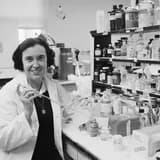
Death of Rosalyn Yalow in New York City after a career that reshaped medical measurement and opened doors for women in science.
Rosalyn Yalow died on 30 May 2011 in New York City, closing a career that had permanently altered medical diagnosis and hormone research. By the time of her death, her co-development of radioimmunoassay was recognized as a foundational advance in twentieth-century medicine, one that made possible highly sensitive measurement of biological molecules that had previously been difficult or impossible to quantify.
Her death marked the passing of a scientist whose work had moved from the margins of a Veterans Administration hospital laboratory to the center of global biomedical recognition. The significance of her life was not limited to awards: she had also become a powerful example for women in science, especially those entering fields dominated by men. Yalow’s legacy endured through the methods she helped create, which continued to influence endocrinology, diagnostics, and laboratory medicine long after her death. Her passing prompted tributes that emphasized both her scientific originality and her role in breaking gender barriers in American research institutions.