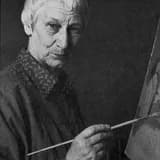
Rita Angus died on 25 January 1970 in Wellington, New Zealand, aged 61, after a long illness.
Rita Angus died on 25 January 1970 in Wellington, New Zealand, at the age of 61. She had suffered from breast cancer and related health complications for several years, continuing to paint through periods of illness with remarkable determination until close to the end of her life.
Her death marked the close of a career that spanned more than four decades and produced an extraordinary body of work, including iconic self-portraits, sweeping landscapes of the Canterbury Plains and Central Otago, and allegorical figures such as Rutu and the Goddess series, which explored themes of femininity, spirituality, and national identity. At the time of her death she had already gained recognition within New Zealand's art community, though wider public and institutional acclaim grew substantially in the decades following her passing.
In the years after her death, major retrospectives — notably a significant exhibition organised by the National Art Gallery (now part of Te Papa Tongarewa) — cemented her reputation as one of New Zealand's foremost twentieth-century artists. Today her paintings, held predominantly in the Museum of New Zealand Te Papa Tongarewa and other major public collections, are considered national treasures, and she is widely regarded as one of the most significant women painters in New Zealand history, an important figure in the establishment of a modern, regionally grounded visual art tradition.