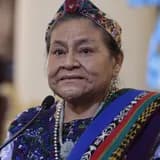
Rigoberta Menchú Tum receives the Nobel Peace Prize in Oslo, becoming the first Indigenous person ever awarded the prize.
On 10 December 1992, Rigoberta Menchú Tum formally received the Nobel Peace Prize at the award ceremony in Oslo City Hall, Norway.[1][12] Presented with the Nobel medal and diploma, she was publicly honored "for her struggle for social justice and ethno-cultural reconciliation based on respect for the rights of indigenous peoples."[12]
At this ceremony, Menchú became the first Indigenous person to be awarded the Nobel Peace Prize, a distinction underscored by contemporaneous commentary and later historical assessments.[12][15] In the early 1990s, Indigenous activists were rarely recognized on such a global stage; her selection challenged prevailing assumptions about who could be a universal symbol of peace and justice.
The timing of the award, in the midst of peace negotiations to end Guatemala’s civil war, reinforced international pressure on the Guatemalan government and armed opposition to pursue reconciliation.[12][1] Menchú’s acceptance speech emphasized memory, truth-telling, and the need to respect diverse cultures within democratic societies, offering a model of peace grounded in Indigenous perspectives rather than merely state-centric diplomacy.
Her Nobel ceremony had enduring impact. It amplified Indigenous rights as a core human-rights concern, inspired a generation of activists—especially women from marginalized communities—and provided seed funding for the Rigoberta Menchú Tum Foundation, which would work on education, legal advocacy, and intercultural dialogue.[13][5] The events of 10 December 1992 thus stand as a sentinel moment in both Nobel history and transnational Indigenous activism.