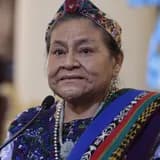
Rigoberta Menchú Tum registers as a presidential candidate in Guatemala with Winaq, breaking ground for Indigenous women in national politics.
On 7 February 2007, Rigoberta Menchú Tum formally registered her candidacy for the presidency of Guatemala with the Supreme Electoral Tribunal.[5] She ran under the banner of the newly formed Indigenous party Winaq, in alliance with other political groups, becoming one of the first highly visible Indigenous women to seek the country’s highest office.[5][6]
This registration was a barrier-breaking event in Guatemalan politics, where Indigenous peoples—despite being a demographic majority—had long been marginalized from national decision-making and largely excluded from elite political competition.[16] Menchú’s move from human-rights advocacy into electoral politics challenged entrenched racism and patriarchal norms that had limited Indigenous women’s participation in formal power structures.
Her candidacy drew international attention, framed in many accounts as Guatemala’s first prominent Indigenous presidential bid and a symbol of post-war democratization.[5] Although she ultimately received a modest share of the vote, the significance of 7 February 2007 lies in opening political space: it demonstrated that Indigenous-led parties could field national candidates and that an Indigenous woman could credibly claim the presidency.
The campaign also helped consolidate Winaq’s organizational presence and inspired broader discussions about multicultural citizenship, constitutional reform, and Indigenous autonomy.[5][9] For many observers, Menchú’s candidacy represented a shift from purely protest-based politics toward attempts to transform the state from within.
In this sense, the 7 February 2007 registration stands as a sentinel moment in Latin American Indigenous political history, highlighting the evolving strategies of activists who seek both legal redress and direct participation in governance.