← All women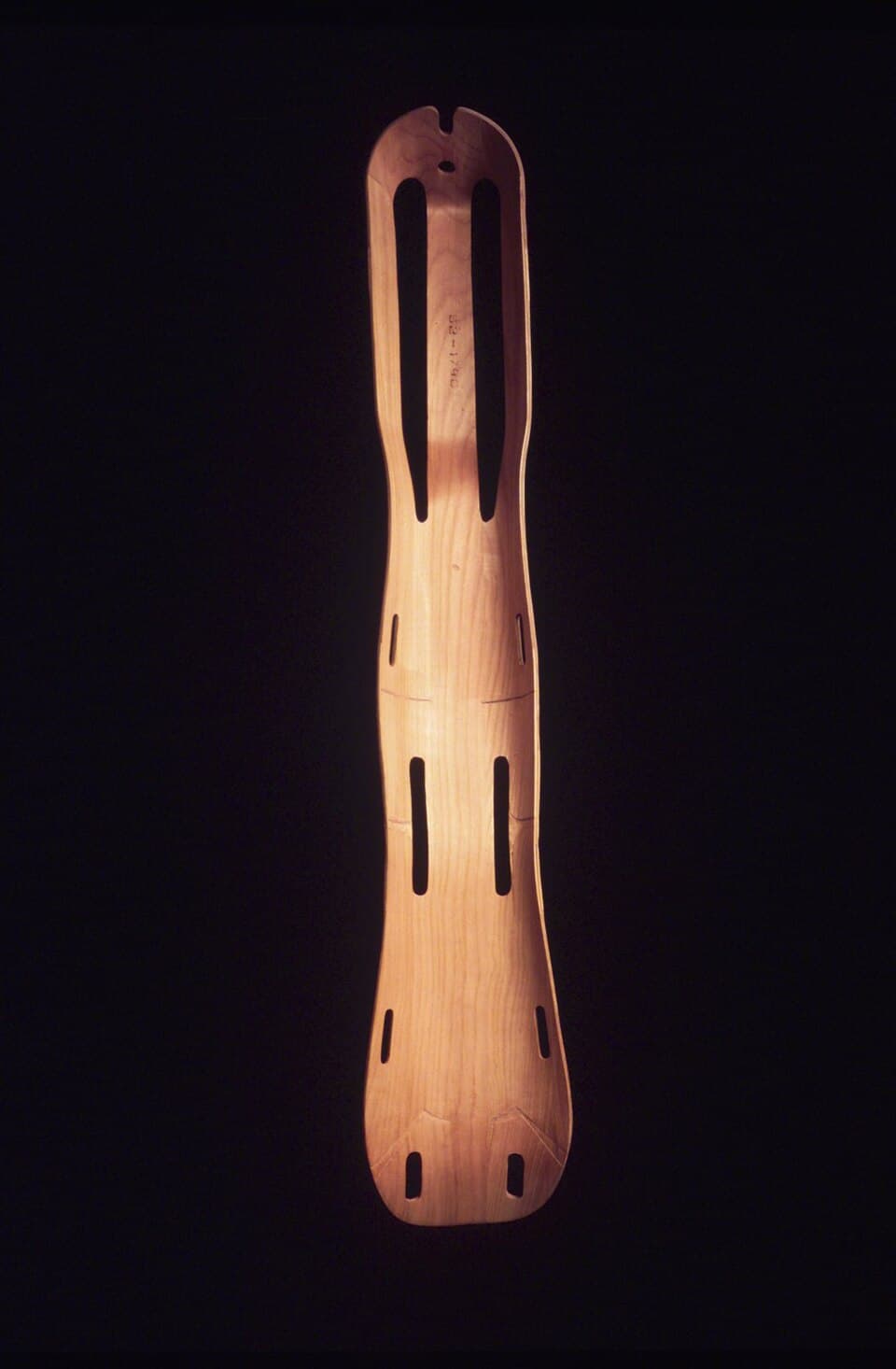
American · Arts
Ray Eames
December 15, 1912 – August 21, 1988
Early Life and Background
Ray-Bernice Alexandra Kaiser Eames (née Kaiser) was born on December 15, 1912, in Sacramento, California.[1][2][5] She was the daughter of Alexander and Edna Kaiser, and grew up in a family that supported her artistic inclinations.[1][4] Although some earlier sources cited 1913 as her birth year, major institutions such as the Metropolitan Museum of Art, the Library of Congress, and recent scholarship now concur on 1912.[1][9][18]
Ray developed an early interest in drawing, color, and composition, and by the 1930s she was pursuing art seriously. She studied painting in New York with the influential German émigré artist and teacher Hans Hofmann, whose emphasis on structural relationships and spatial dynamics strongly shaped her visual thinking.[12] Hofmann’s pedagogy encouraged a rigorous, analytical approach to form and color that would later become central to Ray’s work in furniture, graphics, and film.
In the early 1930s, Ray also studied and worked in New York’s vibrant modern art milieu, absorbing ideas from abstract painting and European modernism. This background distinguished her from many contemporaries in industrial design, grounding her later work in a fine‑arts sensibility that she never abandoned.
Cranbrook and Meeting Charles Eames
In 1933, Ray Kaiser enrolled at the Cranbrook Academy of Art in Bloomfield Hills, Michigan.[9][14] Cranbrook was a crucial hub for modern design and architecture in the United States, bringing together figures such as Eliel Saarinen, Eero Saarinen, and Charles Eames
Ray met Charles Eames while both were associated with Cranbrook in the late 1930s.[9][14][17] Charles, an architect originally from St. Louis, had joined the faculty, and together with Eero Saarinen he entered the Museum of Modern Art’s Organic Design in Home Furnishings competition. Ray assisted Charles and Saarinen with experimental molded plywood chairs and tables, contributing her understanding of structure and surface.[14] In 1940, the Eames–Saarinen designs won first prize in the "Seating for a living room" category, a breakthrough that validated their exploration of molded plywood for mass‑produced furniture.[14][17] This period was formative for Ray: she transitioned from painter to designer, learning how to translate sculptural and pictorial concerns into three‑dimensional objects that could be manufactured at scale. Her collaborative work at Cranbrook laid the foundation for the partnership with Charles that would soon reshape modern design. On May 20, 1941, Ray Kaiser and Charles Eames married in Reno, Nevada.[11][18] Shortly thereafter, they moved to Los Angeles, where they began their lifelong collaboration, establishing a studio in a converted garage at 901 Washington Boulevard in Venice.[4][11][18] This studio, soon known as the Eames Office, became a laboratory for experimentation in furniture, architecture, photography, film, textiles, toys, and exhibitions. In Los Angeles, the couple intensified their work with molded plywood. Ray’s background in painting and sculpture was critical to refining the aesthetic quality of their prototypes: she adjusted curves, studied surface qualities, and orchestrated color schemes. While Charles often served as the public spokesperson, Ray was deeply involved in every stage of design development, from conceptual sketches to presentation photographs.[1][17][19] During World War II, the Eames Office secured a contract with the U.S. Navy to produce molded plywood leg splints.[11][14][18] These splints replaced heavy metal designs that could exacerbate injuries, using thin plywood veneers bent into anatomically contoured forms. Ray’s sensitivity to ergonomics, tactility, and visual simplicity helped turn a technical solution into an object that embodied the couple’s emerging philosophy: design should address human needs elegantly and economically. The wartime experiments led directly to postwar furniture innovations. On February 26, 1946, the U.S. Patent Office issued Patent No. 2,395,468 for a "Method of Making Laminated Articles," covering the molded plywood process underlying the Navy splints and later furniture.[3][16] That same year, the Museum of Modern Art (MoMA) in New York mounted a solo exhibition titled New Furniture Designs by Charles Eames, showcasing molded plywood chairs and tables developed by the Eames Office.[14][18] The exhibition brought the couple’s work to wide attention and led to a long‑term relationship with the Michigan‑based manufacturer Herman Miller.[14][3] Through Herman Miller, the Eames Office introduced pieces such as the Lounge Chair Wood (LCW), the molded plywood dining and lounge chairs, and various tables that became landmarks of mid‑century modern design. Ray played a key role in the visual refinement of these pieces, adjusting proportions, edge profiles, and finishes to achieve a balance of structural clarity and warmth. The Eameses’ molded plywood furniture popularized modernist principles—economy of means, clarity of structure, and integration of form and function—for a broad American middle class in the 1940s and 1950s.[9][13][18] Their work demonstrated that industrial materials could support playful, organic shapes rather than only rectilinear austerity, thereby expanding the aesthetic vocabulary of modernism. Beyond plywood, the Eames Office explored steel wire, fiberglass‑reinforced plastic, and aluminum. On May 17, 1955, U.S. Patent No. 2,708,476 for "Furniture Frame Construction" was granted, covering a welded wire frame system used in several Eames chairs.[3] Although the patent lists Charles Eames as the inventor, it emerged from the collaborative work of the office, with Ray’s input visible in the chairs’ overall composition and surface treatment.[1][17] In the early 1950s the Eameses developed the fiberglass side and armchairs, which used sculpted plastic shells on metal or wooden bases.[17] These designs, produced by Herman Miller in the United States and by other licensees abroad, became ubiquitous in homes, schools, and public spaces. Ray’s sensitivity to color produced a carefully chosen palette of fiberglass hues that softened the industrial material and made the chairs adaptable to many contexts. Later, the couple introduced the Aluminum Group of seating, which used tensioned fabric or leather stretched over cast aluminum frames.[17] As with earlier designs, Ray’s attention to detail and visual coherence ensured that these technically advanced pieces remained inviting and humane rather than purely mechanical. One of the most famous Eames designs is the Eames Lounge Chair and Ottoman, introduced in 1956 and produced by Herman Miller.[3][17] The chair combined molded plywood shells with rich leather cushions, aiming to create the feeling of a well‑used baseball glove—comfortable, familiar, and luxurious.[3] On June 16, 1957, the Lounge Chair and Ottoman received the Grand Prize at the Salone del Mobile in Milan, Italy.[6] The award recognized the chair’s innovative combination of industrial technique and domestic comfort and affirmed its status as an international design icon. Ray’s role in controlling the chair’s visual character—its proportions, color relationships, and photographic presentation—was crucial to its enduring appeal.[1][6] The Lounge Chair has since become one of the most recognizable pieces of twentieth‑century furniture, widely reproduced and continuously manufactured. It embodies many of the Eameses’ ideals: technical ingenuity, material honesty, and an emphasis on the user’s sensory experience. In addition to furniture, Ray and Charles Eames contributed to modern architecture through the design of their own home and studio in the Pacific Palisades neighborhood of Los Angeles. Built in 1949 as part of the Case Study House program sponsored by Arts & Architecture magazine, the Eames House (Case Study House No. 8) used standard industrial components—steel frames, glass panels, and factory‑made materials—to create a finely tuned domestic environment.[4][11] Ray was central to the interior composition of the house, orchestrating textiles, objects, colors, and art into a layered, intimate space that contrasted with more austere modernist interiors of the period.[4][19] The house functioned simultaneously as a residence, studio, and constantly evolving installation, demonstrating how modern architecture could be both rational and playful. The Eames House has been recognized as a landmark of postwar residential design and later became a National Historic Landmark, preserved by the Eames Foundation.[5] It remains a key site for understanding Ray’s sensitivity to spatial choreography, as every placement of furniture, artwork, and everyday items reflects her eye for balance and rhythm. Ray Eames’s contributions extended far beyond furniture and architecture. She was a prolific graphic designer, responsible for posters, invitations, publications, and exhibition graphics that defined the visual identity of the Eames Office.[1][4] Her work often combined playful imagery, bold color, and clear typography, making complex ideas accessible. The couple designed major exhibitions, including Glimpses of the USA (1959), a multi‑screen presentation for the American National Exhibition in Moscow, and displays for IBM and other corporations that merged information design with immersive environments.[10][14][17] In many of these projects, Ray took the lead in arranging images, developing graphic sequences, and controlling how visitors experienced visual information. Ray also co‑created numerous films. Among the most celebrated is Powers of Ten (1977), a short film that explores the relative scale of the universe by zooming out from a picnic in Chicago to the edge of the cosmos and back down to the microscopic level.[8][10] The film exemplifies the Eameses’ commitment to education and visual communication, using simple narration and precise graphic design to convey complex scientific concepts. Their film and graphic work garnered significant recognition. In 1960, Ray and Charles received an Emmy Award for Graphics for their contributions to the television program The Fabulous Fifties, acknowledging their innovative use of visual storytelling.[8] This honor underscored Ray’s role in bringing high‑level design thinking into mass media. Over the course of their careers, Ray and Charles Eames received numerous awards that reflected their broad impact on design and architecture. In 1954, they were awarded the Decimo diploma di Medaglia d’Oro (Gold Medal) at the Milan Triennale for their furniture designs, affirming their international stature.[8] In 1957, they received the American Institute of Architects (AIA) 100th Anniversary Gold Medal for craftsmanship and excellence in furniture design and execution.[8] Later honors included the Kaufmann International Design Award in 1961, the AIA 25 Year Award in 1977, and the Gold Medal of the Royal Institute of British Architects (RIBA) in 1979, one of the highest recognitions in architecture and design.[8] Ray was also recognized individually. In 1977, she was named one of the "Women of the Year" by the California Museum of Science & Industry Muses in Los Angeles, highlighting her role as a leading woman in design.[8] The most historically notable honor came on November 15, 1977, when Ray and Charles received the Gold Medal of the American Institute of Graphic Arts (AIGA); Ray is widely cited as the first woman to receive this medal, marking a barrier‑breaking moment in graphic design history.[4] After her death, Ray continued to receive posthumous recognition. On October 12, 2000, she was inducted into the Art Directors Club (ADC) Hall of Fame, which honored her expansive contributions to design, film, and visual communication.[5] In 2008, the U.S. Postal Service issued a sheet of sixteen commemorative stamps celebrating the designs of Charles and Ray Eames, further evidence of their lasting influence on American visual culture.[8] Ray and Charles Eames’s personal and professional lives were deeply intertwined. They married in 1941 and remained together until Charles’s death in 1978.[1][11][18] The couple did not have children, but they created a close community through the Eames Office, working with a diverse staff of designers, craftspeople, and assistants.[17] Ray’s daily life revolved around the studio and the Eames House, where she continually rearranged objects, artworks, and furniture to explore new visual relationships.[4][19] Visitors recalled her meticulous attention to detail, whether in a photographic composition, an exhibition layout, or the placement of a flower in a vase. Her personal style—precise, modest, and observational—shaped the tone of the office and contributed to its reputation for intellectual curiosity and play. In the late 1970s and 1980s, Ray continued to manage the Eames Office and preserve its legacy, even as Charles’s health declined. Charles Eames died on August 21, 1978, in St. Louis, Missouri.[3][18] Ray oversaw ongoing projects, archival organization, and reissues of their designs, ensuring that the office’s work remained coherent and accessible. On August 21, 1988, exactly ten years after Charles’s death, Ray Eames died in Los Angeles, California, at Cedars‑Sinai Hospital.[1][4][18] She was 75 years old. Some sources specify Santa Monica as the location, but major institutional references, including the Library of Congress, report Los Angeles.[1][18] Ray was buried alongside Charles, closing the story of a partnership that had profoundly shaped modern design. Ray Eames is now widely regarded as one of the most important designers of the twentieth century. Together with Charles, she helped define the visual character of postwar American life through furniture, architecture, films, exhibitions, textiles, and toys.[1][9][10][18] Their work demonstrated that modern design could be both playful and rigorous, technologically advanced yet deeply attentive to human experience. For many decades, Ray’s contributions were overshadowed by the tendency to foreground Charles as the "architect" and public face of the Eames Office. However, scholarship, museum exhibitions, and initiatives such as the Pioneering Women of American Architecture project have increasingly emphasized Ray’s central role in the conceptual, visual, and organizational aspects of the work.[4][19] She is recognized as the primary force behind the office’s graphic language, color sensibility, and meticulous standards of presentation. The Eameses’ designs remain in production and continue to influence contemporary designers. Pieces such as the Lounge Chair, fiberglass armchairs, Aluminum Group seating, and the Eames House are canonical in design education and widely collected by museums. Films like Powers of Ten are still used as teaching tools in science and design, attesting to the lasting relevance of Ray’s approach to visual communication.[8][10] Ray Eames’s legacy is especially significant in the context of women’s history. She worked in fields—industrial design, architecture, corporate communications—where women were often excluded from leadership and authorship. Her AIGA Gold Medal in 1977 as the first female recipient marks a critical milestone in professional recognition.[4] Subsequent honors and the scholarly reassessment of her career have contributed to broader efforts to reclaim women’s roles in the making of modern visual culture. Today, the Eames Office and the Eames Foundation, along with major museums such as the Library of Congress, the Metropolitan Museum of Art, and SFMOMA, preserve and interpret Ray’s work.[9][14][18] Their archives and exhibitions ensure that future generations understand not only the iconic objects but the collaborative, experimental ethos that produced them. Ray Eames’s life and career exemplify how a woman’s multifaceted creativity can transform everyday environments and how careful historical inquiry can restore her to the center of the story of modern design.Marriage, Move to Los Angeles, and the Eames Office
Molded Plywood and Postwar Furniture
Wire-Frame, Fiberglass, and Aluminum Designs
The Eames Lounge Chair and Ottoman
Architecture: The Eames House (Case Study House No. 8)
Graphic Design, Exhibitions, and Film
Awards, Honors, and Recognition
Personal Life
Later Life and Death
Legacy and Historical Impact
Dated achievements
8 indexed.
- Dec151912Arts
Birth of Ray Kaiser (Ray Eames)
Ray Eames was born in Sacramento, California.
View details Wikipedia: Ray Eames - May201941Arts
Marriage of Ray Kaiser and Charles Eames
Ray Kaiser and Charles Eames married in Reno, Nevada.
View details