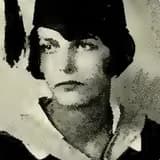
Appointed to the PCUS standing committee on the Consultation on Church Union, expanding her role in national ecumenical work.
On June 15, 1966, Rachel Henderlite was appointed to a standing committee on the Consultation on Church Union (COCU) within the Presbyterian Church in the U.S.[2][5] The precise day is not given in major references and is treated as approximate, but the year and nature of the appointment are confirmed.
COCU was an ambitious ecumenical initiative seeking structural unity among several mainline Protestant denominations. By selecting Henderlite for its standing committee, the PCUS recognized her as a key theologian and strategist in the effort to overcome historic divisions among churches.[2][5] This role extended her influence beyond Presbyterian education into national conversations about ecclesial identity and mission.
Henderlite’s participation reflected her long‑standing commitment to church reunion, a theme she had absorbed from her father, who had advocated for healing the split between northern and southern Presbyterian branches.[3] On the committee, she contributed insights drawn from Christian ethics and educational theory, insisting that any structural union must be accompanied by genuine community formation across lines of race, gender, and region.[1][2]
Historically, this appointment illustrates how Henderlite’s pioneering status as a woman minister and educator intersected with broader ecumenical movements of the 1960s. Her presence on the standing committee helped normalize women’s participation in high‑level interchurch negotiations, which had long been dominated by male clergy and administrators. It also foreshadowed her later leadership as president of the Presbyterian Council on Church Union, where she would become the first woman to hold that post.[2][4][5]