← All women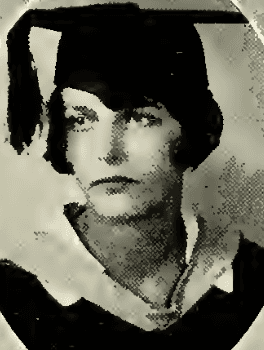
American · Activism
Rachel Henderlite
December 30, 1905 – November 6, 1991
Early Life and Background
Rachel Henderlite (December 30, 1905 – November 6, 1991) was an American Presbyterian minister, theologian, and Christian educator, best known as the first woman ordained to the Ministry of Word and Sacrament in the Presbyterian Church in the United States (PCUS).[3][4] She became a major figure in Christian education, ethics, and ecumenism in the mid‑20th century.
Henderlite was born in Henderson, North Carolina, on December 30, 1905, one of three children of James Henry Henderlite, a Presbyterian pastor, and Nelle (Crow) Henderlite.[3][4] Biographical accounts describe her as "a child of the manse," growing up immersed in congregational life and theological conversation.[1][3] The family later moved to Gastonia, North Carolina, where her father served as pastor of First Presbyterian Church.[1] Her childhood in a closely knit family—alongside an older sister, Virginia, and younger brother, Jim—shaped her understanding of community and faith.[1]
James Henderlite advocated for reunion between the northern and southern branches of American Presbyterianism, a theme that deeply influenced Rachel’s later passion for church union and ecumenism.[3] Living in the segregated American South during the early 20th century, she experienced both the intimacy of a church‑centered upbringing and the limitations imposed on women and racial minorities within religious institutions.[3][4] These formative experiences seeded her later commitment to justice‑oriented Christian education and her critique of paternalism in church–community relations.
Henderlite received part of her early higher education at Mary Baldwin College, a Presbyterian‑related women’s institution.[4] She then attended Agnes Scott College, another women’s college in Georgia, where she earned a BA degree in 1928.[2][4] Her path through women’s colleges reflects the channels through which academically inclined women could access higher education at a time when coeducational opportunities remained limited, particularly in theology.
Education and Intellectual Formation
After Agnes Scott, Henderlite pursued advanced study in Christian education. She enrolled at New York University, where she completed an MA in Christian education in 1936.[4] This degree gave her formal grounding in educational theory and pedagogy, which she would later integrate with biblical and ethical study.
In 1942 she began graduate study at Yale Divinity School, specializing in Christian ethics under the influential theologian Reinhold Niebuhr.[1][4] She studied at Yale from 1942 to 1944 and continued work that led to a PhD in Christian ethics in 1947.[4] Niebuhr’s Christian realism—emphasizing the persistence of sin in individuals and structures, the ambiguity of political action, and the need for responsible, repentant engagement with public life—shaped Henderlite’s own ethical outlook.[1]
Her Yale training positioned her among a small but growing cohort of women theologians who were entering elite divinity schools in the mid‑20th century. According to Biola University’s Christian Educators of the 20th Century project, Henderlite "excelled in many fields: Biblical theology, ethics, social justice, and ecumenism" and was "first and foremost a teacher," whose Christian education theory and practice were expressed in speeches, publications, and curriculum design.[1]
Career Beginnings: Mississippi Synodical College and Montreat College
Henderlite’s formal career in higher education began at Mississippi Synodical College in Holly Springs, Mississippi. From 1936 to 1938 she served as dean and professor of Bible.[4] In this role she combined administrative leadership with classroom teaching, guiding a women’s college in the segregated Deep South during the Great Depression. Her position allowed her to experiment with integrating biblical scholarship and Christian nurture within an institutional setting designed primarily for women’s education.[4]
In 1938 she moved to Montreat College near Black Mountain, North Carolina, serving as professor of Bible until 1941.[4][5] Montreat, a Presbyterian women’s college, trained teachers and church workers. Henderlite’s teaching there further established her reputation as an able biblical educator who connected scripture with contemporary social realities. These early posts gave her practical experience in shaping curricula and mentoring women preparing for roles in churches and schools.
Presbyterian School of Christian Education and Work in Richmond
After her graduate studies at Yale, Henderlite joined the Presbyterian School of Christian Education (PSCE) in Richmond, Virginia, in 1944sixteen‑year professorship in applied Christianity and Christian nurture, teaching there from the mid‑1940s into the early 1960s.[4][5]
At PSCE, she developed courses that integrated theological reflection, ethical analysis, and educational practice. Her approach emphasized that Christian formation occurs through the "total life of the church" rather than solely through classroom instruction, a perspective that would later underpin denominational curricula.[1] She was deeply involved in mentoring women students, equipping them for leadership in churches even when ordination remained closed to them.
During her Richmond years, Henderlite engaged in significant civil rights and community work. Sources note that she helped found Richmond’s first predominantly Black Presbyterian church, challenging entrenched racial segregation in the city and within the church.[4] She opposed paternalistic attitudes in white congregations and promoted more egalitarian relationships between white and Black Presbyterians.[2][4] Her activism extended beyond local efforts; she took part in the March on Washington and the Selma to Montgomery march, linking her Christian ethics with direct participation in the broader civil rights movement.[1]
Writings and Major Works
In addition to teaching, Henderlite produced a series of books and educational materials that advanced mid‑century Protestant Christian education. Her published works include:
- Exploring the Old Testament (1945), an accessible guide for lay readers and students.[3]
- Exploring the New Testament (1946).[3]
- A Call to Faith (1955), which invited readers to deeper commitment and understanding of Christian belief.[3][4]
- Paul, Christian and World Traveler (1957), presenting the apostle Paul in narrative form for educational use.[3][4]
- Forgiveness and Hope (1961), a reflection on the ethical and pastoral dimensions of forgiveness.[3]
- The Holy Spirit in Christian Education (1964), exploring the role of the Spirit in the processes of teaching and learning in the church.[3]
These books contributed to the literature used in Presbyterian Christian education programs and helped articulate a theological vision in which curriculum, scripture, and ethical responsibility were closely intertwined.
A particularly significant aspect of her work was her leadership in developing the Covenant Life Curriculum (CLC) for the Presbyterian Church in the U.S. in the 1960s. Biola’s profile notes that, as Director of Curriculum for the PCUS, Henderlite was "visionary, creator, cheerleader, advocate and administrator" for the entire CLC project.[1] The curriculum sought to ground Christian education in the socialization processes by which people absorb religious meaning from the total life of the church in the world, not merely from formal lessons.[1] This innovation shaped how a generation of Presbyterians understood Christian formation and remains a key achievement in her career.
Ordination and Barrier‑Breaking Ministry
In 1965, Henderlite was ordained as minister of All Souls Presbyterian Church in Richmond by Hanover Presbytery, becoming the first woman ordained to the Ministry of Word and Sacrament in the Presbyterian Church in the United States (PCUS).[2][3][4] Sources emphasize that, while some other American Presbyterian bodies had ordained women earlier, her ordination was a first within the Southern PCUS, which would later merge into the Presbyterian Church (U.S.A.).[2][3]
The ordination took place during a year of intense social upheaval, including the Selma voting rights marches and escalating opposition to the Vietnam War.[2] Henderlite had already established herself as a respected theologian and educator, but ordination placed her in a new role as a pastor authorized to preach, administer sacraments, and provide spiritual leadership. Her theological training in ethics and her civil rights activism informed her preaching and pastoral approach.
The decision by Hanover Presbytery to ordain Henderlite marked a turning point in PCUS history. Encyclopedia.com describes her as "the 1st woman to be ordained as Presbyterian minister in US," while other sources specify the PCUS context.[3][4] The safer historical formulation, given prior ordinations in the northern branch, is that she was the first woman ordained as minister in the PCUS.[2][3] Her ordination opened the way for subsequent women to become ministers in the Southern Presbyterian tradition, altering long‑standing gender norms within the denomination.
Austin Presbyterian Theological Seminary
Following her ordination, Henderlite joined Austin Presbyterian Theological Seminary in Texas as Professor of Christian Education in 1966.[2][4][5] This appointment made her the first woman on the seminary’s full‑time faculty, another barrier‑breaking achievement.[2][4][5]
Austin Seminary was a central institution for training PCUS pastors. By teaching there, Henderlite moved into the heart of ministerial formation for a denomination that had only recently opened ordination to women. She continued to emphasize the integration of theology, ethics, and educational practice, pushing seminarians to think about the social implications of Christian teaching, particularly regarding race and poverty.[1]
Henderlite retired from Austin Seminary in 1971 and was named Professor Emeritus, which Biola’s profile describes as "a singular honor for one who had taught there for only a few years."[1][5] The emeritus title signaled the high esteem in which the institution held her contributions, despite the relatively short duration of her appointment.
Ecumenical Leadership and Church Union
Beyond her work in education and local ministry, Henderlite played a significant role in national ecumenical efforts. In 1966, she was appointed to a standing committee on the Consultation on Church Union (COCU) within the PCUS.[2][5] COCU was an ambitious initiative seeking structural union among major Protestant denominations. Her appointment recognized her expertise and commitment to church unity and extended her influence into broader interdenominational dialogue.
In 1977, Henderlite became the first woman president of the Presbyterian Council on Church Union, serving in that role until 1982.[2][4][5] The Council was related to COCU and worked to advance the vision of church union. As president, she guided discussions and strategic planning at a time when enthusiasm for structural merger was waning, and churches were rethinking ecumenism amid changing cultural and theological landscapes.
Her leadership in these bodies reflected both her theological heritage—shaped by her father’s advocacy for Presbyterian reunion—and her own experience as an educator concerned with how institutional structures affect congregational life. It also demonstrated that women could occupy top leadership roles in complex national ecumenical organizations, which had historically been led by male clergy and administrators.[2][4][5]
Awards, Honors, and Recognition
While many of Henderlite’s honors were institutional rather than formal awards, they attest to her stature within church and academy. Her designation as Professor Emeritus upon retirement from Austin Presbyterian Theological Seminary in 1971 is one such recognition, unusual given her relatively brief tenure there.[1]
In addition, her leadership roles—such as being the first woman ordained minister in the PCUS, the first woman full‑time faculty member at Austin Seminary, and the first woman president of the Presbyterian Council on Church Union—function as de facto honors marking her achievements.[2][3][4][5] Biola’s Christian Educators of the 20th Century project includes her among a select group of influential Christian educators, further highlighting her national significance in that field.[1]
Posthumously, she has been commemorated in denominational and scholarly venues. In 2015, the Presbyterian Historical Society, the archives of the Presbyterian Church (U.S.A.), published a "Women’s History" feature commemorating the 50th anniversary of her 1965 ordination, underscoring its importance as "another important first in the history of Presbyterianism and the women’s movement."[2] In 2016, Biola’s database entry recognized her again as the first woman ordained to the Ministry of Word and Sacrament in the former PCUS and praised her contributions to curriculum development and social justice.[1]
Personal Life
Accounts of Henderlite’s life focus primarily on her professional and ecclesial roles; little is reported about romantic relationships or family beyond her parents and siblings. Available biographical sources do not indicate that she married or had children.[1][3][4] Her personal life appears to have been largely devoted to teaching, writing, pastoral ministry, and participation in civil rights and ecumenical endeavors.
Her identity as "a child of the manse" suggests that she remained closely connected to Presbyterian ecclesial culture throughout her life.[1] The strong emphasis on her relationships with students and colleagues—many of whom considered her a mentor and model—indicates that she formed a wide relational network through which her influence was transmitted, even in the absence of a documented nuclear family of her own.
Legacy and Historical Impact
Rachel Henderlite’s legacy spans several domains: Christian education, ordination and gender equity, civil rights, and ecumenism.
In Christian education, her work at PSCE and her leadership in the Covenant Life Curriculum project reshaped how the PCUS understood religious formation. The curriculum emphasized that faith is learned through participation in the life of the church and engagement with the world, not merely through rote instruction. Biola’s profile credits her with helping to "ground education more holistically in the socialization processes by which young and old absorb religious meaning."[1] This approach influenced subsequent generations of educators and continues to echo in contemporary discussions about holistic faith formation.
Her 1965 ordination as the first woman minister in the PCUS is a landmark in the history of women’s religious leadership. It symbolized a shift in denominational theology and practice concerning gender and opened pathways for future women pastors in the Southern Presbyterian tradition.[2][3][4] The 2015 fiftieth‑anniversary commemoration by the Presbyterian Historical Society underscores the enduring significance of this event for both Presbyterianism and the broader women’s movement.[2]
Henderlite’s involvement in civil rights—including helping to found Richmond’s first predominantly Black Presbyterian church and participating in major civil rights marches—demonstrates how she applied Christian ethics to issues of race and justice.[1][2][4] Her critique of paternalistic relationships between white churches and Black communities contributed to the gradual transformation of Presbyterian engagement with racial justice.
In ecumenism, her service on COCU and as president of the Presbyterian Council on Church Union illustrates how women came to occupy central roles in national interchurch bodies. Her leadership helped guide ecumenical efforts from dreams of organic union toward more realistic forms of cooperation and shared mission.[2][4][5]
Overall, Henderlite stands as a pioneering figure who bridged scholarship, pedagogy, pastoral ministry, and social activism. Her life illustrates the possibilities and challenges faced by women who sought to reshape Protestant institutions from within in the mid‑20th century.
Later Life and Death
After retiring from Austin Seminary in 1971 and being named Professor Emeritus, Henderlite remained active in teaching, writing, and ecumenical and social justice work.[1][5] She continued to be involved with the Presbyterian Council on Church Union into the early 1980s and remained a respected voice in discussions of Christian education and ethics.[2][4][5]
Henderlite died of a heart attack on November 6, 1991, in Austin, Texas, at the age of 85.[1][3][4] Her death closed a career that had spanned more than five decades of teaching, ministry, and ecclesial leadership.
In the decades since her death, scholars, denominational historians, and educators have continued to recognize her contributions. Her inclusion in reference works such as Encyclopedia.com’s dictionary of women and the Texas State Historical Association’s Handbook of Texas, as well as in specialized databases like Christian Educators of the 20th Century, ensures that her story remains accessible to researchers and students.[1][4][5] Within the Presbyterian Church (U.S.A.), her name is frequently invoked in discussions about women’s ordination and the history of Christian education.
Rachel Henderlite’s life offers a model of faithful, intellectually rigorous engagement with the church and world. Her work demonstrates how a woman, grounded in both theological scholarship and practical education, could challenge entrenched systems and help the church more fully embody its commitments to justice, reconciliation, and shared ministry.
Dated achievements
12 indexed.
- Dec301905Activism
Birth of Rachel Henderlite
Birth of Rachel Henderlite in Henderson, North Carolina, to Presbyterian minister James Henry Henderlite and Nelle Crow Henderlite.
View details Rachel Henderlite - Wikipedia - Sep011936Activism
Begins leadership at Mississippi Synodical College
Begins work as dean and professor of Bible at Mississippi Synodical College in Holly Springs, launching her formal career in higher Christian education.