← All women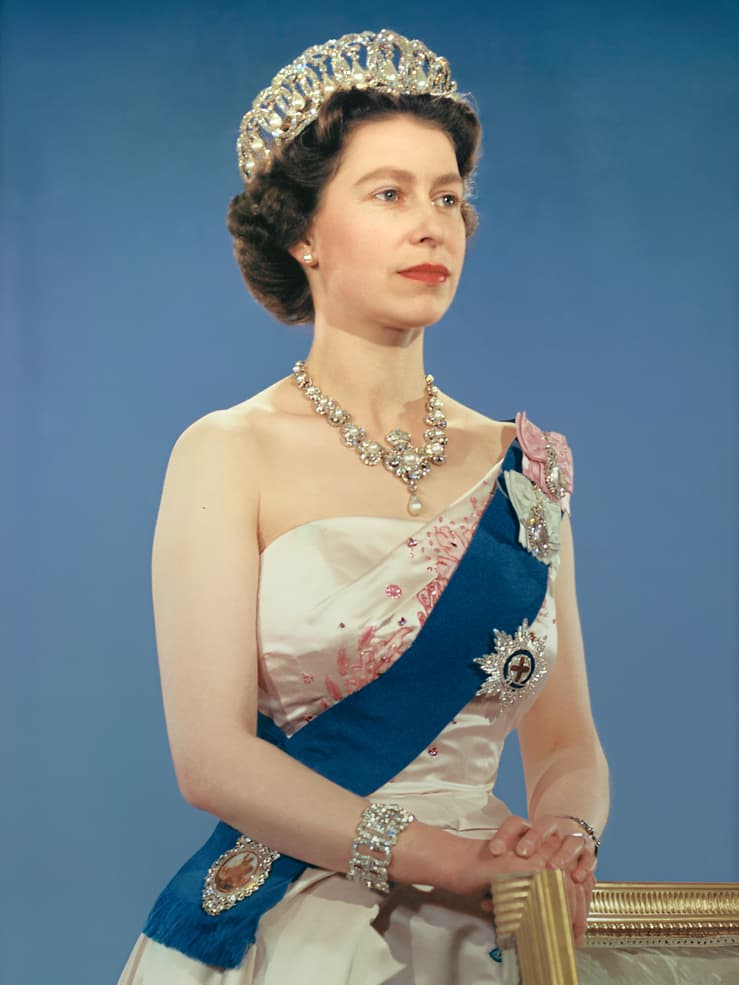
British · Politics
Quenn Elizabeth II
April 21, 1926 – September 8, 2022
Early Life and Background
Elizabeth Alexandra Mary Windsor was born on 21 April 1926 at 17 Bruton Street, Mayfair, London, the home of her maternal grandparents, the Earl and Countess of Strathmore.[1][3] She was the first child of Prince Albert, Duke of York (later King George VI), and Lady Elizabeth Bowes-Lyon, who became Queen Elizabeth and later the Queen Mother.[1][6] At birth, Elizabeth was third in line to the throne, after her uncle, King Edward VIII, and her father, and it was widely assumed that the succession would continue through Edward’s line.[3][6]
Elizabeth’s early childhood was spent between London and the family’s country homes. She received a largely governess-led education at home, with an emphasis on history, constitutional law, languages, religion, and music, reflecting expectations for a royal princess rather than a future monarch.[1][3] Her younger sister, Princess Margaret, was born in 1930, and the sisters formed a close bond that endured throughout their lives.[1]
In 1936, the abdication crisis transformed Elizabeth’s position. Her uncle, King Edward VIII, abdicated to marry Wallis Simpson, an American divorcee, and her father became King George VI.[3][9] As the king’s eldest child under male-preference primogeniture, Elizabeth became heir presumptive at age ten.[3] The family moved into Buckingham Palace, and her upbringing increasingly included preparation for constitutional duties. She began studying the workings of government, reading state papers with her father, and receiving tuition in history and law.[1][6]
World War II profoundly shaped Elizabeth’s formative years. The royal family remained in Britain throughout the conflict, symbolising solidarity with civilians during the Blitz.[1] Elizabeth made her first radio broadcast in 1940, addressing evacuated children and urging courage.[1] In 1945, she joined the Auxiliary Territorial Service, training as a driver and mechanic and becoming the first female member of the royal family to serve as a full-time active member of the armed services.[1][3] These experiences reinforced her sense of duty and public service, themes that would define her reign.
Marriage and Early Public Role
Elizabeth’s personal and public lives intertwined from an early stage. She met Prince Philip of Greece and Denmark, a distant cousin and Royal Navy officer, in the 1930s and corresponded with him through the war years.[1][3] Their engagement was announced in July 1947, and on 20 November 1947 they were married in Westminster Abbey in a ceremony that offered a moment of post-war optimism for the British public.[3][9] Philip renounced his Greek and Danish titles, became a British subject, and was created Duke of Edinburgh prior to the wedding.[3]
The couple’s first child, Charles, was born in 1948, followed by Anne in 1950, Andrew in 1960, and Edward in 1964.[3][9] For a brief period in the late 1940s, Elizabeth enjoyed a relatively private life as a young naval officer’s wife, particularly during Philip’s posting to Malta, where they lived away from constant public scrutiny.[2] However, her father’s declining health drew her increasingly into official duties.
Beginning in the late 1940s, Elizabeth undertook extensive tours of the Commonwealth, representing the king and familiarising herself with the realms she would later rule.[1][2] These early travels, including visits to South Africa and Canada, helped shape her understanding of the changing nature of the British Empire and the emerging Commonwealth of Nations.[1][3] Her growing public profile made clear that she was being prepared for a future role as queen regnant.
Accession and Coronation
King George VI died on 6 February 1952 while Elizabeth and Philip were on a royal tour of Kenya.[1][2][6] At the moment of his death, she automatically became Queen Elizabeth II, acceding to the throne at the age of 25.[3][9] The couple returned immediately to London, where she adopted the regnal name Elizabeth II and began the formal processes of accession, including meetings with Prime Minister Winston Churchill and attendance at her father’s funeral.[3]
Her coronation took place on 2 June 1953 at Westminster Abbey, in a ceremony steeped in centuries-old ritual.[1][6] The event was historically notable as the first British coronation to be fully televised, a decision approved by the Queen against initial resistance from some advisers.[1][3] An estimated 27 million people in the United Kingdom watched the broadcast, and millions more around the world saw or heard coverage, making it a defining moment in the spread of television and in the public’s relationship with the monarchy.[1][6][13]
The coronation affirmed Elizabeth’s position as queen regnant of multiple sovereign states, including the United Kingdom, Canada, Australia, New Zealand, and several other realms, as well as Head of the Commonwealth.[1][9] It symbolised not only the continuation of the monarchy but also the emergence of a young female sovereign in an era marked by post-war reconstruction and decolonisation. Her reign officially began on 6 February 1952, but the coronation provided the ceremonial and symbolic foundation for her subsequent role.
Reign, Constitutional Role, and Major Developments
Elizabeth II’s reign, lasting from 1952 to 2022, was one of the most transformative periods in modern British and Commonwealth history.[1][3][12] As a constitutional monarch, her powers were primarily symbolic and ceremonial; she acted on the advice of her ministers and did not intervene publicly in party politics.[3] Nonetheless, through her weekly audiences with prime ministers and her discreet counsel, she exerted significant influence on the tone and stability of government.[3][9]
One of the most important structural changes during her reign was the rapid dissolution of the British Empire and the growth of the Commonwealth as a voluntary association of independent states.[1][9] Over 20 countries were part of the empire when she became queen, and many gained independence during her reign, including African, Caribbean, and Pacific states.[9][12] Elizabeth served as Head of the Commonwealth, supporting its evolution into a diverse grouping with shared values of cooperation and democracy.[1][12]
Domestically, her reign encompassed major social and political developments: the end of post-war rationing, the Suez Crisis, the Troubles in Northern Ireland, Britain’s entry into and later withdrawal from the European Union, and substantial reforms to the role of the monarchy itself.[3][12] She worked with 15 British prime ministers, from Winston Churchill to Liz Truss, across ideological divides and shifting economic and social circumstances.[9]
Her constitutional role also extended to other realms. Elizabeth II was queen regnant of up to 32 sovereign states during her lifetime and remained monarch of 15 realms at her death, including Canada, Australia, and New Zealand.[1][3] In each realm she acted on the advice of local ministers and served as a symbol of continuity and shared heritage. This multi-realm monarchy required frequent foreign travel and careful attention to evolving national sentiments, including republican movements in several countries.
Media, Communication, and Modernisation
Elizabeth’s reign was marked by a conscious effort to balance tradition with modernisation. She embraced new forms of mass communication early. On 14 October 1957, she delivered the first televised royal Christmas broadcast, extending the radio tradition begun by George V.[1][6][9] Speaking from Sandringham, she acknowledged the novelty of appearing in people’s homes via television, signalling a willingness to adapt to technological change.
The Queen’s use of emerging technologies continued. On 26 March 1976, during a visit to the Royal Signals and Radar Establishment in Malvern, she sent an electronic message over ARPANET, becoming the first monarch known to send an email.[12] In later decades she authorised the launch of an official royal website and eventually social media channels for the monarchy, further integrating the institution into digital information networks.[8]
Elizabeth also modernised the monarchy’s physical and institutional openness. On 7 August 1993, Buckingham Palace was opened to paying members of the public for tours of the State Rooms, initially to help fund repairs to Windsor Castle after a major fire.[1][3] The popularity of these visits led to annual summer openings, symbolising a more transparent and accessible institution. She supported televised coverage of royal events, including weddings and jubilees, thereby making royal ritual part of global media culture.
Foreign Visits and Diplomacy
Foreign travel and diplomacy were central to Elizabeth II’s role. She undertook hundreds of overseas visits, often as part of Commonwealth tours and state visits. In 1957, her first state visit to the United States included an address to the United Nations General Assembly on 17 October, the first by a reigning British monarch.[1][3] A few days later, on 23 October 1957, she opened the 23rd Canadian Parliament in Ottawa, becoming the first monarch of Canada to open a parliamentary session in person.[1]
Elizabeth’s travels reflected shifting geopolitical realities. In 1965 she made a state visit to West Germany, widely seen as a historic gesture of post-war reconciliation.[3] In 1972 she visited Yugoslavia, becoming the first British monarch to visit a communist country.[3] On 12 October 1986, she began a state visit to the People’s Republic of China, the first such trip by a British sovereign, amid evolving relations shaped by the future of Hong Kong.[1]
Her role as diplomat-in-chief extended to the United States Congress, where she addressed a joint session on 16 May 1991, another first for a British monarch.[1] Perhaps most symbolically, from 17 May 2011 she undertook a four-day state visit to the Republic of Ireland, the first by a British monarch and the first royal visit to Ireland in a century.[3] Her carefully worded remarks and gestures of remembrance were widely interpreted as significant contributions to reconciliation after decades of conflict.
Engagement with the Public and Social Change
Elizabeth II adjusted royal practice to meet changing public expectations. On 18 March 1970, during a tour of Australia, she introduced the royal "walkabout" in Sydney, choosing to walk among crowds and engage directly with members of the public.[12] This innovation soon became a standard feature of royal visits, humanising the monarchy and allowing ordinary citizens brief personal encounters with the sovereign.
The Queen’s reign coincided with major social transformations: the decline of deference, the rise of youth culture, shifts in gender roles, and growing scrutiny of public institutions.[12] She faced criticism and pressure during moments of crisis, notably the response to the death of Diana, Princess of Wales, in 1997 and debates over royal finances. In these periods, she showed a capacity to adjust while maintaining core principles of duty and reserve, for example by making a televised address after Diana’s death and authorising changes to ceremonial arrangements.
Elizabeth also supported commemorative initiatives. In 2009 she instituted the Elizabeth Cross, a medal awarded to the next of kin of members of the UK armed forces killed in operations or as a result of terrorism, marking a personal recognition of sacrifice.[12] Her jubilees—Silver (1977), Golden (2002), Diamond (2012), and Platinum (2022)—were occasions for national reflection on change and continuity, often accompanied by community events intended to strengthen social bonds.
Sport, Culture, and Public Ceremonies
Sport and cultural celebration formed a distinctive strand of Elizabeth’s public role. As Queen of Canada, she formally opened the 1976 Summer Olympics in Montreal on 17 July 1976, declaring the Games open in the Olympic Stadium.[1] Decades later, on 27 July 2012, she opened the London 2012 Summer Olympics, famously appearing in a pre-recorded sequence with James Bond before declaring the Games open.[1] On 29 August 2012, she also opened the London 2012 Paralympic Games, underscoring institutional recognition of disability sport.[1]
Cultural events often framed her jubilees. In her Golden Jubilee year, one of the central public celebrations was the Prom at the Palace pop concert at Buckingham Palace on 4 June 2002, where she joined an audience enjoying performances by major artists.[2][10] Similar concerts and public festivities accompanied her Diamond and Platinum Jubilees, blending royal ceremony with contemporary entertainment in ways that appealed to broad audiences.
These events highlighted the monarchy’s role in national spectacle and soft power. Elizabeth’s willingness to participate in playful or innovative formats—such as the Bond sequence in 2012—contributed to her enduring popularity and helped frame the crown as compatible with modern culture.
Awards, Honours, and Recognition
As sovereign, Elizabeth II was the fount of honours in the United Kingdom and the Commonwealth realms, personally conferring orders, decorations, and medals. She was herself the subject of numerous foreign honours and state recognitions, reflecting her stature in international diplomacy.[3]
Her reign saw adjustments to the honours system, including greater transparency and efforts to broaden the social range of honourees. The Elizabeth Cross introduced in 2009, named for the Queen, provided a formal symbol of national gratitude to bereaved military families.[12] Various institutions and public spaces around the world bear her name, from schools and hospitals to parks and ships, such as the cruise liner Queen Elizabeth 2, launched in 1967 and named in her honour.[1]
Internationally, she was frequently recognised for her role as a stabilising figure, including tributes from the United Nations and Commonwealth leaders at key anniversaries. Her platinum jubilee in 2022 prompted global messages of congratulations, highlighting her record-breaking tenure and perceived personal dedication.
Personal Life
Elizabeth II’s personal life combined traditional royal expectations with the demands of modern media scrutiny. Her marriage to Prince Philip, Duke of Edinburgh, lasted from 1947 until his death in 2021 and is often described as a partnership of complementary temperaments: her cautious reserve balanced by his forthrightness and interest in science and technology.[1][3] They had four children—Charles, Anne, Andrew, and Edward—whose lives and marriages often drew intense press attention.
The Queen’s interests included horses, racing, dogs (especially corgis), countryside pursuits, and Christian faith.[3][10] She was known as a knowledgeable owner and breeder of thoroughbreds and attended major races such as the Derby and Royal Ascot. Her corgis became emblematic of her public image, frequently appearing in photographs and media portrayals.
Family challenges included the divorces of three of her children in the 1990s, the public controversies surrounding Prince Andrew, and the complex relationship of the monarchy with Diana, Princess of Wales, and later with the Duke and Duchess of Sussex.[3][10] Throughout these difficulties, Elizabeth maintained her characteristic reticence in public, rarely commenting directly but occasionally authorising institutional responses or statements.
Later Life, Record-Breaking Reign, and Platinum Jubilee
In her later decades, Elizabeth increasingly shared duties with other members of the royal family, particularly Charles and William, while continuing to undertake a substantial programme of engagements.[4] Her health remained generally robust, allowing her to perform public roles well into her nineties, though mobility issues and the COVID-19 pandemic in the early 2020s limited in-person appearances.
On 9 September 2015, she became Britain’s longest-reigning monarch, surpassing Queen Victoria’s record, a milestone marked modestly but widely celebrated.[3][15] By 2022 she had reigned for 70 years and 214 days, making her the longest-lived and longest-serving British sovereign and the longest-reigning queen regnant in recorded history.[1][12]
Her Platinum Jubilee year began on 6 February 2022, the 70th anniversary of her accession.[2][9][12] Official celebrations took place throughout the year, including a four-day holiday in June featuring Trooping the Colour, beacon lightings, and the Platinum Party at the Palace concert. Although her health prevented her from attending all events, she appeared on the Buckingham Palace balcony and took part in key ceremonies, reinforcing her presence as the central figure of the commemorations.
Death and Succession
On 8 September 2022, Elizabeth II died at Balmoral Castle in Aberdeenshire, Scotland, at age 96.[1][3][10] Buckingham Palace announced that she had died peacefully, and her death triggered a period of national and Commonwealth mourning.[14] Her eldest son succeeded her immediately as King Charles III, in accordance with the principles of hereditary succession.[1][3]
Elizabeth’s coffin was transported from Scotland to London, where it lay in state in Westminster Hall, allowing hundreds of thousands of people to pay their respects.[14] A state funeral was held at Westminster Abbey on 19 September 2022, attended by heads of state and dignitaries from around the world and watched by vast global audiences.[14] She was later interred in St George’s Chapel at Windsor Castle, alongside her parents and Prince Philip.[11]
Legacy and Historical Impact
Elizabeth II’s legacy is defined by longevity, duty, and constitutional continuity. Her reign spanned seven decades of global transformation, from the aftermath of World War II through the Cold War, decolonisation, technological revolutions, and shifting social values.[1][12] As a constitutional monarch, she maintained political neutrality while providing a consistent symbolic presence above partisan conflict, a role many commentators credit with contributing to political stability in the United Kingdom and other realms.[3]
Her approach to monarchy emphasised service, as reflected in extensive annual engagements—often around 300 per year for much of her reign—and in her self-description as a servant of her peoples, rooted in a religious understanding of vocation.[4][12] She became an emblem of continuity for multiple generations, with many citizens knowing no other monarch during their lifetimes.
Elizabeth’s reign also reshaped the monarchy’s global position. Under her, the empire was formally dismantled and replaced by the Commonwealth of Nations, in which she played a central unifying role.[1][9] The crown adjusted to new constitutional arrangements, such as the patriation of Canada’s Constitution and the creation of distinct roles for the monarch in each realm. Her diplomatic visits and participation in international organisations helped project British soft power and foster reconciliation, as in Ireland and post-war Germany.[3]
Finally, her status as a long-serving woman sovereign has attracted particular attention in studies of gender and leadership. Elizabeth II navigated expectations associated with both monarchy and femininity, becoming one of the most recognisable women in the world and a point of comparison with other female leaders and historical queens regnant.[1][12] Her legacy continues to shape debates about the future of the monarchy, the Commonwealth, and the symbolic frameworks through which nations understand continuity and change.
Dated achievements
19 indexed.
- Apr211926Politics
Birth of Elizabeth Alexandra Mary Windsor
Elizabeth Alexandra Mary Windsor was born in Mayfair, London.
View details Wikipedia: Elizabeth II - Feb061952Politics
Accession to the throne
Elizabeth became queen at age 25 immediately after her father's death.
View details