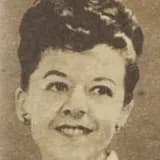
Glanville-Hicks's opera 'The Transposed Heads', based on Thomas Mann's novella, premiered in New York, marking a major achievement for an Australian-born woman composer in American opera.
On 1 February 1954, Peggy Glanville-Hicks's opera The Transposed Heads, based on Thomas Mann's novella of the same name, received its premiere performance in New York City under the auspices of the Louisville Orchestra commission circuit, later staged more fully in New York. The work was one of the first operas by an Australian-born composer to achieve substantial recognition on the American stage.
The opera reflected Glanville-Hicks's deep interest in non-Western musical modes, particularly Indian and Southeast Asian scales and rhythmic structures, which she incorporated into a Western operatic framework — an innovative and unusual synthesis for the period. This cross-cultural approach distinguished her from many of her American and European contemporaries and reflected her broader ethos of expanding the tonal and modal vocabulary of concert music beyond the European tradition.
As a woman composer working in the mid-20th century — an era in which female composers were rarely commissioned for large-scale operatic works — Glanville-Hicks's success with The Transposed Heads was a significant breakthrough. It helped establish her reputation in New York's demanding musical circles, where she was also active as a respected and influential music critic for the New York Herald Tribune. The opera's success paved the way for her subsequent large-scale works, including Nausicaa, and cemented her standing as one of the most original operatic voices of her generation.