← All women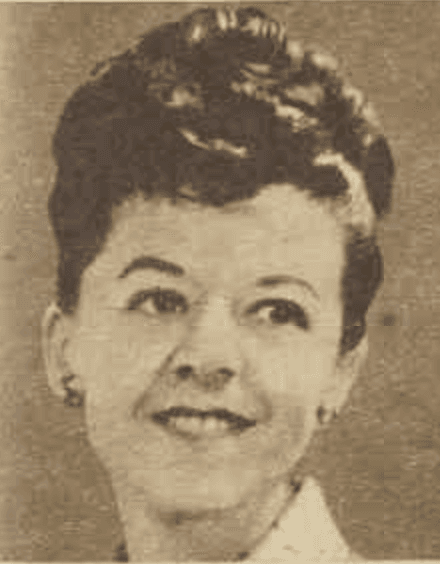
Australian, American · Arts
Peggy Glanville-Hicks
December 29, 1912 – June 25, 1990
Early Life and Education
Peggy Glanville-Hicks was born on 29 December 1912 in Sandringham, a suburb of Melbourne, Australia, to Ernest Glanville-Hicks and Myrtle Emily Hicks. She grew up in a household that valued creativity — her father was a journalist and cartoonist, and her mother encouraged her early musical education. From childhood, Glanville-Hicks displayed a precocious talent for music, and she began piano lessons and composition studies while still very young.
She attended the Melbourne Conservatorium of Music (part of the University of Melbourne), where she studied composition under the English-born composer Fritz Hart, a significant figure in early 20th-century Australian musical life. Hart's tutelage nurtured her ambitions to pursue a career as a composer at a time when opportunities for women in serious composition were exceedingly rare, both in Australia and abroad.
Seeking broader training, Glanville-Hicks left Australia in 1931 to study in London, enrolling at the Royal College of Music. There she studied composition under the towering figure of English music, Ralph Vaughan Williams, as well as with Gordon Jacob for orchestration. She later journeyed to Vienna to study with Egon Wellesz, and to Paris where she studied with the legendary teacher Nadia Boulanger, whose pedagogical influence shaped generations of 20th-century composers, including Aaron Copland and Virgil Thomson. This rigorous, multi-national education gave Glanville-Hicks an unusually broad grounding in both the English and Continental compositional traditions.
Career Beginnings and Development
During her years in London in the 1930s, Glanville-Hicks began to establish herself as a composer, writing chamber works, songs, and orchestral pieces that reflected her rigorous training while beginning to show her personal voice — one increasingly drawn to modal and non-Western musical structures rather than conventional Western tonal harmony. She also worked as a pianist and accompanist to support herself during these lean years.
In 1938, she married the English composer Stanley Bate, and the couple later relocated to the United States, settling in New York City in 1942 amid the upheavals of the Second World War. The marriage was troubled and the couple eventually divorced in 1949, though Glanville-Hicks would remain based primarily in New York for the following two decades, building both her compositional career and a parallel career as a music journalist.
In New York, she became a respected and influential music critic for the New York Herald Tribune from 1948 to 1958, working alongside the composer-critic Virgil Thomson. Her criticism was noted for its intellectual rigor, its openness to new and experimental music, and her championing of composers working outside the mainstream European-derived tradition — including early minimalists and composers exploring Asian and Middle Eastern musical idioms. This critical platform gave her significant visibility and influence within New York's mid-century contemporary music scene, a scene otherwise dominated almost entirely by men.
Major Works and Musical Style
Glanville-Hicks's compositional output is distinguished by her deep engagement with non-Western musical systems — particularly Indian, Southeast Asian, Greek, and Middle Eastern modal structures — which she wove into otherwise Western-style orchestral and operatic forms. This was a distinctive and prescient approach: decades before "world music" fusion became a widely recognized concept, Glanville-Hicks was systematically incorporating raga-like modes, gamelan-influenced textures, and non-diatonic scales into concert music intended for Western audiences.
Her best-known work is the opera The Transposed Heads (1953), based on Thomas Mann's novella of the same name, which received its premiere in early 1954 and was later staged with success including a notable production in Louisville, Kentucky, and performances in New York. The opera exemplified her synthesis of Indian musical elements with Western operatic storytelling.
She followed this with several other significant operas, including The Glittering Gate (1959), Nausicaa (1961) — based on Robert Graves's novel Homer's Daughter and premiered in Athens — and Sappho (composed in the 1960s but not staged in her lifetime; it received its posthumous premiere decades later). Her orchestral and ballet works include Sinfonia da Pacifica, Etruscan Concerto for piano and orchestra, and several ballets choreographed for major companies, including collaborations connected to the world of American modern dance.
Beyond composition, Glanville-Hicks was an important cultural advocate: she helped establish and briefly directed the Composers' Forum and contributed to organizations promoting contemporary American and international music, including work related to the International Society for Contemporary Music (ISCM), where she served in an administrative and advocacy capacity that helped bring lesser-known composers' works to public attention.
Later Career and Life in Greece
In 1959, following the end of her New York Herald Tribune tenure, Glanville-Hicks relocated to Athens, Greece, drawn by her fascination with the Eastern Mediterranean's musical and cultural heritage. She lived in Greece for over a decade, a period during which she composed some of her most ambitious works, including Nausicaa, which drew directly on her immersion in Greek culture and mythology.
During the 1960s, Glanville-Hicks battled a serious illness — she was diagnosed with a brain tumor, and after undergoing surgery she reportedly lost, for a period, some of her creative faculties, a devastating setback for a composer at the height of her international recognition. She nonetheless continued to work and eventually returned to composing, though her later output was smaller than the prolific period of the 1950s.
Recognition and Honors
Throughout her career, Glanville-Hicks received recognition including grants from the Guggenheim Foundation, commissions from major American orchestras and opera companies, and support from cultural bodies in both the United States and Australia. Her opera The Transposed Heads brought her significant national attention in the United States, a rare feat for a woman composer, let alone one of Australian birth, in the conservative mid-20th-century American classical establishment.
In recognition of her contributions to Australian and international music, the Peggy Glanville-Hicks Address was established posthumously as an annual lecture delivered by a distinguished figure in Australian music and culture, continuing to bear her name into the 21st century. The Australian Music Centre and various Australian cultural institutions have also worked to preserve and promote her scores and legacy.
Personal Life
Glanville-Hicks's personal life was marked by her marriage to composer Stanley Bate in 1938, a union that ended in divorce in 1949 after years of difficulty, partly attributed to Bate's struggles with mental health and alcohol. She did not remarry and had no children, dedicating her life fully to her musical career, criticism, and advocacy work. She maintained close friendships and professional relationships with many major figures of 20th-century music, including Virgil Thomson, Paul Bowles (with whom she shared an interest in cross-cultural musical exploration and North African and Asian musical traditions), and numerous choreographers and librettists with whom she collaborated on operatic and ballet projects.
Return to Australia, Death, and Legacy
In her later years, Glanville-Hicks returned to Australia, settling in Sydney, where she purchased a historic terrace house in the suburb of Paddington. She died in Sydney on 25 June 1990, at the age of 77.
Upon her death, in a final act that would extend her influence long beyond her lifetime, she bequeathed her Paddington house and much of her estate to establish the Peggy Glanville-Hicks Composers' House, a residency program that continues to house and support Australian composers, offering them concentrated, financially secure time to create new work. This philanthropic legacy has made her name synonymous with practical support for the next generations of Australian musical talent, ensuring that her contributions to music extend well beyond her own compositions and criticism.
Today, Peggy Glanville-Hicks is remembered as one of the most significant Australian composers of the 20th century and a trailblazing woman in a field that offered few opportunities to women of her era. Her cross-cultural musical vision, her incisive music criticism, and her enduring philanthropic legacy through the Composers' House and the Peggy Glanville-Hicks Address have secured her a lasting place in the history of Australian and international music.
Dated achievements
3 indexed.
- Dec291912Arts
Birth of Peggy Glanville-Hicks in Melbourne, Australia
Peggy Glanville-Hicks was born on 29 December 1912 in Melbourne, Australia, later becoming one of the most internationally recognized Australian composers of the 20th century.
View details Peggy Glanville-Hicks - Wikipedia - Feb011954