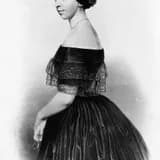
Pauline Viardot died in Paris on May 18, 1910, at age 88, closing a career that had shaped opera, composition, and the salons of Romantic Europe.
Pauline Viardot died in Paris on May 18, 1910, at the age of 88. By the time of her death, she had long retired from public performance, having given her farewell public appearances decades earlier in the 1870s, but she remained an active composer, teacher, and central figure in Parisian musical and literary society almost until the end of her long life.
Her death marked the passing of one of the last living links to the golden age of Romantic opera and to the great cultural circles of nineteenth-century Europe, having personally known and collaborated with composers including Chopin, Liszt, Berlioz, Brahms, Gounod, Saint-Saëns, and Fauré, and having maintained an intimate and artistically fertile friendship with the novelist Ivan Turgenev for over forty years, as well as friendships with George Sand and other leading literary figures.
Viardot's legacy rests on multiple pillars: her legendary vocal artistry and dramatic range, which inspired roles written specifically for her voice, including Fidès in Meyerbeer's Le prophète and the title role of Gluck's Orphée et Eurydice in Berlioz's revival; her substantial output as a composer of songs, operettas, and chamber works, remarkable for a woman of her era to have produced and had performed; and her influence as a vocal pedagogue who trained generations of singers. Her death was mourned across the European musical world, and she is remembered today as one of the most versatile and influential musical figures of the nineteenth century, a woman who transcended the usual boundaries placed on female performers to become a composer, impresario, and cultural authority in her own right.