← All women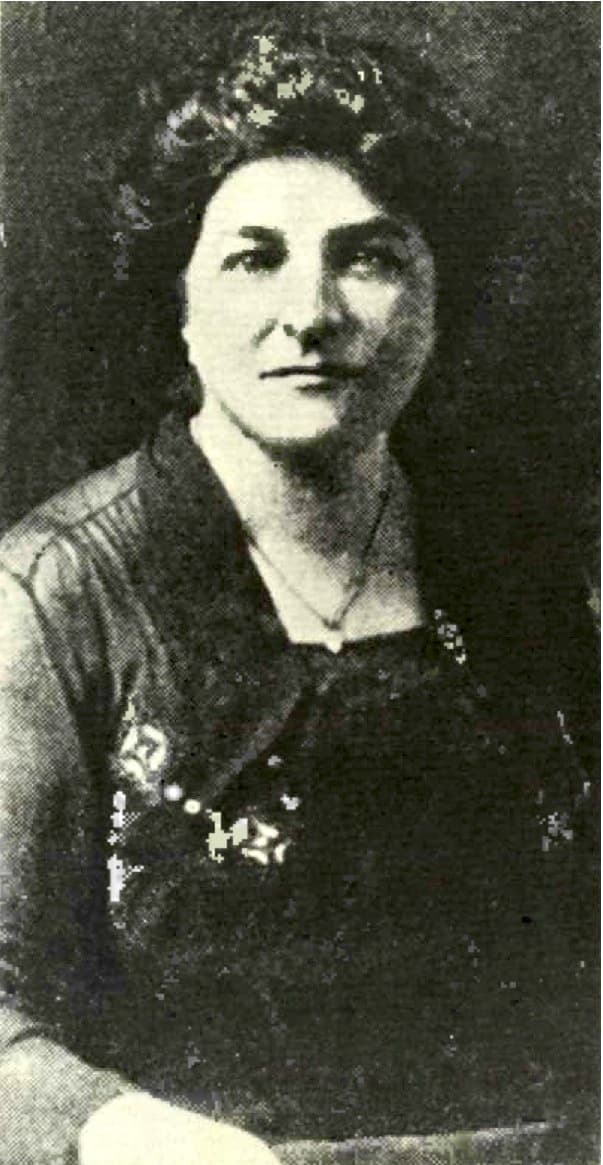
American · Activism · Law
Opha May Johnson
May 4, 1878 – August 13, 1955
Early life and background
Opha May Johnson (née Jacob) was born on May 4, 1878, in Kokomo, Indiana, a small Midwestern city shaped by post‑Civil War industrial growth and traditional gender expectations.[10] Growing up in the late nineteenth century, she belonged to a generation of American women who had no national voting rights and limited access to formal careers. Her family moved to Washington, D.C. while she was still young, placing her in the nation’s capital at a time when the federal government was slowly opening clerical positions to women.[4][10]
Details of Johnson’s immediate family life are sparse in surviving records, but multiple biographical accounts agree that she pursued business education in Washington. She enrolled at Wood’s Commercial Business College, a respected institution training stenographers, typists, and clerks to serve in government and private offices. According to later profiles, she graduated second in her class, demonstrating strong aptitude for secretarial work and office management.[10][11] This commercial education was an important stepping stone; at a time when most women’s schooling ended at the secondary level, her credentials positioned her for civil service employment in the capital.
Johnson’s formative years coincided with the rise of the women’s suffrage movement and the gradual feminization of clerical labor. As typewriters and standardized office procedures spread, women were increasingly hired as clerks and stenographers, often at lower wages than men but with new opportunities for financial independence. Johnson’s choice of commercial training reflected both her personal ambition and the broader pattern of women entering white‑collar work at the turn of the century. These experiences would later prove critical when the United States Marine Corps looked for skilled female clerical workers during World War I.
Career beginnings and development
After completing her studies at Wood’s Commercial Business College in the mid‑1890s, Johnson entered the world of office work in Washington. A profile by the Foundation for Women Warriors notes that she graduated in 1895 as salutatorian, equipped with stenography and secretarial skills tailored to the needs of government agencies.[11] During this era, federal departments, including the War Department and the Navy, relied increasingly on civilian clerks to manage paperwork arising from America’s expanding military and administrative apparatus.
By the 1910s, Johnson had secured a position as a civilian clerk at Marine Corps Headquarters in Washington, D.C.[9][10][11] She worked in the Central Recruiting Division and later in the office of the Quartermaster General, handling records and administrative tasks.[3][9] Her responsibilities placed her at the center of the Corps’ personnel and supply systems, and contemporary descriptions emphasize that she impressed her supervisors with her competence.[9] This reputation among Marine Corps leadership would later prove decisive when the service considered admitting women as uniformed members.
Johnson’s civilian career unfolded against a backdrop of shifting norms about married women’s employment. Many middle‑class Americans believed wives should not work outside the home, yet Johnson continued her clerical career after marriage. Her persistence reflected both economic realities and personal commitment, and later tributes commend her for working "more than two decades as a civil servant at a time when married women were not supposed to work outside the home."[9] Over time, she became a quiet but integral part of the administrative machinery supporting the Marine Corps.
World War I and barrier‑breaking enlistment
When the United States entered World War I in 1917, the Marine Corps faced mounting personnel demands. As thousands of male Marines prepared for deployment to France, the Corps needed office workers to manage mobilization, logistics, and records. In mid‑1918, the Navy and Marine Corps considered a new solution: enlisting women to perform clerical duties, thereby "freeing a man to fight."[8][9]
On August 8, 1918, Secretary of the Navy Josephus Daniels officially approved a plan allowing women to enlist in the Marine Corps.[8] This authorization formed part of a broader policy that had already brought women into the Navy as "Yeoman (F)" and into other wartime roles. For the Marine Corps, however, it marked the first time women could join as Marines rather than solely as civilian employees. The new female Marines would be placed mostly in the Marine Corps Reserve, where they were informally nicknamed "Marinettes".[10]
Marine Corps leaders quickly identified Johnson as an ideal candidate. Already working in the Central Recruiting Division, she knew the Corps’ procedures and possessed excellent clerical skills. A UPI feature notes that the commandant and the quartermaster general asked Johnson to be the first woman to enroll in the service.[9] On August 13, 1918, she arrived at the recruiting office in Washington and stood first in line when enlistment opened to women.[4][6][8][9][10]
That day, Johnson joined the Marine Corps Reserve, becoming the first woman known to have enlisted in the United States Marine Corps.[4][6][10] Approximately 300 women enlisted in the Reserve during World War I, but Johnson’s position at the front of the line ensured that she would be recorded as the first.[6][8][9][10] She entered as a private and was assigned once again to clerical duties, this time as a uniformed Marine at Headquarters Marine Corps.[3][9]
Johnson’s enlistment was historically remarkable for several reasons. She joined the Corps at about 39–40 years old, older than many recruits, and did so in 1918, two years before the ratification of the 19th Amendment, which finally granted women national voting rights.[6][9][10] At the time, many Americans doubted that women belonged in the armed forces at all. Her enlistment demonstrated women’s willingness and ability to fill vital roles within the military and gave tangible support to suffragists’ claims that women were already contributing to national defense.
Promotion and service as senior‑enlisted woman
Once enlisted, Johnson continued working in the Office of the Quartermaster General at Marine Corps Headquarters, performing clerical work vital to wartime logistics.[3][8][9] Her prior experience and strong performance led to rapid advancement. Contemporary accounts, including a UPI report, state that she became a sergeant "after just one month and five days" in the service.[9] Calculating from her enlistment date of August 13, 1918, this timeframe places her promotion around September 17, 1918.
As a sergeant, Johnson was recognized as one of the first women to attain that rank in the Marine Corps and as the senior‑enlisted woman among the female Marines serving during World War I.[1][8][9] She supervised clerical tasks and embodied the expanding possibilities for women within the military hierarchy. Her rise to noncommissioned officer status rebutted arguments that women could only occupy minor or temporary roles.
Throughout her wartime service, Johnson and her fellow female Marines handled office work, payroll, and records, freeing male Marines for deployment to European battlefields. Historians emphasize that these women "critically aided the war effort" and contributed to the political recognition of women’s importance in the United States, indirectly assisting the suffrage cause.[1] Within this group, Johnson’s combination of senior rank, prior experience, and public recognition as the "first woman Marine" made her a symbolic leader.
Demobilization, civil service, and veterans’ organizing
With the end of World War I in late 1918, the U.S. military rapidly demobilized. In 1919, the Marine Corps began disenrolling its female Marines alongside male veterans returning to civilian life. Johnson was released from uniformed service but continued her administrative work as a civilian employee at Headquarters Marine Corps and within the War Department.[8][9][11] She remained in government employment for more than two decades, even as social norms discouraged married women from working outside the home.[9][11]
That same year, Johnson’s service was recognized through inclusion in the American Legion. She became a charter member of Belleau Wood Post No. 1, described as the first post for female Marine Corps reservists.[8] The post’s name referenced the Battle of Belleau Wood, a fierce 1918 engagement in which Marines played a crucial role. By associating female Marines with this renowned battle, the post symbolically acknowledged their contributions to the Corps’ wartime success.
Within the American Legion and other veterans’ networks, Johnson and her peers forged early communities of women veterans. These organizations provided social support, advocacy, and a means to preserve the history of women’s wartime service. Although documentation about Johnson’s specific activities within Belleau Wood Post No. 1 is limited, her status as a charter member underscores her ongoing commitment to military service and veterans’ causes.
Johnson continued working in civil service until 1943, when she retired; reports indicate that failing eyesight accelerated her decision to leave the workforce.[8][9] By then, she had spent nearly half a century in office work and more than two decades in direct support of the Marine Corps and the War Department. Her long career embodied both the opportunities and constraints faced by early twentieth‑century professional women.
Personal life
Biographical summaries agree that Opha May Jacob became Opha May Johnson through marriage, though many sources do not provide detailed information about her husband’s name or occupation.[4][9][11] Some local histories note that her husband predeceased her by five years, dying around 1950.[9] The couple’s life appears to have been based in Washington, D.C., where Johnson’s work at Marine Corps Headquarters anchored their daily routines.
There is little documentation about whether Johnson had children, and most institutional profiles focus on her professional and military contributions rather than private family life. This omission itself reflects historical patterns: women who broke professional barriers were often remembered for their public roles, while their domestic lives received less archival attention. What is clear is that Johnson pursued long‑term employment despite social expectations that married women should not work. Her ability to maintain a career in civil service while married made her a quiet example of changing gender roles in mid‑twentieth‑century America.
Awards, honors, and recognition
During her lifetime, Johnson did not receive the widespread public acclaim that later generations would bestow on her. Her recognition as the "first woman Marine" circulated mainly within Marine Corps circles and among colleagues who knew the story of the 1918 enlistment.[1][6] However, her symbolic significance grew steadily in the decades following World War I, especially as more women joined the Corps during subsequent conflicts.
In the late twentieth and early twenty‑first centuries, official Marine Corps publications, veterans’ organizations, and media outlets began to highlight Johnson prominently in commemorations of women’s military service. A 2018 Marine Corps article marking "100 years of women serving in the Marine Corps" explicitly identifies her as the first woman to join the Corps and recalls her enlistment on August 13, 1918.[7] Drill instructors at Marine Corps recruit training are known to quiz recruits on the identity of the first female Marine, ensuring Johnson’s name remains part of institutional memory.[6]
On August 13, 2018, the centennial of her enlistment, a monument and grave marker honoring Johnson were unveiled, correcting the fact that she had long lain in an unmarked grave.[8][9] The Foundation for Women Warriors and other organizations participated in ceremonies acknowledging her role in breaking the Marine Corps’ gender barrier.[8][11] Media coverage by outlets such as UPI, TIME, and Military Times further amplified her story, introducing her to a broad American audience.[6][9][10]
These commemorations amount to a retroactive honoring of Johnson’s achievements. While she may not have received formal military decorations specifically for being the first woman Marine, the institutional and public recognition accorded to her in recent decades functions as a collective award, placing her firmly in the pantheon of pioneering women in U.S. military history.
Legacy and historical impact
Johnson’s enduring legacy lies in her role as the first woman to enlist in the United States Marine Corps and as an early advocate for women’s capacity to serve in the armed forces.[4][6][10] Her enlistment on August 13, 1918, symbolized a dramatic shift in the Corps’ conception of who could be a Marine, and it has since been enshrined in Marine Corps lore. Recruits are taught her name, and official histories often begin the story of women Marines with her decision to stand in line and sign the papers.[1][6][7]
Johnson’s service demonstrated that women could perform essential military functions even without combat roles. Her work handling records and clerical tasks, and her rapid promotion to sergeant, showed that women could meet and exceed the Corps’ professional standards.[8][9] In doing so, she and her fellow "Marinettes" provided practical evidence supporting the broader push for women’s rights, reinforcing suffragists’ arguments that women were already contributing to national defense and deserved political equality.[1][9][10]
Historians of World War I emphasize that women like Johnson "pierced the patriarchal bulwark that was the United States military" and opened doors that had been closed for generations.[2] Her legacy can be traced through later milestones: the expanded presence of women in the Marine Corps during World War II; the integration of women into regular rather than temporary components; and the gradual opening of leadership and, eventually, combat roles to women Marines. Each generation of women who earned the eagle, globe, and anchor did so in the wake of Johnson’s precedent.
Beyond the military, Johnson’s career contributes to the history of women’s work in government and bureaucracy. Her decades as a clerk and civil servant illustrate the ways in which women built professional lives within administrative structures that were often invisible but crucial to state functioning. She represents the thousands of women whose office work underpinned wartime mobilization, policy implementation, and organizational continuity.
Later life and death
After her disenrollment from the Marine Corps in 1919, Johnson continued working as a civilian at Headquarters Marine Corps and the War Department, remaining part of the institutional environment she had helped transform.[8][9][11] She retired in 1943, with reports indicating that deteriorating eyesight accelerated her decision to leave government service.[8][9] By that time, she had spent nearly 30 years in direct support of the Marine Corps, both in and out of uniform.
Johnson lived quietly in the years following her retirement. Several sources note that her husband died five years before her, around 1950.[9] On August 13, 1955, exactly 37 years after her historic enlistment, Johnson herself died.[2][8][9] Although some references list August 11, 1955, as her death date,[4][6] multiple commemorative articles and genealogical entries identify August 13 as the more likely date, and it is widely used in centennial histories and memorials.[2][8][9]
Johnson was buried in a grave that, for many years, lacked a permanent marker.[8] The absence of a headstone encapsulated the broader historical neglect of women’s military service. It was only decades later, amid renewed interest in World War I and women’s roles in the armed forces, that organizations and historians worked to ensure her final resting place reflected her significance. In 2018, on the centennial of her enlistment, a monument and grave marker were dedicated in her honor, coinciding with national celebrations of "100 years of women in the Marine Corps."[7][8][9]
Today, Johnson’s life and death are commemorated by the Marine Corps, veterans’ groups, and women’s history organizations. Her story is shared in educational videos, museum exhibits, and online articles, ensuring that the woman who once simply stood first in line at a recruiting station is remembered as a foundational figure in the history of women’s military service.
Dated achievements
6 indexed.
- May041878Activism
Birth of Opha May Jacob (Johnson)
Opha May Jacob (later Johnson) was born in Kokomo, Indiana, on May 4, 1878.
View details Kokomo native is first female Marine Corps enlistee - Aug081918Activism
Navy approves women’s enlistment in Marine Corps
Secretary of the Navy Josephus Daniels approved women’s enlistment in the Marine Corps on August 8, 1918.