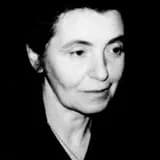
Olga Ladyzhenskaya died on January 12, 2004, in St. Petersburg, having shaped modern PDE theory and fluid dynamics.
Olga Ladyzhenskaya died on January 12, 2004, in St. Petersburg (formerly Leningrad), the city where she had spent most of her illustrious academic career at the Leningrad Branch of the Steklov Institute of Mathematics.
At the time of her death, she was recognized globally as one of the foremost mathematicians of the twentieth century, particularly celebrated for her rigorous work on partial differential equations, the Navier-Stokes equations governing fluid dynamics, and mathematical physics more broadly. She had continued to be mathematically active into her later years, publishing papers, mentoring students, and participating actively in the international mathematical community even after decades of work.
Her death marked the end of an era for Russian mathematics; she was among the last of a generation of Soviet mathematicians who had survived Stalinist repression, world war, and the isolation of the Cold War to become towering figures in global science. Numerous obituaries and tributes appeared in mathematical journals worldwide, including the Notices of the American Mathematical Society, honoring her as a brilliant researcher, a devoted teacher, and a woman who overcame extraordinary personal and political barriers to reach the top of a male-dominated field.
Her legacy lives on through the many theorems, inequalities, and methods that bear her name, and through generations of mathematicians she trained in Leningrad/St. Petersburg.