← All women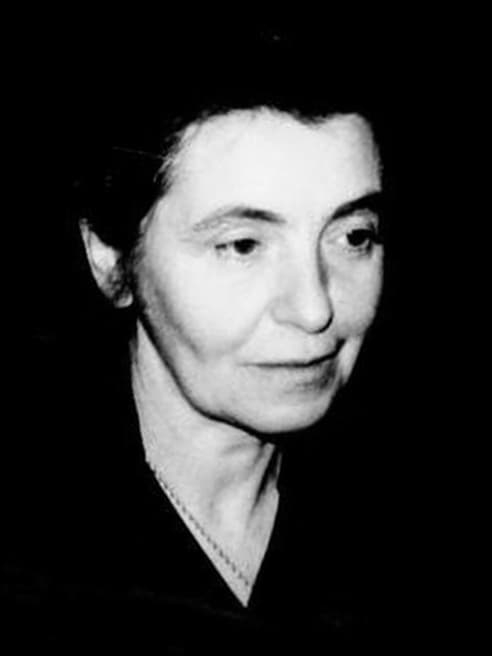
Russian · Science
Olga Ladyzhenskaya
March 7, 1922 – January 12, 2004
Early Life and Background
Olga Alexandrovna Ladyzhenskaya was born on March 7, 1922, in Kologriv, Russia. Her father, a mathematics teacher, was an early influence, fostering her interest in mathematics from a young age. However, tragedy struck when her father was arrested and executed during Stalin's Great Purge, profoundly impacting Olga's life and opportunities. Despite these challenges, she excelled academically in high school.
Career Beginnings and Development
After overcoming initial obstacles due to her family's political background, Olga was admitted to Leningrad University, where she studied under the supervision of renowned mathematicians Ivan Petrovsky and Sergey Sobolev. Her early career was marked by her PhD studies focusing on the theory of partial differential equations (PDEs), which were central to various physics and engineering problems.
Major Works and Accomplishments
Ladyzhenskaya is best known for her work on the Navier-Stokes equations, which describe the motion of fluid substances. She formulated and proved important results regarding the existence and smoothness of solutions to these equations in two dimensions, a cornerstone of modern mathematical fluid dynamics. Additionally, she contributed significantly to the development of functional analysis methods applicable to PDEs.
Her most celebrated paper, co-authored with Nina Ural'tseva, provided significant advancements in boundary value problems for elliptic equations. Ladyzhenskaya was not only a theoretician but also emphasized the applied aspects and the potential impact on engineering and physical sciences. Her work laid foundational understandings that have been critical in fields ranging from meteorology to aerospace engineering.
Awards and Honors
Throughout her distinguished career, Ladyzhenskaya received numerous accolades, including the State Prize in 1969 and becoming a member of the Russian Academy of Sciences. Globally recognized as a leader in her field, she was invited to a plethora of international conferences and served on the editorial boards of several scientific journals.
Personal Life
Olga's personal life was deeply intertwined with her professional endeavors. A devout scholar, her social connections were primarily with her students and academic peers. Despite the personal adversities she faced, including the political climate that impacted her family, she remained dedicated to her research and teaching.
Legacy and Historical Impact
Ladyzhenskaya's legacy transcends her individual contributions to mathematics; she is celebrated as a role model for women in science, overcoming gender and political barriers. In addition to her direct contributions, her textbooks and published papers continue to educate and inspire new generations of mathematicians around the world.
Later Life and Death
In her later years, Olga continued to be active in academic circles, participating in conferences and mentoring students. She passed away on January 12, 2004, leaving behind a legacy of groundbreaking work and a path opened wider for women in mathematics.
Dated achievements
2 indexed.
- Mar071922Science
Born in Kologriv, Soviet Russia
Olga Ladyzhenskaya was born on March 7, 1922, in Kologriv, in the Kostroma region of Russia.
View details Olga Ladyzhenskaya - Wikipedia - Jan122004Science
Died in St. Petersburg, Russia
Olga Ladyzhenskaya died on January 12, 2004, in St. Petersburg, having shaped modern PDE theory and fluid dynamics.