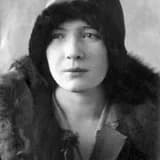
As the Nazi Siege of Leningrad began, Berggolts started broadcasting daily on Leningrad Radio, sustaining civilian morale with poetry and personal reflections.
When German forces encircled Leningrad in September 1941, beginning a siege that would last 872 days and claim over a million civilian lives, Olga Berggolts remained in the city rather than evacuate. She became a regular broadcaster on Leningrad Radio, delivering poems, speeches, and personal reflections to a starving, freezing, terrorized population.
Her voice, transmitted through loudspeakers across the city even as bombs fell and rations dwindled to near-starvation levels, became one of the few threads connecting isolated citizens to a sense of shared humanity and resistance. She spoke of grief, endurance, and hope without the hollow triumphalism of official propaganda, which gave her words extraordinary authenticity and emotional power. Leningraders came to call her the "Voice of Leningrad" or the "Leningrad Madonna".
During this period she wrote some of her most enduring works, including the poem cycle later published as Leningradskaya Tetrad (Leningrad Notebook, 1942) and the long poem Fevralsky Dnevnik (February Diary, 1942). Her radio broadcasts and poetry are credited with playing a genuine role in sustaining civilian morale during one of the most catastrophic urban sieges in modern history. Her later line, inscribed at the Piskaryovskoye Memorial Cemetery, 'No one is forgotten and nothing is forgotten,' became a defining epitaph for Soviet memory of the war.