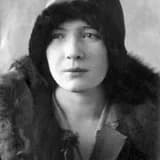
Olga Berggolts died on 13 November 1975 in Leningrad at age 65, having become one of the most beloved poetic voices of the Soviet wartime generation.
Olga Berggolts died on 13 November 1975 in Leningrad (now St. Petersburg) at the age of 65. Her later decades had been marked by declining health, alcoholism, and a fraught relationship with Soviet authorities who alternately celebrated and censored her work, particularly her unpublished memoirs and diaries that candidly described Stalinist repression, her own imprisonment in 1938–1939, and the horrors of the siege beyond official narratives.
Despite the personal and political struggles of her later life, she remained an iconic figure in Leningrad, revered by survivors of the siege for the solace her wartime broadcasts had provided. She was buried at the Literatorskie Mostki cemetery in St. Petersburg, a resting place reserved for distinguished writers and cultural figures.
Her death was widely mourned, and in the years following, her reputation only grew as more of her suppressed writings came to light, revealing a more complex and critical voice than the state-sanctioned image of the wartime radio poet. Streets, plaques, and memorials across St. Petersburg commemorate her, and her wartime line inscribed at the Piskaryovskoye Memorial Cemetery remains one of the most quoted phrases in Russian memorial culture. Her legacy endures as a testament to the power of literature and human voice amid catastrophe, and as an early example of a woman writer whose public persona as comforter concealed a private history of trauma and dissent.