← All women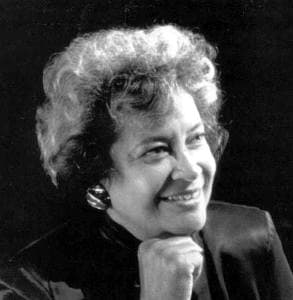
American · Arts
Norma Sklarek
April 15, 1926 – February 6, 2012
Early Life and Background
Norma Merrick Sklarek was born on April 15, 1926, in Harlem, New York, the only child of Dr. Walter Ernest Merrick, a physician, and Amelia (Amy) Willoughby Merrick, a seamstress.[1][3][5][7] Both parents had emigrated from Trinidad, bringing West Indian heritage and values that emphasized education, discipline, and practical skills. The family later settled in Brooklyn, but her early years in Harlem placed her within a vibrant African American and Caribbean community.[1][5]
Her father introduced her to hands-on work around the house, including carpentry and painting, and recognized her aptitude for mathematics and drawing.[1][8][11] This combination of technical ability and artistic interest led him to suggest that she study architecture, a field virtually closed to Black women at the time. Growing up in the era of Jim Crow, Sklarek was acutely aware that racial segregation and gender bias shaped opportunities in education and employment, yet her parents expected her to excel academically.
Norma attended Hunter College High School, an academically rigorous public school for gifted girls in New York City, where she strengthened her foundation in mathematics and science.[1][3] Her success there enabled her to pursue higher education during a period when few women, and fewer still African American women, enrolled in architectural programs. These early experiences—immigrant family background, exposure to practical skills, and high-level schooling—formed the foundation for her pioneering career.
Education and Formative Influences
After secondary school, Sklarek enrolled at Columbia University, studying architecture at a time when women were rare in the discipline. Some accounts note that she entered via Barnard College, Columbia’s affiliated women’s college, but her professional degree is consistently recorded as a Bachelor of Architecture (B.Arch.) completed in 1950.[2][3][5] She was one of only two women and the only African American in her architecture class, facing an often hostile environment in which faculty and peers doubted women’s suitability for the profession.[3][8][11]
The curriculum demanded long studio hours, structural engineering courses, and design critiques. Sklarek later recalled that she spent extensive time in the studio, working harder than many classmates to prove her competence.[1][3] Despite limited support, she persisted, driven both by intellectual curiosity and a determination to succeed in a field that fascinated her.
In 1950, she graduated with her B.Arch., becoming the first Black woman to earn an architecture degree from Columbia University.[1][3][5] This achievement was significant not only for the university but also for the broader history of architectural education; Columbia was a major gateway into high-profile practice, and her presence within its alumni network challenged the racial and gender homogeneity of the profession’s pipeline.
Yet her degree did not immediately translate into employment. After graduation, she applied to numerous architectural firms in New York and was rejected repeatedly—accounts often cite nineteen refusals—without clear reasons, though discrimination based on both race and gender was pervasive.[2][3][8] These experiences underscored for her that the barriers she faced were not merely academic but deeply structural.
Career Beginnings in New York
Unable to secure a position in a private firm, Sklarek began her professional career at the New York City Department of Public Works (or Department of Public Works of New York State, as some sources describe), working as a draftsperson.[2][3][8] There she engaged in routine architectural and engineering drawings, gaining practical experience in construction documents and public-sector projects.
While employed at Public Works, she prepared for the New York State architecture licensing examination. The exam was notoriously difficult, but she passed it on her first attempt in 1954, becoming the first Black woman licensed as an architect in New York State.[3][8][9] Some sources describe her as the first African American woman licensed as an architect in the United States, although earlier Black women architects had registered in other jurisdictions; nonetheless, her New York licensure remains a major landmark.[8][9]
This credential improved her career prospects, and she soon joined the prominent firm Skidmore, Owings & Merrill (SOM) in New York.[2][3][8] At SOM, she worked on large, complex projects, gaining experience in the kinds of commercial and institutional buildings that would later define her career. Her technical skill and reliability led to increasing responsibility, even as she continued to encounter sexism and racism within the profession.
In 1959, Sklarek became the first Black woman member of the American Institute of Architects (AIA).[3][6][7] Admission to the AIA provided professional recognition and access to a national network of architects, marking her growing prominence in the field. Her membership also represented a symbolic breach in the racial and gender barriers that had long characterized the organization.
Move to California and Rise at Gruen Associates
After about a decade in New York, Sklarek relocated in 1960 to Los Angeles, California, where she joined Gruen Associates, the influential firm founded by Victor Gruen.[1][3][11] Gruen was known for pioneering work in shopping center design and urban planning. At Gruen Associates, Sklarek quickly distinguished herself as a production and project architect, responsible for coordinating complex design and construction processes.
In California she obtained her state architect’s license in 1962, becoming the first African American woman architect licensed in California.[1][3][7] The license allowed her to assume greater responsibility on projects and solidified her professional standing in the rapidly growing West Coast market.
Within Gruen Associates, Sklarek rose through the ranks, eventually becoming director of architecture and a vice president—roles extremely rare for women, especially Black women, in large commercial firms during the 1960s.[1][3] She managed multidisciplinary teams, oversaw budgets and schedules, and ensured technical quality across a range of projects.
Her tenure at Gruen included work on several major commissions, often in collaboration with architects such as César Pelli. She served as production architect on projects including the United States Embassy in Tokyo (completed 1976), the Pacific Design Center in West Hollywood (nicknamed the "Blue Whale"), San Bernardino City Hall, and the Columbus Courthouse Center in Indiana.[3][11] On the Tokyo embassy, sources note that she also served as design architect, underscoring her creative as well as technical contributions.[11]
Major Works and Accomplishments
Sklarek’s work is best known for its scale and complexity rather than for signature stylistic gestures. Her expertise lay in production architecture—the translation of design concepts into buildable, coordinated construction documents and the management of the construction process.
Among her most notable projects are:
- United States Embassy, Tokyo, Japan (completed 1976) – As production and design architect, she coordinated a complex diplomatic facility in a foreign context, navigating stringent security requirements and cross-cultural collaboration.[3][11]
- Pacific Design Center, West Hollywood, California – Known as the "Blue Whale" for its striking blue glass volume, the center became a key venue for the design and furniture industries. Sklarek served as production architect, ensuring the project’s technical feasibility and delivery.[11]
- San Bernardino City Hall, California – She had a major role in the development of this civic building, managing the technical and logistical demands of public-sector architecture.[11]
- Columbus Courthouse Center, Indiana – Her work on this complex contributed to the modernization of judicial facilities in the Midwest.[11]
- Terminal One at Los Angeles International Airport (completed in time for the 1984 Olympics) – Sklarek played a leading role in the project’s realization, helping to modernize one of the world’s busiest airports and shape the visitor experience during a global event.[3][11]
- Mall of America (later work) – She contributed to the design and production of this enormous retail complex, further cementing her reputation in large-scale commercial architecture.[11]
Her career also included numerous shopping centers and office towers, projects that required precise coordination among architects, engineers, contractors, and clients. These buildings, though sometimes anonymous in public memory, constitute significant portions of the urban and suburban landscapes of the United States.
Leadership at Welton Becket & Associates
After leaving Gruen Associates, Sklarek joined Welton Becket & Associates, a major Los Angeles firm, as a vice president, beginning in 1980.[1] At Welton Becket, she became the firm’s first female licensed architect and its first woman hired to a senior position, breaking through entrenched gender barriers in corporate architectural practice.
In this role, she oversaw significant projects, supervised staff, and shaped firm policy and culture. Her leadership demonstrated that women could succeed at the highest levels of architectural management, not only as designers but also as executives. She continued to hire and mentor women and minority architects, using her authority to broaden participation in the firm.[1]
Her presence as a Black woman vice president in a large commercial firm was symbolically powerful, especially for younger architects who had rarely seen women of color in senior roles. It reinforced her reputation as a "woman of firsts" and extended her impact beyond individual projects to the organizational structures of the profession.
Founding Siegel, Sklarek, and Diamond
In 1985, Sklarek co-founded the firm Siegel, Sklarek, and Diamond with architects Margot Siegel and Katherine Diamond.[1][5][7][8] This practice was notable for being woman-owned and woman-led, and Sklarek became the first African American woman to found and co-own a woman-owned architectural firm.
The firm specialized in large commercial and institutional projects, drawing on its principals’ extensive experience. Under this arrangement, Sklarek had greater control over staffing and promotion, and she used that control to support women and minority architects.[1][7] The firm is often described as one of the largest female-owned architectural practices in the United States at the time.[11]
Siegel, Sklarek, and Diamond’s formation represented an important evolution in Sklarek’s career: she was no longer just breaking barriers within existing institutions but creating new structures that embodied more equitable values. The firm provided a model of women’s leadership in architecture and helped normalize the idea of women as firm principals in a field that had long relegated them to supporting roles.
Awards, Honors, and Recognition
Over the course of her career, Sklarek received numerous honors acknowledging both her professional achievements and her role in challenging discrimination. The most prominent include:
- Fellowship in the American Institute of Architects (FAIA, 1980) – She became the first African American woman Fellow of the AIA, recognizing her contributions to architecture and society.[3][6][7][11]
- Whitney M. Young Jr. Award (AIA, 2008) – This award honors architects committed to social responsibility and civil rights. In presenting it, AIA leaders called her the "Rosa Parks of architecture", highlighting her role in confronting racial and gender barriers.[1][3][5]
Institutional recognition also came through archival preservation. The Smithsonian National Museum of African American History and Culture holds the Norma Merrick Sklarek Archival Collection, documenting her career and impact.[6][7] Her life and work have been profiled by the Beverly Willis Architecture Foundation in its "Pioneering Women of American Architecture" project, by Columbia University, and by various media outlets and educational resources.[1][5][8][11]
Posthumous tributes in newspapers such as the Los Angeles Times underscore her reputation as a groundbreaking figure whose achievements were widely respected within the profession, even if they were not always known to the general public.[3]
Personal Life
Sklarek’s personal life intertwined with her professional trajectory. She married and divorced in the early 1950s, and later married architect Rolf Sklarek, with whom she shared professional interests; she took his surname during this marriage.[8][9] After Rolf’s death, she married Cornelius Welch, a physician, in 1985Gregory Ranson, David Rairweather, and Susan.[9]
Balancing family responsibilities with a demanding career was challenging, particularly at a time when workplace structures assumed that professionals had wives at home to manage domestic tasks. Sklarek’s ability to raise children while preparing for licensing exams and managing large projects added another dimension to her pioneering status.
Colleagues and profiles often describe her as reserved but determined, focused on competence and integrity. She did not seek celebrity status but instead prioritized the successful realization of projects and the advancement of those she mentored. Her personal resilience—maintaining family life while operating in a hostile professional environment—forms an important part of her historical significance.
Legacy and Historical Impact
Norma Merrick Sklarek has been widely described as a "woman of firsts" and the "Rosa Parks of architecture".[1][6] Her legacy lies in both the buildings she helped create and the structural barriers she helped dismantle. She was among the first Black women to achieve licensure and senior leadership in major firms, and she opened institutional doors as the first Black woman member and Fellow of the AIA.
Her impact can be understood in several dimensions:
- Professional Integration: Sklarek’s licensure and membership achievements challenged the exclusion of Black women from architecture’s credentialing and professional bodies, contributing to a gradual diversification of the field.[3][6][7]
- Institutional Change: As a senior executive and firm co-founder, she used her positions to hire and promote women and minority architects, altering workplace cultures and creating opportunities that had previously been unavailable.[1][7]
- Built Environment: Her role in delivering major projects across the United States and abroad ensured that the work of a Black woman architect is literally embedded in significant civic, commercial, and diplomatic structures, even if her name is not always publicly visible.[3][11]
- Symbolic Representation: For younger generations, especially Black women and other underrepresented groups, her career provides a powerful example that architecture is a domain they can enter, shape, and lead.[1][5][8]
Her story has been increasingly highlighted in recent years as scholars and institutions seek to correct the historical record and acknowledge the contributions of women and people of color to architecture. Educational resources, podcasts, articles, and children’s materials now present her as a model of perseverance and excellence.[1][5][8][11]
Later Life and Death
In her later years, Sklarek remained a respected figure within the profession. She continued to influence architecture through mentorship, consulting, and public recognition of her achievements. Her contributions were formally honored with the Whitney M. Young Jr. Award in 2008, explicitly linking her work to civil rights and social responsibility.[1][3][5]
On February 6, 2012, Sklarek died of heart failure at her home in Pacific Palisades, California, at age 85.[1][3][7] Obituaries and memorials emphasized both her professional accomplishments and the obstacles she had overcome. They noted that she had worked on some of the most recognizable buildings in the United States and abroad, even though she had not always received public credit.
After her death, interest in her life grew, with researchers and institutions collecting and preserving her papers and oral histories. The Norma Merrick Sklarek Archival Collection at the Smithsonian and the profile by the Beverly Willis Architecture Foundation are key resources for understanding her legacy.[1][6][7] Her story now occupies an important place in the historiography of women in architecture and African American professional history.
Norma Merrick Sklarek’s life demonstrates how individual determination and skill can challenge deeply entrenched systems of exclusion. Through her work, mentorship, and quiet insistence on competence over prejudice, she helped reshape the architectural profession, leaving a legacy that continues to influence discussions of diversity, equity, and excellence in the built environment.
Dated achievements
11 indexed.
- Apr151926Arts
Birth of Norma Merrick Sklarek in Harlem, New York
Born April 15, 1926, in Harlem, New York, to Trinidadian immigrant parents Walter and Amy Merrick.
View details Norma Merrick Sklarek – Wikipedia - Jun011950Arts
First Black woman to earn an architecture degree from Columbia University
Graduated from Columbia University in 1950, becoming the first Black woman to earn an architecture degree there (date approximate).