← All women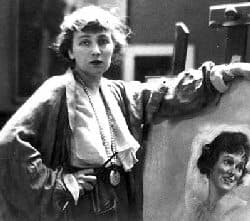
American · Arts
Neysa McMein
January 25, 1888 – May 12, 1949
Early Life and Background
Neysa McMein was born Marjorie Moran McMein in Quincy, Illinois, in 1888, the daughter of newspaper editor Harry Moran McMein and Isabelle Lee Parker McMein.[2][3][5][8] Growing up in a Midwestern city with a father deeply involved in journalism exposed her early to print culture, public affairs, and the power of mass communication.[2] This environment would later prove significant for a woman who built her career supplying images to the very magazines that shaped American opinion.
Sources disagree on details of her birth name and exact birth date, reflecting the uneven documentation of women’s lives in the late nineteenth century. Encyclopedia.com, relying on earlier biographical work, gives her birth as "Margary Edna McMein" on January 24, 1888, while other research and more recent biographical studies identify her as Marjorie (or Marjorie Moran) McMein and note a January 25, 1888 birth.[2][5][8] Whatever the variant, sources agree that she was born in 1888 in Quincy and that she later adopted the professional name Neysa Moran McMein.
McMein attended the local high school in Quincy and displayed early artistic talent. After graduation, she moved to Chicago to pursue formal training in art, enrolling at the School of the Art Institute of Chicago, one of the leading art schools in the United States.[1][2][3][6] There she studied commercial art, acquiring skills in drawing, composition, and design that were essential for illustration. Her experience in Chicago initiated her movement from provincial Illinois to the larger urban centers that would define her career.
Education and Name Change
Following her initial studies in Chicago, McMein relocated to New York City around 1913, drawn by the city’s theatrical and artistic opportunities.[1][3][7] Initially she pursued acting, appearing on stage in minor roles while seeking work in illustration.[7] New York exposed her to a circle of writers, artists, and performers, many of whom would later form part of her social and professional milieu.
In New York, McMein made a decisive act of self‑reinvention. On the advice of a numerologist, she changed her first name from Marjorie to Neysa, believing that the unusual new name would bring greater luck and commercial success.[1][3][5][7] She later added "Moran"—her father’s middle name—as a second given name in some professional contexts.[6][7] This self‑fashioning, common among performers but less typical among women illustrators, reflected her instinct for branding and persona. The distinctive name Neysa set her apart in an increasingly crowded field of commercial artists.
McMein supplemented her Chicago training by studying at the Art Students League of New York, an institution that attracted many aspiring illustrators and painters.[1][2][6][10] There she refined her technical skills and began to shift her focus from acting to illustration, finding that drawing offered more stable prospects. By the mid‑1910s, she had committed fully to making her living as a commercial artist.
Career Beginnings in Illustration
McMein’s professional breakthrough came in the mid‑1910s. In 1914 she sold her first commercial illustration to the Boston Star, marking her entry into the competitive world of newspaper and magazine art.[3] Around the same time, she began securing assignments for illustrations and cover designs from New York publishers.
In 1916, McMein began creating covers for The Saturday Evening Post, then one of the most widely read magazines in the United States.[3][4][9] This relationship would become central to her career; over the next two decades she produced nearly sixty covers for the Post, many featuring fashionable, modern women rendered in a distinctive painterly style.[3][9][11] Her early covers appeared alongside work by leading illustrators such as J. C. Leyendecker and Norman Rockwell, placing her in an elite cohort and making her one of the rare women working at that level in commercial illustration.[4][9]
McMein’s early cover subjects demonstrated her range. Wartime images such as "Woman Pilot" (August 11, 1917) and "Red Cross Nurse" (August 31, 1918) engaged directly with World War I themes, while more whimsical or fashion‑oriented covers—"Hat with Birds" (March 9, 1918), "Bathing Beauty" (July 19, 1919), and "Christmas Shopper" (December 13, 1919)—established her as an interpreter of modern femininity.[4][9] These works helped build her reputation as an artist who could combine topical concerns with appealing, accessible imagery.
World War I Service and Activism
During World War I, McMein extended her work beyond magazine illustration into direct support for the war effort. She created posters for the United States government, the American Red Cross, and the YMCA, many depicting women and girls aiding soldiers or working in relief roles.[5][7] Such posters formed part of the broader propaganda campaign encouraging enlistment, fundraising, and volunteer service.
McMein also traveled to France as a volunteer entertainer, performing for American soldiers—often referred to as "Doughboys"—under the auspices of the YMCA.[5] She was part of a group that included other women performers and writers, and her presence overseas underscored the expanding role of women in morale‑building activities during the war. French sources note that she was named a non‑commissioned officer in the United States Marine Corps for her contributions, though details of the appointment are limited.[6]
Back in New York, McMein became involved in women’s suffrage activism. She marched in demonstrations and lent her talents to the cause. Later commentary by the Saturday Evening Post and historians describes her as a "prominent suffragette" and political activist, suggesting she used both her public persona and her artwork to advance women’s rights.[4][5][9] Her 1920 Post cover "Woman Voter" explicitly references the struggle for women’s enfranchisement at a critical moment in the campaign for the Nineteenth Amendment.[4]
Rise as a Jazz Age Illustrator
In the years after World War I, McMein emerged as one of the highest‑paid and most in‑demand female artists of the Jazz Age.[5][11] Her images of chic, independent young women became synonymous with the new decade’s style, capturing the spirit of the "flapper" era without always resorting to its most exaggerated clichés.
From 1923 to 1937, McMein painted all of the covers for McCall’s, a leading women’s magazine, making her work a regular presence in households across the United States.[3][6] French sources extend the run slightly, noting that she produced all McCall’s covers from 1923 to 1938.[6] Regardless of the precise end date, this long‑term contract indicated extraordinary trust in her ability to define the magazine’s visual identity.
McMein’s magazine work was not limited to McCall’s and the Saturday Evening Post. She produced covers and interior illustrations for Collier’s, McClure’s, Woman’s Home Companion, Photoplay, Liberty, and other mass‑market periodicals.[11] Her images typically centered young women, often in close‑up portraits that emphasized facial expression and fashion details. The American Art Archives notes that her work "sold millions of mags," a testament to her commercial impact.[11]
Contemporary observers and later writers describe McMein’s style as combining glamour with psychological insight. Her women are consistently stylish—wearing feathered berets, red floppy hats, fur wraps—but they rarely appear vacant. Instead, they meet the viewer’s gaze, suggesting inner life and agency. This approach distinguished her from more sentimental or decorative illustrators and contributed to her reputation as a serious artist within the commercial field.
Advertising and the Creation of Betty Crocker
In addition to magazines, McMein became a sought‑after advertising illustrator. She produced memorable campaigns for Palmolive soap and created images for brands including Cadillac, Lucky Strike cigarettes, Adam’s Gum, Coca‑Cola, Hummingbird Hosiery, Gainsborough Hair Nets, and Colgate.[11] Advertising allowed her to translate her portrait style into persuasive images that linked products with aspirational identities, particularly for female consumers.
One of her most historically significant advertising commissions was for General Mills. In 1936, McMein drew the first Betty Crocker illustration, giving a face to the already‑established brand persona of a trustworthy home‑economics adviser.[4][9][11] Working from input provided by General Mills’ female staff, she created a composite "ideal" housewife, whose portrait appeared in packaging and promotional materials. This image became foundational for decades of Betty Crocker advertising and remains an iconic figure in the history of American consumer culture.
McMein also produced advertising art for Gainsborough Hair Net in 1924, among other campaigns, indicating her ability to adapt to different products while maintaining a recognizable aesthetic.[11] Her presence in both editorial and advertising contexts underscores the extent to which her imagery permeated everyday life for American women during the interwar years.
Portraiture and High‑Profile Commissions
Beyond magazines and advertising, McMein built a substantial career as a portrait painter. She cultivated a glamorous public identity in New York City, living in a studio above Carnegie Hall where she hosted regular parties for a wide circle of artists, writers, and performers.[4][9][11] Her social network included figures such as Dorothy Parker, Robert Benchley, Harpo Marx, Irving Berlin, Charlie Chaplin, Jascha Heifetz, Noel Coward, Mary Pickford, H. G. Wells, and George Bernard Shaw.[4][7][9][11] These relationships facilitated portrait commissions and enhanced her visibility.
McMein became known for painting portraits of presidents. She executed portraits of Warren G. Harding and Herbert Hoover, and some accounts suggest she may have been among the first female artists invited to the White House to paint a sitting president.[2][4][9] Whether or not she was the absolute first, the commission represented a significant recognition of her skill and status in a field traditionally dominated by male artists.
Her portrait subjects extended to many other prominent individuals, including actresses, writers, and society figures. These works, often more formally painted than her magazine illustrations, demonstrated her command of likeness and character and allowed her to engage with art worlds beyond commercial publishing.
Personal Life and Relationships
McMein’s personal life was as notable as her professional achievements. In 1923, she married John Gordon Baragwanath, an engineer and writer.[2][6] The couple had a daughter, Joan Gordon Baragwanath, and McMein also became stepmother to Baragwanath’s son from a previous relationship.[2] Despite marriage and motherhood, she continued to work at a high professional level, challenging conventional expectations that women’s careers should end or diminish after marriage.
Her New York studio became a hub of social activity. McMein was closely associated with the Algonquin Round Table, an informal group of writers, critics, and wits who met regularly at the Algonquin Hotel.[4][5][11] Although she was not a writer, she was a "member" of the Algonquin club in spirit and practice, hosting many of its luminaries at her parties. The atmosphere of sharp humor and creative exchange that characterized the Round Table informed her own persona as a glamorous, witty artist.
Biographical accounts describe McMein as modern and independent, a woman who crafted her own image carefully. She dressed fashionably, moved in bohemian and elite circles, and embraced new forms of entertainment and social games. Some writers credit her with inventing or popularizing the scavenger hunt as a social pastime in the late 1920s, though precise documentation of this claim is limited.[5] Regardless, such anecdotes underscore her role in shaping the informal culture of interwar New York.
Awards, Honors, and Later Career
McMein’s reputation endured beyond the height of the Jazz Age. She continued to work through the 1930s, producing covers, advertisements, and portraits. French sources note that she drew a comic strip titled "Deathless Deer" with scenarios by Alicia Patterson, although details on dates and circulation remain sparse.[6]
Her contributions to illustration were formally recognized posthumously. In 1984, more than three decades after her death, McMein was inducted into the Society of Illustrators Hall of Fame, an honor reserved for artists who have made outstanding and lasting contributions to the field.[7] This recognition placed her alongside many of the most celebrated illustrators in American history and confirmed her importance in shaping twentieth‑century visual culture.
As one of very few women to achieve sustained prominence in commercial illustration during the early twentieth century, McMein served as a model for subsequent generations of female artists seeking professional careers in advertising, publishing, and design. Her success demonstrated that women could not only participate in these fields but also lead them.
Legacy and Historical Impact
McMein’s legacy rests on several intertwined achievements. First, she helped define the visual image of the modern American woman in the early twentieth century. Her magazine covers, advertising images, and portraits presented women as stylish, self‑possessed, and active, departing from older models of domestic, passive femininity.[3][4][9][11] These images circulated widely, shaping both male and female perceptions of contemporary womanhood.
Second, she broke barriers in a male‑dominated profession. At a time when most major illustrators were men, McMein secured contracts with leading magazines, commanded high fees, and received prestigious portrait commissions.[4][5][11] Her visibility made it harder to argue that women lacked the skill or reliability necessary for large commercial assignments.
Third, through works such as her "Woman Voter" cover and her involvement in suffrage activism, she contributed to the visual culture of women’s rights.[3][4][5] She translated political aspirations into attractive, aspirational imagery that made the idea of women voters and public actors seem natural rather than threatening.
Fourth, her creation of the first Betty Crocker portrait in 1936 had an enduring impact on consumer culture. Betty Crocker became one of the most recognizable female figures in American advertising, and McMein’s original conception established the template.[4][9][11] The character embodied tensions in women’s history—between professional achievement and domestic ideals—but also illustrated how women artists shaped the very images that defined those ideals.
Finally, McMein’s public persona—as a glamorous, socially engaged woman moving among writers, musicians, and actors—expanded the archetype of the woman artist in popular imagination. She was neither isolated nor purely bohemian; she occupied a space at the intersection of commerce, culture, and social elite.
Later Life and Death
By the 1940s, McMein’s career slowed as tastes shifted and new media emerged, but she remained respected for her earlier contributions. She continued to live and work in New York, maintaining relationships with friends from the Algonquin circle and the broader world of arts and letters.
In 1949, McMein underwent surgery for cancer. During the procedure she suffered an embolism, which proved fatal. She died in New York City on May 12, 1949, at the age of 61.[2][3][10][12] Her remains were interred at Rhinebeck Cemetery in New York State.[6] Obituaries and later historical accounts noted her role as a pioneering woman in illustration and recalled her vibrant social presence as much as her work.
In the decades after her death, the availability of her magazine covers in archives and collections—such as those of The Saturday Evening Post—has allowed scholars and enthusiasts to reassess her influence. She is now recognized not only as a Jazz Age icon but also as a significant figure in the history of women’s labor, media representation, and commercial art.
Today, Neysa McMein stands as a key example of how a woman could navigate and reshape the early twentieth‑century visual economy: she crafted images that defined an era, advocated for women’s rights, and built a successful career in a field that rarely welcomed women at its highest levels.
Dated achievements
15 indexed.
- Jan251888Arts
Birth of Neysa McMein
Neysa McMein was born in Quincy, Illinois on January 25, 1888.
View details Neysa McMein: Illustrator and Iconic Figure - Aug111917Arts
Saturday Evening Post cover: Woman Pilot
McMein's 'Woman Pilot' cover for the Saturday Evening Post was published on August 11, 1917.