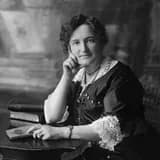
As one of the 'Famous Five,' McClung won the Persons Case, ruling women are 'qualified persons' eligible for Senate appointment.
On October 18, 1929, the Judicial Committee of the Privy Council in Britain — then Canada's highest court of appeal — issued its historic ruling in Edwards v. Canada (Attorney General), commonly known as the Persons Case. The decision declared that women were indeed "qualified persons" under the British North America Act and therefore eligible to be appointed to the Senate of Canada.
Nellie McClung was one of the "Famous Five" — alongside Emily Murphy, Irene Parlby, Henrietta Muir Edwards, and Louise McKinney — who petitioned the Supreme Court of Canada in 1927 to clarify the meaning of "persons" in the constitution. When the Supreme Court ruled against them in 1928, the women appealed to the Privy Council in London, which overturned the decision.
Lord Sankey, delivering the judgment, famously stated that the exclusion of women from public office was "a relic of days more barbarous than ours." The ruling was a watershed moment for women's legal and political rights in Canada, opening the door for women to be appointed to the Senate and reshaping constitutional interpretation regarding gender equality. The Famous Five, including McClung, are commemorated on the Canadian ten-dollar bill and with statues on Parliament Hill, and this date remains a cornerstone of Canadian women's legal history.