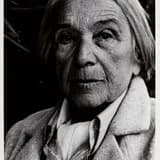
Sarraute's novel Portrait d'un inconnu was published with a preface by Jean-Paul Sartre, boosting her literary recognition.
In 1948, Nathalie Sarraute published Portrait d'un inconnu (Portrait of a Man Unknown), a novel that had initially struggled to find a publisher and had been rejected multiple times through the 1940s. Its eventual release was accompanied by a preface written by Jean-Paul Sartre, one of the most influential intellectuals in France at the time, who praised the work as an example of an "anti-novel."
Sartre's endorsement brought Sarraute's radical narrative techniques—her dissection of the subconscious, inarticulate tensions beneath everyday conversation, later termed "tropisms"—to a much wider audience. The novel rejected traditional plot and character development in favor of an intense focus on fleeting psychological sensations, aligning Sarraute with the nascent movement that would become known as the Nouveau Roman (New Novel).
This publication marked a pivotal turning point in Sarraute's career, transforming her from a little-known writer into an emerging figure of the French avant-garde. It cemented associations between her work and existentialist circles, even though she maintained her own distinct aesthetic project separate from Sartre's philosophy. The novel remains a foundational text in understanding the shift in French fiction away from realism and toward introspective, fragmented narrative forms in the postwar period.