← All women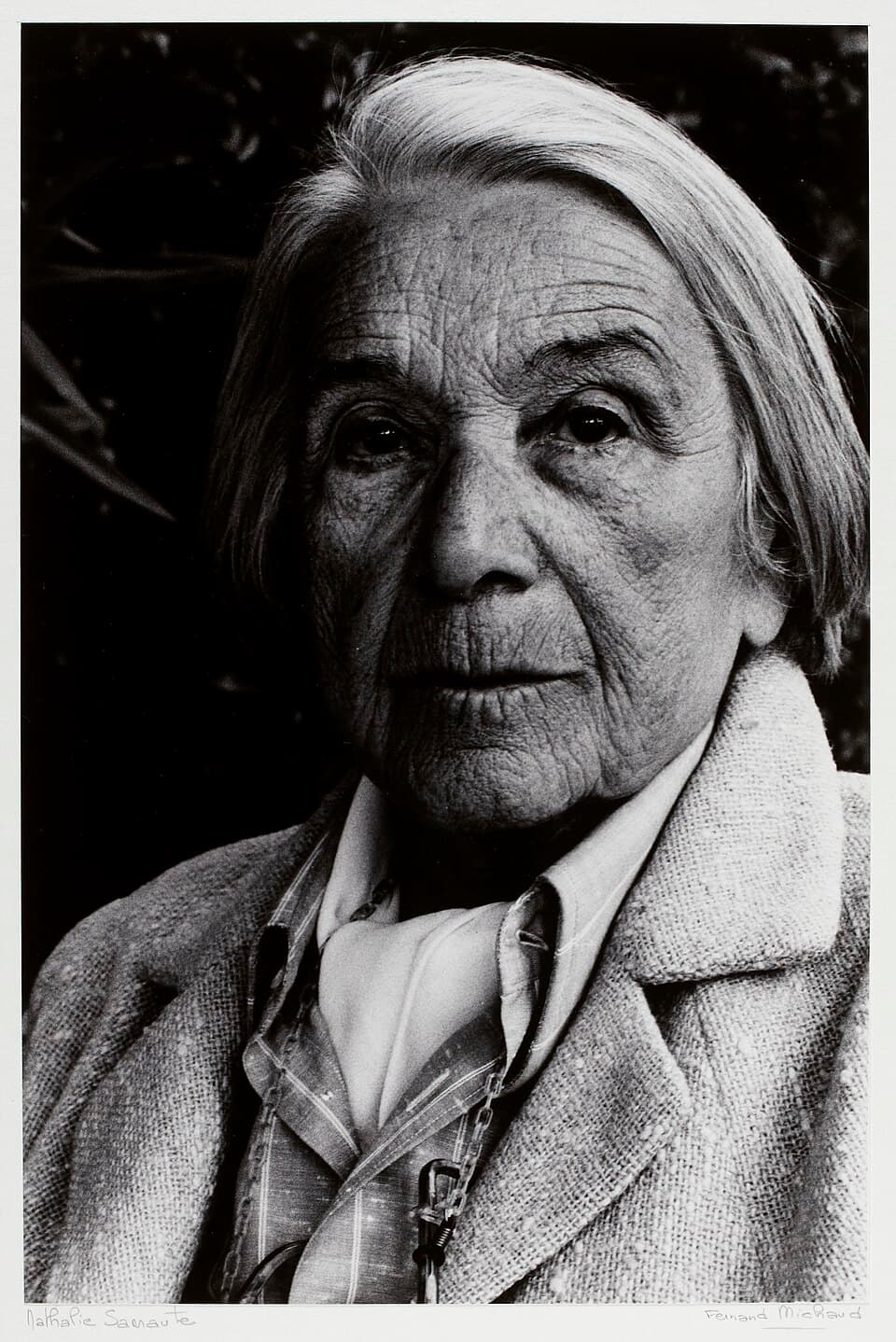
French, Russian · Literature
Nathalie Sarraute
July 18, 1900 – October 19, 1999
Early Life and Background
Nathalie Sarraute, born on July 18, 1900, in Ivanovo, Russia, was originally named Natalya Ilyinichna Tcherniak. Her parents were Russian Jews. She spent her early childhood between Russia and France, where her parents settled after their separation. Sarraute's educational journey began in France, where she attended various law and literature courses, eventually studying at the Sorbonne, Oxford, and the University of Berlin.
Her formative years exposed her to the cultural turmoil of early 20th-century Europe, shaping her future literary perspective. This multi-cultural background played a significant role in her later writings, deeply influencing her narrative style and themes.
Career Beginnings and Development
Initially working in law, Sarraute turned her attention to literature in the 1930s. Her first major publication, Tropisms (1939), laid the foundation for her literary career. This collection of short sketches focused on the minute oscillations and nuances of human interactions. Despite its subtlety, the book attracted attention in literary circles for its novel approach.
A significant milestone in her career was joining the Nouveau Roman movement, which rejected traditional narrative in favor of fragmented, introspective character exploration. Sarraute became one of its leading figures, pioneering stream-of-consciousness storytelling.
Major Works, Discoveries, or Accomplishments
Her 1957 novel The Golden Fruits won the International Publishers’ Prize and confirmed her status as a leading novelist. This novel challenged traditional narratives and focused on collective human consciousness. Other critical works include Portrait of a Man Unknown (1947) and Do You Hear Them? (1972).
Awards, Honors, and Recognition Received
Throughout her life, Sarraute received numerous accolades. Her work, The Golden Fruits, was particularly celebrated, and she was awarded France's Prix International de Littérature. In addition, Sarraute was recognized globally for her significant contribution to literature.
Personal Life
Sarraute married Raymond Sarraute, a lawyer, in 1925, and they had three children. Her personal life was characterized by her deep involvement in the intellectual circles of her time, surrounded by prominent figures of French culture.
Legacy and Historical Impact
Sarraute's innovation in narrative form influenced subsequent generations, altering the course of literary fiction. Her techniques anticipated postmodern literary trends, embracing ambiguity and fragmentation. Though initially received with some skepticism, her works have become pivotal in understanding the evolution of modern literature.
Later Life and Death
Continuing to write well into her 90s, Sarraute's final novel, Here, was published in 1995. She passed away on October 19, 1999, leaving behind a profound legacy that continues to inspire literary scholars and writers.
Dated achievements
3 indexed.
- Jul181900Science
Birth of Nathalie Sarraute in Ivanovo, Russia
Born Natalia Tcherniak on July 18, 1900, in Ivanovo-Voznesensk, Russian Empire, into a Jewish family.
View details Nathalie Sarraute - Wikipedia - Jan191948Science
Publication of "Portrait d'un inconnu" with preface by Jean-Paul Sartre
Sarraute's novel Portrait d'un inconnu was published with a preface by Jean-Paul Sartre, boosting her literary recognition.