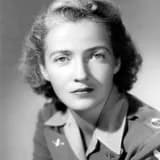
She qualifies as the first female pilot in the U.S. Army Air Forces, meeting AAF standards for the Ferrying Division.
On September 7, 1942, Nancy Harkness Love officially qualified as the first female pilot in the U.S. Army Air Forces (AAF), meeting formal requirements to serve in the Air Transport Command’s Ferrying Division.[9][11] This qualification marked the transition from her role as a civilian advocate for women pilots to a commissioned participant in the military structure.
To reach this point, Nancy had assembled and presented a roster of highly experienced women pilots and worked closely with military leaders such as Col. William H. Tunner to demonstrate their potential value as ferry pilots.[2][9] The AAF’s acceptance was deeply reluctant, reflecting prevailing views that flying military aircraft was too dangerous and technically demanding for women. Nancy herself underwent rigorous evaluation and check rides to satisfy commanders that she could handle high‑performance aircraft and complex procedures.
Being the first woman formally recognized as an AAF pilot was a genuine barrier‑breaking milestone. It established a precedent within the Army’s bureaucracy that women could be rated for operational flight duties, not just auxiliary or training roles. This status enabled her to lead the newly created Women’s Auxiliary Ferrying Squadron and gave her authority in negotiations over standards, assignments, and aircraft types.[9][10]
The impact of this event extended far beyond her individual career. Nancy’s qualification provided a critical proof of concept: if one woman could meet AAF standards, others could as well. It set the stage for the eventual integration of over 300 women into ferrying operations and influenced later decisions about women’s access to military pilot training. In the history of women’s military aviation, September 7, 1942 stands as the moment when the U.S. Army Air Forces formally opened the cockpit—however narrowly—to women.[9][11]