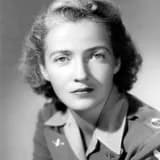
By August 1943 she is named WASP Executive in Air Transport Command, overseeing six ferrying squadrons and 300+ women pilots.
Around August 1, 1943, Nancy Harkness Love was appointed Women Airforce Service Pilots (WASP) Executive in the Air Transport Command, giving her staff responsibility for six ferrying squadrons and more than 300 women pilots.[9][2] This followed the merger of her Women’s Auxiliary Ferrying Squadron (WAFS) with Jacqueline Cochran’s Women’s Flying Training Detachment to form the unified WASP program.
In this executive role, Nancy coordinated ferrying operations, set standards for aircraft qualifications, and worked with male commanders to assign missions across the continental United States. She monitored safety records, advocated for expanded aircraft types women could fly, and ensured that the high professional standards she had introduced with WAFS were maintained as the organization grew.[2][9]
Although not a "first" in the sense of an initial barrier broken, this appointment was a sentinel moment in the institutionalization of women’s military aviation. It placed a woman in a senior operational staff position within the Air Transport Command, overseeing complex logistical missions involving front‑line aircraft. Her authority over such a large number of pilots demonstrated that women could not only fly but also manage large‑scale military aviation programs.
The impact of her August 1943 appointment persisted beyond the war. Nancy’s leadership helped establish best practices for integrating women into technical military roles, including careful selection, standardized training, and performance‑based advancement. However, despite her responsibilities, neither she nor her pilots received formal military status or veterans’ benefits at the time, highlighting the gap between operational reality and institutional recognition. This executive role remains a key moment in the story of women’s leadership in military aviation.[2][9]