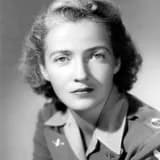
She becomes the first woman pilot to fly "the Hump" over the Himalayas between India and China on a combat ferrying mission.
On January 8, 1945, Nancy Harkness Love became the first woman pilot to fly "the Hump", the perilous air route over the Himalayas between India and China used to supply Allied forces.[8] The mission, arranged by Generals William Tunner and Edward H. Smith, involved flying a combat ferry over high mountains notorious for extreme weather, turbulence, and navigational hazards.
The Hump route was among the most dangerous in World War II aviation; thousands of pilots died in its storms and treacherous terrain. Women pilots had previously been confined to domestic U.S. ferrying, but Nancy’s flight represented a dramatic expansion of their operational sphere. Despite not being formally designated as combat pilots, she undertook a mission indistinguishable in risk from those flown by male crews.[8]
Her status as the first woman to complete this crossing was a clear barrier‑breaking achievement. It demonstrated to military leadership that women could confront the same extreme conditions and responsibilities as men on strategic air routes. The mission also symbolized the culmination of her wartime efforts: from early advocacy for women ferry pilots to direct participation in one of the war’s most hazardous aerial operations.
Historically, January 8, 1945 underscores the disconnect between women’s actual contributions and their official recognition. Despite accomplishments such as flying the Hump, Nancy and her WASP colleagues were denied veteran status until 1979. Nevertheless, this mission cemented her reputation as one of the most capable and daring women pilots of the era and remains a landmark in the global story of women’s military aviation.[8]