← All women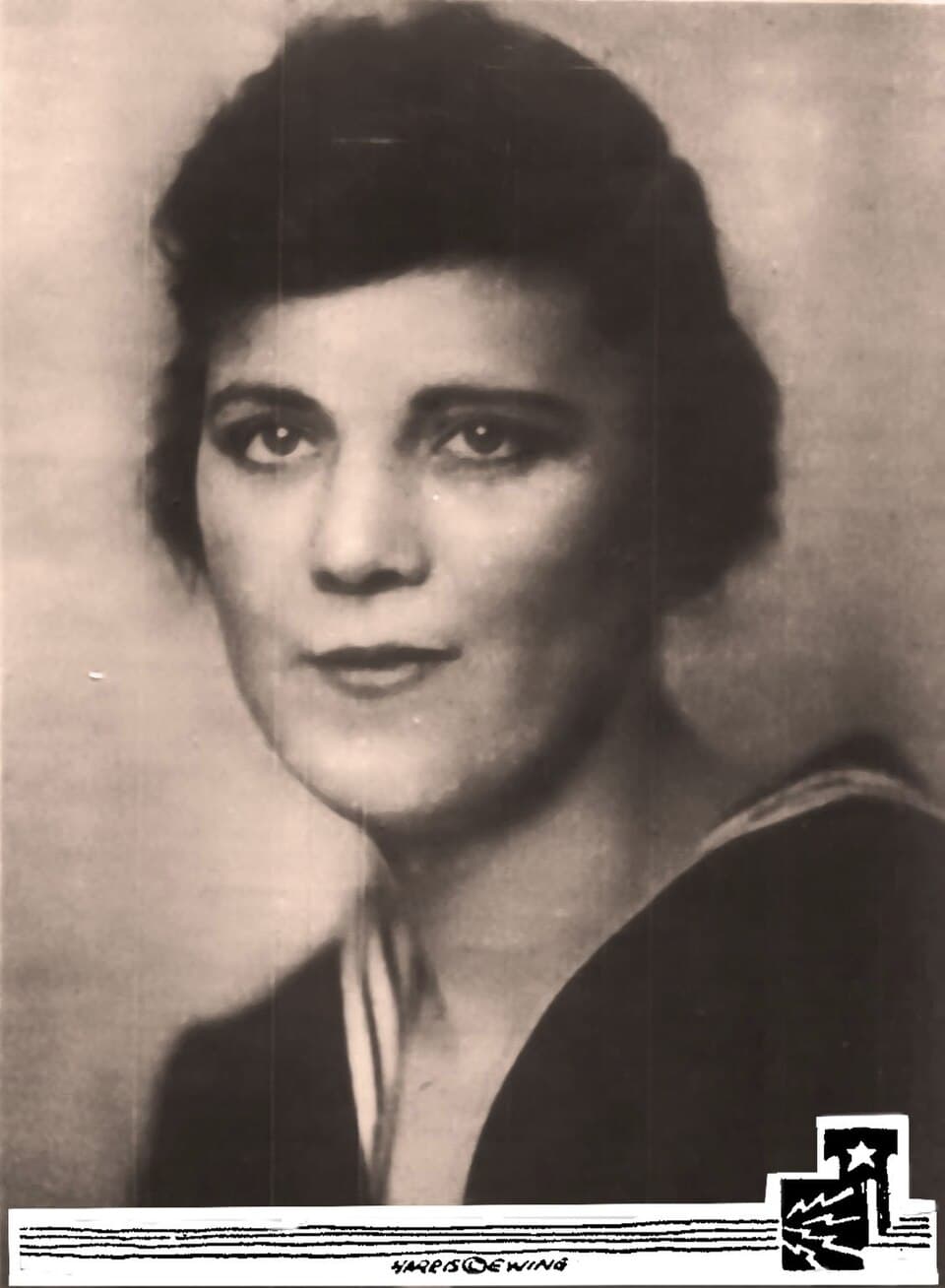
American · Activism
Myrtle Hazard
1892 – May 19, 1951
Early Life and Background
Myrtle Rae Holthaus Hazard, later known in marriage as Myrtle Gambrill, was an American electrician and radio operator whose World War I service made her a foundational figure in the history of women in the United States Coast Guard. Most authoritative Coast Guard and historical sources record her birth year as 1892 and place her origins in Baltimore, Maryland.[2][6][3] Although some modern commemorative accounts list 1896, the year 1892 appears in official Coast Guard materials and major reference sources, and is therefore the best-supported date for historical work.[2][6][12]
Hazard grew up in a period of rapid technological change. The late nineteenth and early twentieth centuries saw the spread of electricity into urban life and the emergence of wireless telegraphy as a transformative communication technology. As a young woman, she developed an interest in radio and electrical systems unusual for women of her era, who were typically steered toward domestic or clerical work. Secondary accounts note that she experienced polio, which left one of her legs smaller than the other, yet she learned to walk without braces.[3] This combination of physical resilience and intellectual curiosity shaped her path toward technical work.
Information about her formal education is limited in surviving public records, but biographical summaries emphasize that she was largely self-taught in radio and telegraph operation.[2][3] At a time when technical schools and apprenticeships rarely admitted women, especially in electrical trades, her ability to master complex skills suggests a mix of private study, informal mentoring, and practical experimentation. These formative experiences prepared her to take advantage of the openings that World War I would create for skilled operators.
Career Beginnings and Entry into the Coast Guard
When the United States entered World War I in 1917, the military and maritime services faced urgent demand for trained radio and telegraph operators. Ships and coastal stations relied on wireless communications for navigation, convoy coordination, and safety at sea. The United States Coast Guard, then operating under the Treasury Department but placed under the Navy for wartime service, needed personnel who could maintain equipment and handle traffic in increasingly busy coastal waters.[6][5]
Hazard, already a trained radio operator, recognized that her skills matched a critical national need. Despite prevailing norms that limited women’s roles in the armed services to nursing or clerical support, she applied to serve in the Coast Guard in a technical capacity. Coast Guard historical narratives describe her as an experienced radio and telegraph operator before enlistment, though the precise details of her pre-war employment are not fully documented.[2][6]
Her application was extraordinary for its time. While the Navy and Army had begun to accept women in specific auxiliary capacities—such as the Navy’s Yeoman (F) program for clerical workers—formal enlistment of women into uniformed ranks remained rare and controversial. Hazard’s request to enter the Coast Guard not as a typist or nurse but as an electrician and radio operator challenged entrenched assumptions about both gender and technical work.
World War I Service and Major Accomplishments
Hazard’s breakthrough came in January 1918, when she formally enlisted in the Regular United States Coast Guard and took the oath of allegiance, beginning her service as acting Electrician Third Class. Coast Guard and Department of Defense women’s-history chronologies identify her as the first woman to enlist in the Coast Guard.[1][5][6] During the war, she would also be the only woman to serve in the service’s uniformed ranks.[2][6]
Her enlistment is generally dated to January 7, 1918, the day recorded in women’s-military chronologies as the start of her Coast Guard service and recognized by historians as the moment she became the service’s first officially enlisted woman.[1] A related Coast Guard retrospective notes that on January 9 she signed her oath of allegiance, formalizing her entry as acting Electrician Third Class.[1] Taken together, these records mark early January 1918 as the point at which Hazard crossed the institutional threshold from civilian technician to uniformed Coast Guard member.
Within weeks, she was serving as a radio operator and is documented as the Coast Guard’s first woman electrician by January 21, 1918.[6][5][1] In the Coast Guard’s rating structure, electrician status meant responsibility for maintaining and operating electrical and wireless communication systems—an essential function for coastal stations and vessels that needed reliable links for navigation, distress signaling, and coordination with naval operations.
Hazard was assigned to work as a radio and telegraph operator, using equipment that, while primitive by modern standards, required precise technical knowledge and disciplined procedures. She handled coded and plain-language messages, monitored traffic, and ensured that the Coast Guard’s communication lines remained open during a period of intensified maritime activity. Her exact duty station is not consistently identified in surviving public summaries, but accounts emphasize that she performed these duties within the Coast Guard’s wartime communication network.[2][6]
Her service carried particular significance because she was the only woman in the Coast Guard during World War I. Whereas other branches created segregated female units or auxiliary programs, the Coast Guard effectively integrated her individually into a rating otherwise occupied by men. This isolation meant that she had no female peers in uniform, making her advancement dependent on her ability to earn respect and trust solely through performance in a male-dominated environment.
Hazard’s wartime work drew international notice. After the conflict, the government of Serbia awarded her the Order of St. Sava in recognition of her contributions.[2][3] The Order of St. Sava was historically conferred for merits in education, science, and public service, and its bestowal upon Hazard underscores the value placed on her radio communications work in support of allied efforts. Although the exact date of the award is not recorded in readily accessible sources, its mention in biographical accounts highlights the transnational impact of her technical service.
Within the Coast Guard, Hazard advanced in rank over the course of the war. She ultimately concluded her service in November 1919 as an Electrician’s Mate First Class, a senior enlisted rating reflecting both experience and demonstrated proficiency.[6][5] Her promotion trajectory—from acting Electrician Third Class at enlistment to First Class electrician by the end of her service—signals institutional recognition of her capabilities. Department of Defense and Coast Guard summaries emphasize that she ended her service at this grade and that she remained the only woman to serve in the Coast Guard during the war.[5][6]
Awards, Honors, and Recognition
Hazard’s most notable contemporaneous honor was the Order of St. Sava, awarded by the Serbian government for her wartime radio work.[2][3] While the citation text and date are not widely reproduced, its inclusion in multiple biographical sources indicates that allied governments viewed her contributions as meaningful to the broader war effort. The award is particularly significant because it recognized a woman technician at a time when most decorations to women focused on nursing or humanitarian assistance.
Within the United States, immediate post-war recognition of Hazard was limited, reflecting broader patterns in the treatment of women’s military service. She returned to civilian life without the level of public acclaim afforded to male veterans. However, the Coast Guard preserved records of her enlistment and rating, and later historians would identify her as the first woman to enlist in the service and its first female electrician.[2][6]
Institutional recognition grew substantially in the late twentieth and early twenty-first centuries, as the Coast Guard sought to document and honor women’s contributions. Hazard’s name appears in official Coast Guard historical overviews, women’s chronology publications, and online exhibits highlighting notable pioneers.[1][6] These materials consistently emphasize three core points: she was the first woman to enlist in the Coast Guard, the only woman to serve during World War I, and the first woman to hold electrician status in the service.
A major posthumous honor came in 2020, when the Coast Guard named a Sentinel-class Fast Response Cutter USCGC Myrtle Hazard (WPC 1139).[2][4][6] As the 39th cutter in the class, the vessel’s naming represented a deliberate tribute to Hazard’s pioneering role. Official descriptions of the cutter explicitly note that she was selected as namesake because she was the first enlisted woman in the Coast Guard and served as an electrician and radio operator during World War I.[4][6][7]
Personal Life
After World War I, Myrtle Rae Holthaus married and became known as Myrtle Gambrill.[2] The details of her marriage—including her husband’s full name, occupation, and the dates of their union—are not extensively documented in widely accessible public sources. However, the transition in surname appears consistently in biographical references, indicating that she took her husband’s name according to common practice of the period.
Accounts from women’s-history organizations and commemorative essays suggest that Hazard returned to a more private life following her military service.[3] She lived in Baltimore, raising a family and participating in community life outside the public spotlight. The combination of her physical resilience, technical skill, and wartime service likely informed her later experiences, but surviving records do not provide a detailed narrative of her civilian career or family relationships.
This relative silence in the archive illustrates a broader pattern: many women who broke barriers in early twentieth-century military service did not receive sustained biographical attention, and their personal stories remain only partially recoverable. In Hazard’s case, historians reconstruct her life primarily through military records and later institutional tributes, with limited access to personal papers or oral histories.
Legacy and Historical Impact
Myrtle Hazard’s legacy rests on three intertwined firsts widely affirmed in Coast Guard and historical sources: she was the first woman to enlist in the United States Coast Guard, the only woman to serve in the Coast Guard during World War I, and the first woman to hold electrician status in the service.[2][6]
Her enlistment in January 1918 marked an institutional turning point. Coast Guard women’s-history chronologies and service publications treat her oath of allegiance as the beginning of formal, uniformed service by women in the Coast Guard.[1][6] While later decades would see broader integration of women through changes in law and policy, Hazard’s individual entry demonstrated that a woman could meet the service’s standards, handle technically demanding duties, and advance in rating.
As the only woman in the Coast Guard during the war, Hazard’s presence also complicates simple narratives about women’s collective participation. Rather than joining a female corps or auxiliary, she stood alone within a male-dominated structure, relying on personal resolve and professional competence to navigate an environment without institutional support networks for women. This singularity makes her story both inspiring and sobering: inspiring because she succeeded despite isolation, and sobering because the service did not immediately follow her example by opening regular enlistment to more women.
Her work as an electrician and radio operator helped normalize the idea that women could perform complex technical roles critical to national security. Today, women serve across the full spectrum of Coast Guard ratings, including electronics technicians, information systems specialists, and engineers. Official narratives about USCGC Myrtle Hazard explicitly draw a line between her early twentieth-century service and the contemporary presence of women in these fields, presenting her as a foremother of modern technical integration.[4][6][7]
The naming and commissioning of USCGC Myrtle Hazard in 2020 further solidified her place in institutional memory. Based in Santa Rita, Guam, the cutter supports Coast Guard operations in the Indo-Pacific region, performing missions that include search and rescue, maritime law enforcement, and international engagement.[4][5][7] Its namesake description emphasizes Hazard’s pioneering role and presents her as an enduring symbol of the service’s commitment to diversity and inclusion.[6][7]
Beyond the Coast Guard, Hazard’s story contributes to the broader history of women in the U.S. military. She stands alongside contemporaries such as the Navy’s Yeoman (F) personnel and women in the Army Signal Corps, but her specific path—as a uniformed electrician in a small maritime service—adds nuance to the narrative of how and where women first entered technical military roles. Her award from Serbia underscores the international dimension of this contribution, showing that allied nations recognized the importance of women’s technical work.
There has been some historical debate about whether twin sisters Genevieve and Lucille Baker or Myrtle Hazard should be considered the first women associated with the Coast Guard. However, Coast Guard historical materials and official chronologies clarify that Hazard was the first woman to take the formal oath of enlistment and serve as a uniformed member, distinguishing her status from other women who may have worked in civilian or auxiliary capacities.[1][6][5] This clarification reinforces her position as the service’s first officially enlisted woman.
Later Life and Death
After concluding her Coast Guard service in November 1919 as an Electrician’s Mate First Class, Hazard returned to civilian life in Baltimore.[6][5] She lived there for the remainder of her life, known in later years as Myrtle Gambrill. While detailed records of her post-war activities are sparse in public archives, biographical accounts indicate that she focused on family and community, embodying a pattern common among women veterans of the era whose service was often underrecognized.[2][3]
Hazard died on May 19, 1951, in Baltimore, Maryland.[2][3] Her death passed largely without national publicity, reflecting the limited attention then paid to women’s military pioneers. However, the preservation of her service record and later historical research ensured that her contributions would not be lost. In subsequent decades, as the United States military and the Coast Guard moved toward fuller integration of women, historians, advocates, and the service itself revisited her story.
By the early twenty-first century, Hazard had become a central figure in Coast Guard women’s-history narratives, culminating in the commissioning of a cutter bearing her name. Today, her legacy is carried forward each time crew members report aboard USCGC Myrtle Hazard, each time the service recounts its history of women’s integration, and each time a woman in the Coast Guard pursues a technical rating once considered off limits.
Thus, while Myrtle Rae Holthaus Hazard’s life ended in 1951, the impact of her choices—her decision to enlist, her insistence on serving as an electrician and radio operator, and her successful performance in that role—continues to shape both institutional memory and the lived experience of women in the Coast Guard and the wider U.S. military.
Dated achievements
7 indexed.
- Jan071918Activism
First woman to enlist in the United States Coast Guard
Myrtle Rae Holthaus Hazard became the first woman to enlist in the United States Coast Guard on January 7, 1918.
View details The Long Blue Line: Myrtle Hazard—first woman in the United States Coast Guard - Jan211918