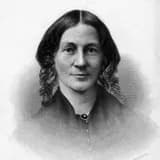
Miner opened a school in Washington, D.C. to train free Black women as teachers, one of the first institutions of its kind in the slaveholding capital.
On December 6, 1851, Myrtilla Miner opened a small school in Washington, D.C., for the education of free African American girls, later formally known as the Normal School for Colored Girls. Beginning with just a handful of students in a rented room, the school was a radical act in a city where slavery was still legal and where educating Black people was met with fierce hostility and even violence.
Miner's goal was not simply literacy instruction but the training of Black women to become teachers themselves, thereby multiplying the impact of education within their own communities. This normal-school model was unusual and visionary: it treated Black women as capable professionals rather than merely recipients of charity.
The school faced constant threats, including arson attempts, mob harassment, and vandalism, reflecting the deep opposition to Black education in the pre-Civil War South. Miner persisted, drawing support from prominent abolitionists including Harriet Beecher Stowe, who contributed proceeds from Uncle Tom's Cabin to help fund the school, and Henry Ward Beecher, Johns Hopkins, and others.
The institution eventually grew, acquired land, and became a cornerstone of Black education in the capital. It is widely regarded as a direct forerunner of what became Miner Normal School, and through subsequent mergers, an ancestor institution of the University of the District of Columbia. Miner's school is considered one of the first sustained efforts to provide advanced, professional-level education to African American women in the United States.