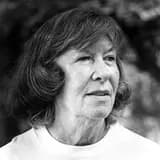
December 2, 2004: Mona Van Duyn dies of bone cancer at age 83 at her home in suburban St. Louis, Missouri.
On December 2, 2004, Mona Van Duyn died of bone cancer at age 83 at her home in University City/Ladue, suburban St. Louis, Missouri.[3][8][9] Her death marked the close of a career in which she had received virtually every major American poetry prize—including the National Book Award, Bollingen Prize, Ruth Lilly Poetry Prize, and Pulitzer Prize—and served as the first woman U.S. Poet Laureate Consultant in Poetry.[2][3][5]
Van Duyn had lived in the St. Louis area since 1950, teaching at Washington University and shaping regional literary culture through her mentorship and editorial work with the journal Perspective.[1][3][4] Her passing prompted appreciations in national newspapers and literary journals, which emphasized her formal mastery, distinctive engagement with middle‑class life, and pioneering role as a woman in high literary office.[3][13]
Historically, December 2, 2004, marks not only the end of her personal life but the point at which her work began to be assessed as a completed oeuvre. Posthumous publications and scholarly studies have since situated her among the most important American poets of the late 20th century, noting how she broadened the thematic range of canonical verse and opened institutional doors for women writers.[2][5][8] In women’s history, her death underscores the legacy of a figure who demonstrated that domestic and relational concerns could anchor poetry of the highest ambition and national significance.