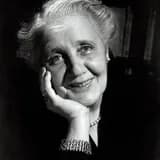
Melanie Klein died on September 22, 1960, in London, having spent her final decades developing psychoanalytic theory in Britain.
Melanie Klein died on September 22, 1960, in London, at the age of 78, following complications from colon cancer surgery. By the time of her death, she had become one of the most significant and polarizing figures in the history of psychoanalysis, having emigrated to Britain in 1926 and spent over three decades developing her theories there.
Klein's death marked the end of a career that fundamentally reshaped psychoanalytic understanding of infancy and early childhood. She had pioneered play technique as a method for psychoanalyzing children, and developed influential concepts such as the paranoid-schizoid and depressive positions, projective identification, and an elaborated theory of unconscious fantasy and internal object relations. Her ideas, often in direct tension with Anna Freud's more ego-psychology-oriented approach, gave rise to what became known as the 'Kleinian' school within the British Psychoanalytical Society.
At the time of her death she was still actively working, having continued to write, supervise analysts, and participate in psychoanalytic controversies well into her seventies. Her legacy persisted through the Melanie Klein Trust, established to preserve and promote her work, and through generations of analysts trained in the object relations tradition she founded. Her influence extends today into fields including child psychology, psychiatry, and even feminist and cultural theory, cementing her as one of the most important psychoanalytic thinkers after Freud.