← All women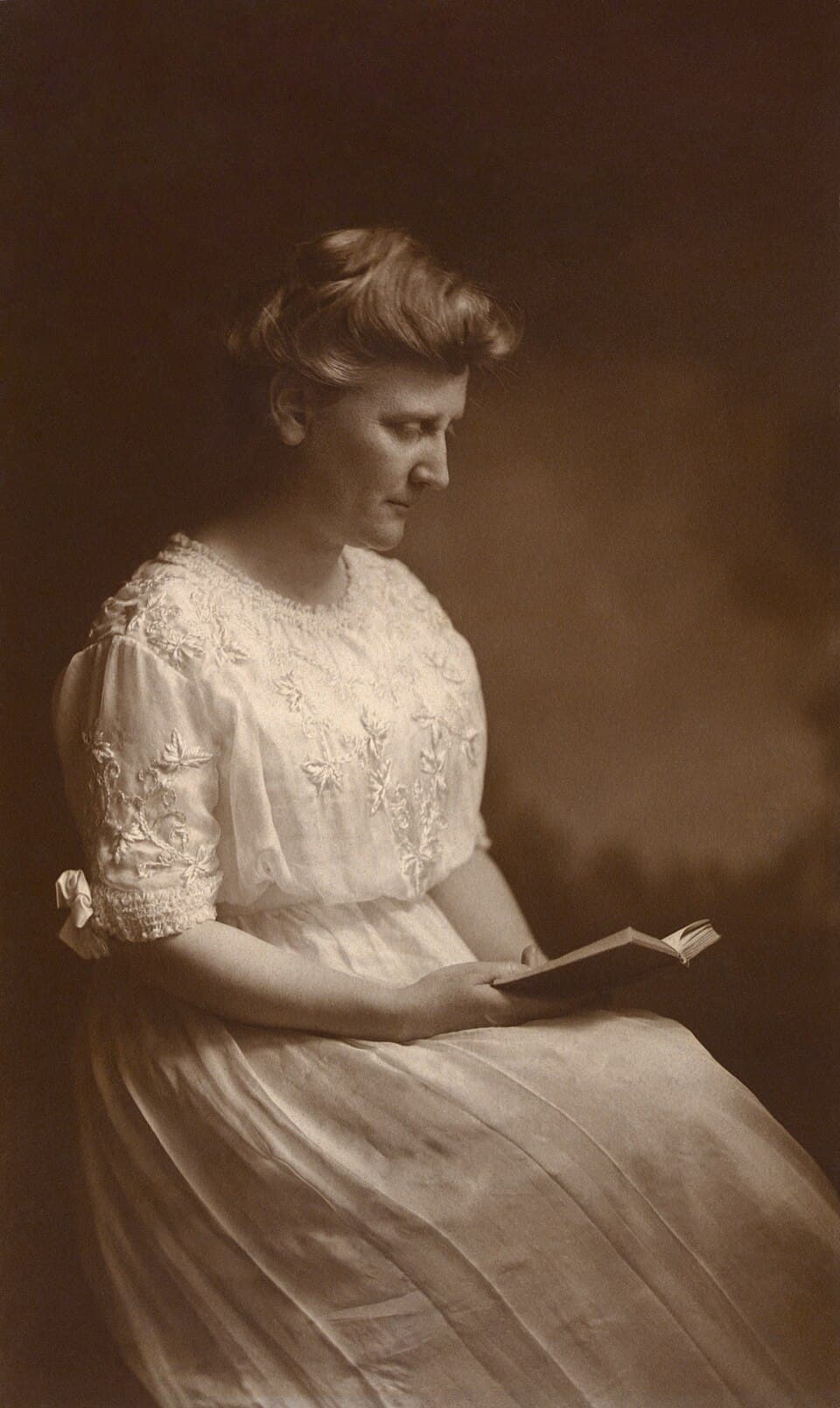
American · Activism · Politics · Literature
Mary White Ovington
April 11, 1865 – July 15, 1951
Early Life and Background
Mary White Ovington (April 11, 1865–July 15, 1951) was born in Brooklyn, New York, into an affluent, reform‑minded Unitarian family.[3][4][12] She was the daughter of Theodore T. Ovington, a successful businessman, and Louise Veatcham Ovington.[12] Both parents were committed abolitionists and supporters of women’s rights, and she grew up in a household where radical discussion and moral opposition to slavery and discrimination were part of everyday life.[3][4][11][12] Born just days before Abraham Lincoln’s assassination, she was part of the generation that bridged the Civil War and Reconstruction era with the Progressive and civil‑rights movements of the twentieth century.[3]
Ovington was educated at Packer Collegiate Institute in Brooklyn, a rigorous school for girls where she graduated in 1891.[11] Her schooling reinforced a sense that educated women could and should engage in public life. Following Packer, she attended Radcliffe College, then the women’s coordinate institution to Harvard, around 1891–1893, but financial constraints prevented her from completing a degree.[10][12] According to later biographical accounts, she spent a brief period participating in upper‑middle‑class social life before turning decisively toward social reform.[12]
Her religious background also shaped her activism. Raised within a liberal Unitarian milieu, she absorbed ideas of individual dignity, social responsibility, and the moral necessity of confronting injustice.[4][8] Biographies note that a crucial early influence came when she heard the celebrated abolitionist and orator Frederick Douglass speak in a Brooklyn church, an experience that helped solidify her determination to engage in struggles against racial oppression.[1][4]
Career Beginnings and Settlement Work
Ovington’s early career unfolded in the world of settlement houses, institutions that brought middle‑class reformers into working‑class neighborhoods to provide services and study social conditions. After working as registrar at the Pratt Institute, she helped establish the Greenpoint Settlement of the Pratt Institute Neighborhood Association in Brooklyn, serving as headworker from 1895 to 1903.[12] There she encountered the intertwined problems of poverty, crowded housing, and labor exploitation among immigrant and working‑class communities.
Around 1904 she began working at Greenwich House, a settlement in New York City, eventually helping organize its Committee on Social Investigations.[1][10] For approximately five years she studied the employment and housing problems facing Manhattan’s Black community, combining direct service work with systematic research.[1] Her investigations revealed pervasive racial discrimination in labor markets, housing segregation, and barriers to upward mobility confronting Black New Yorkers in the supposedly more liberal North.
During this period, Ovington also became an early member of the Socialist Party, aligning herself with movements that challenged economic inequality as well as racial injustice.[10][12] She participated in the peace movement and was a vigorous advocate for women’s suffrage, connecting the denial of political rights to women with the broader denial of rights to African Americans.[10][11] Her settlement work and political affiliations placed her at the heart of Progressive‑era reform networks, where she interacted with social workers, clergy, labor organizers, and intellectuals.
Path to the NAACP and Founding Role
Ovington’s transition from local settlement work to national civil‑rights leadership was catalyzed by racial violence in the Midwest. In 1908, a major race riot in Springfield, Illinois—the home town of Abraham Lincoln—saw white mobs attack Black residents, lynch two Black men, and destroy property.[1][2] On New Year’s Day 1908, Ovington read an article by socialist journalist William English Walling in the New York Evening Post analyzing the riot and warning that such outbreaks would recur unless a national organization defended the rights of African Americans.[1][2]
Deeply disturbed by Walling’s account, Ovington contacted him and reformer Henry Moskowitz to discuss forming a national movement.[1] Later that month, on January 31, 1908, they met at her home in New York City to consider the creation of a new interracial, national organization dedicated to combating racial discrimination and violence.[1] This meeting, convened in her domestic space, is widely recognized as a precursor to the eventual founding of the National Association for the Advancement of Colored People (NAACP).
In 1909, Ovington joined Black and white reformers, including W.E.B. Du Bois, Ida B. Wells‑Barnett, and others, to organize the National Negro Conference in New York City.[1][3][11][12] The conference brought together a wide array of activists to address lynching, disfranchisement, and segregation. Out of its follow‑up structures emerged the NAACP in 1909–1910, conceived as a permanent organization to pursue legal and political strategies against racial injustice.[3][8]
Scholars and institutional histories often describe Ovington as a co‑founder of the NAACP, and some Unitarian Universalist accounts argue that she was effectively "the" founder, given her central role in initiating contacts, organizing meetings, and sustaining the coalition.[3][4][8][11][12] The NAACP established a board of directors in 1910 and appointed Ovington as executive secretary, placing her in a pivotal administrative and coordinating role.[1][2] She would remain deeply involved with the organization for nearly four decades, serving in various leadership capacities and acting as mediator among its diverse constituencies.
Major Works and Intellectual Contributions
Parallel to her organizational work, Ovington produced a body of writing that documented and analyzed race relations in the United States. Her most important early book was Half a Man: The Status of the Negro in New York (1911), which grew out of her settlement‑house research.[10][12] In this study she examined employment, housing, education, and social life among Black New Yorkers, arguing that despite formal freedom, African Americans remained "half citizens" constrained by systematic discrimination.[10][12] The book combined empirical observation with reform advocacy, contributing to the emerging social‑scientific literature on race.
In 1913 she published the novel Hazel through the Crisis Publishing Company, associated with W.E.B. Du Bois’s NAACP magazine The Crisis.[10][12] While less cited than her sociological works, the novel reflected her interest in using fiction to explore issues of race, gender, and social justice. She also wrote Status of the Negro in the United States, a broader study of Black life, and later Portraits in Color (1927), a collection of biographical sketches of prominent African Americans.[1][3][12] These works introduced readers—particularly white audiences—to the achievements and struggles of Black leaders, challenging racist stereotypes.
Ovington documented her personal journey and the NAACP’s development in a series of autobiographical works. She wrote Reminiscences (1932), reflecting on her life and activism, and later The Walls Came Tumbling Down (1947), a memoir focusing specifically on the NAACP and its campaigns.[1][2][12] In these volumes she offered insider perspectives on the organization’s founding, internal controversies, and evolving strategies against lynching, segregation, and discrimination, preserving valuable historical testimony for future generations.
Leadership in the NAACP
From 1910 onward, Ovington’s leadership within the NAACP was continuous and multifaceted. As executive secretary, she managed organizational affairs, coordinated correspondence, and helped convene meetings, working closely with figures such as W.E.B. Du Bois.[1][2] She was instrumental in fundraising and in expanding the association’s membership base.
During World War I, Ovington engaged in strategic debates about how boldly the NAACP should confront racial injustice. On May 3, 1917, she wrote to Du Bois expressing concern that the organization’s outspoken anti‑lynching and anti‑discrimination campaigns could provoke government retaliation in the climate of wartime nationalism.[2] Her letter highlights the tension between moral urgency and institutional survival and illustrates her role as a strategist weighing risks to the nascent organization.
After the war, Ovington continued to rise in the NAACP hierarchy. According to Britannica and other sources, she served as chairman (chair) of the board from 1919 to 1932 and as treasurer from 1932 to 1947.[3] These positions placed her at the center of financial decision‑making and organizational governance during a period that spanned the Harlem Renaissance, the Great Depression, and the early stirrings of the modern civil‑rights movement.
In 1930 she stepped down as executive secretary but remained on the board of directors, continuing to play a crucial role in fundraising and mediation.[2][4] Unitarian Universalist biographical accounts emphasize her talent for mediating conflicts among diverse board members—including radicals, moderates, clergy, socialists, and professionals—and her steady efforts to keep the coalition intact.[4][8] For her many contributions, much of them unpublicized, the NAACP board honored her with the title "Mother of the New Emancipation", acknowledging her behind‑the‑scenes importance.[4]
Women’s Suffrage and Broader Activism
While best known for civil‑rights work, Ovington was also active in the women’s suffrage movement. On May 21, 1912, she marched down Fifth Avenue in a major New York suffrage parade, walking in the second division with members of the New York State Woman Suffrage Association.[2] Her participation in high‑visibility parades complemented her quieter advocacy for women’s political rights through speeches and organizational work.
Ovington’s support for suffrage was intertwined with her socialism and civil‑rights activism. She viewed the denial of the vote to women as part of a broader pattern of exclusion affecting African Americans and the poor. As a member of the Socialist Party, she connected political enfranchisement to economic justice and labor rights.[10][12] Her activism extended to the peace movement, reflecting concern about how militarism and nationalism could exacerbate repression and hinder reform.
She also engaged in other forms of racial advocacy beyond the NAACP. Biographical accounts credit her with helping convince philanthropist Henry Phipps to build "Tuskegee" in New York City as an experiment in model housing for African Americans, and with co‑founding the Lincoln Settlement for Negroes with Black physician Verina Morton‑Jones.[12] She was a central white female participant in the interracial Cosmopolitan Club dinner at Peck’s Restaurant in 1908, which caused a national sensation by openly crossing racial boundaries in a social setting.[12] These activities demonstrated her willingness to challenge segregation in both housing and social life.
Awards, Honors, and Recognition
Although much of Ovington’s work was modestly presented and she often avoided personal publicity, she received significant recognition. The NAACP board’s description of her as the "Mother of the New Emancipation" encapsulated its view of her sustained contributions to building and maintaining the organization.[4] This title highlighted her role not only as founder and officer but also as moral and organizational caretaker.
Her legacy has been honored posthumously as well. In 2009, the United States Postal Service issued a commemorative postage stamp depicting Mary White Ovington alongside Black civil‑rights activist and suffragist Mary Church Terrell, thereby recognizing both women’s roles in the intertwined struggles for racial equality and women’s rights.[1] The stamp situates Ovington within a national pantheon of civil‑rights figures and brings her story to a broader public.
Numerous institutional biographies—from Britannica, the NAACP, Unitarian Universalist sources, Harvard Square Library, and educational institutions such as Packer Collegiate Institute—continue to highlight her significance as a co‑founder of the NAACP and as a pioneering white woman in civil‑rights leadership.[1][3][4][8][11][12] These recognitions underscore her importance in the history of American activism, socialism, and race relations.
Personal Life
Available biographical sources focus primarily on Ovington’s public activism and do not indicate that she married or had children. Her life appears to have been largely devoted to reform work, writing, and organizational leadership.[4][12] She maintained close relationships with fellow activists, including W.E.B. Du Bois, Ida B. Wells‑Barnett, and various Unitarian and socialist colleagues.[1][4][8][11] Her friendships and professional collaborations across racial and religious boundaries were central to her effectiveness in coalition‑building.
Ovington’s Unitarian faith and socialist commitments informed her personal ethos. Accounts portray her as modest, persistent, and willing to work behind the scenes rather than seek the spotlight.[4][8][12] She embraced a lifestyle oriented toward service and intellectual engagement rather than conventional domestic roles expected of many middle‑class women of her era.
Later Life and Retirement
In her later years, Ovington gradually shifted from active executive duties to advisory and reflective roles. After stepping down as NAACP executive secretary in 1930 and later serving as treasurer until 1947, she retired from formal NAACP office but remained revered within the organization.[2][3][4][11] Her retirement coincided with the post–World War II period, as the civil‑rights struggle she had helped nurture entered new legal and political phases.
During these years she continued to write and reflect on her experiences. Her 1932 Reminiscences and 1947 memoir The Walls Came Tumbling Down allowed her to shape historical memory of the NAACP’s founding and struggles.[1][2][12] Even as she withdrew from day‑to‑day administration, she contributed to the intellectual infrastructure of the movement by documenting its early decades.
Ovington spent her final years in Massachusetts. She died on July 15, 1951, in Newton Highlands, at age 86.[3][4][12] At the time of her death, she had witnessed profound changes—from Reconstruction and the entrenchment of Jim Crow to the beginnings of national challenges to segregation—but not yet the landmark legal victories of the 1950s and 1960s.
Legacy and Historical Impact
Mary White Ovington’s legacy rests on her role as a bridge figure linking nineteenth‑century abolitionism, Progressive‑era reform, and the institutional civil‑rights movement of the twentieth century. As a white woman raised by abolitionists and steeped in Unitarian and socialist ideas, she brought a distinctive perspective to struggles for racial justice and women’s rights.
Her most enduring contribution was as a co‑founder and long‑time leader of the NAACP. By initiating contacts after the Springfield race riot, convening crucial planning meetings, and sustaining the organization through fundraising, board leadership, and mediation, she helped create a durable institution that would lead major legal challenges to segregation.[1][3][4][8][12] Her efforts ensured that the NAACP was interracial from its inception, with both Black and white members sharing governance.
Ovington also played a key intellectual role through her writings. Half a Man and her later works contributed to early social‑scientific analyses of race in the North, highlighting structural discrimination in employment and housing rather than treating racism solely as individual prejudice.[10][12] Her biographical sketches in Portraits in Color elevated Black achievements for broader audiences, while her memoirs preserved detailed accounts of organizational history and strategy.
As a suffragist and socialist, she advanced a vision of interconnected struggles—seeing women’s disenfranchisement, racial oppression, and economic exploitation as related forms of injustice. Her participation in suffrage parades and peace campaigns, coupled with her settlement‑house work, demonstrated that civil‑rights activism could be integrated with broader social‑reform agendas.[1][2][10][11]
Historically, Ovington challenged multiple barriers. She occupied leadership positions in a major national organization at a time when women, especially white women working for Black rights, were rarely acknowledged as political leaders. She crossed racial boundaries through collaborative work with African American colleagues and through public acts such as attending interracial dinners and co‑founding institutions serving Black communities.[4][8][12] Her life illustrates how white allies can play constructive roles in civil‑rights movements when they commit to long‑term, institution‑building work rather than episodic protest.
Today, scholars, religious communities, and civil‑rights organizations continue to study and commemorate Ovington’s contributions. Institutional biographies and educational materials emphasize her importance in the founding and early direction of the NAACP and her broader impact on American social reform.[1][3][4][8][11][12] Her story enriches women’s history and civil‑rights history alike, showing how gender, race, religion, and class intersected in the making of twentieth‑century activism.
Dated achievements
9 indexed.
- Apr111865Activism
Birth of Mary White Ovington
Mary White Ovington was born in Brooklyn, New York.
View details Mary White Ovington Biography - Jan011908Activism
Reads article on Springfield race riot
On January 1, 1908, she read about the Springfield race riot, which spurred her civil rights involvement.