← All women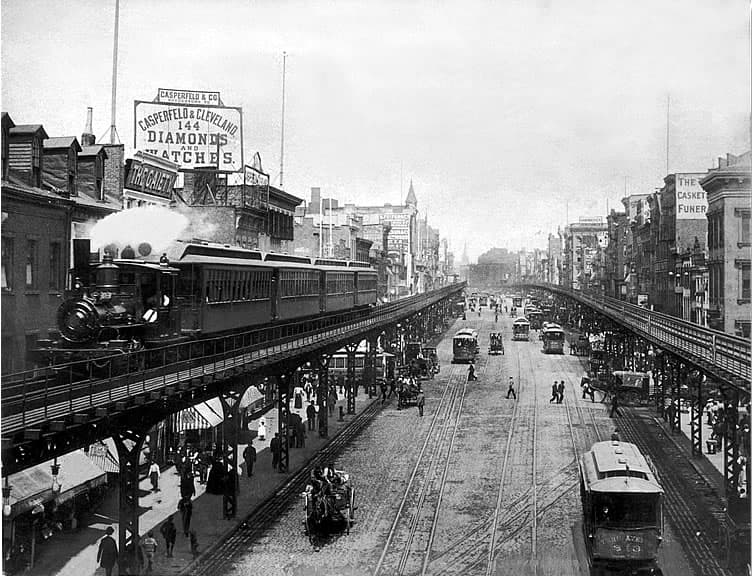
American · Science
Mary Walton
1827 – present
Early Life and Background
Mary Walton was born around 1827, though no primary source documents her exact birth date or birthplace, and her death date remains similarly unrecorded — a common gap in the historical record for women of her era, especially those who were not born into prominent families. What is known of her early life comes largely from her own words. In an 1884 statement published in the Weekly Transcript of Lexington, Kentucky, Walton reflected on her upbringing, noting that "my father had no sons, and believed in educating his daughters." This single line offers a rare and telling glimpse into the domestic environment that shaped her: a household in which a father's absence of male heirs became, unusually for the period, an opportunity rather than a disappointment for his daughters' intellectual development.
Little else is documented about her formal education, though her later technical accomplishments suggest she received a stronger grounding in practical science, mechanics, or engineering principles than most women of her generation could access. Nineteenth-century American women were almost universally excluded from engineering schools, technical apprenticeships, and professional scientific societies, making Walton's later achievements as an inventor all the more exceptional.
Life in New York City
By the late 1870s, Mary Walton was living in Manhattan, where she ran a boarding house located at the corner of 12th Street and 6th Avenue — a location that placed her directly in the shadow of the Sixth Avenue elevated railway line, one of New York's earliest and most controversial mass-transit systems. The elevated trains, while a transportation marvel, were notorious for the tremendous noise and pollution they generated as they rattled above city streets, provoking constant complaints from residents and shopkeepers alike.
Living so close to this daily disruption apparently gave Walton direct motivation and insight for her inventions. She is said to have built and tested model systems in the basement of her own home, using a miniature section of track to experiment with methods of dampening vibration and noise — a hands-on, self-taught approach to invention that stood in stark contrast to the credentialed engineering establishment of her day.
The Locomotive Smoke-Abatement Patent (1879)
Mary Walton's first major invention addressed a different urban problem: the thick black smoke and cinders billowing from coal-fired locomotives, which fouled the air of cities and towns along rail lines. On October 6, 1879, she filed a patent application for a system that redirected chimney emissions through a network of pipes into tanks of water. The water trapped sparks, ash, and much of the pollutant gas, releasing a cleaner exhaust into the surrounding air.
Her patent, U.S. Patent No. 221,880, titled "Improvement in Locomotive and Other Chimneys," was officially granted on November 18, 1879. The device functioned as an early form of what would later be understood as a "wet scrubber" — a technology still used today in industrial emissions control. Walton's invention was a striking anticipation of environmental engineering concerns that would not become mainstream regulatory priorities until well over a century later. She reportedly sold the rights to several railroad companies eager to reduce smoke complaints from the cities and towns their trains passed through.
The Elevated Railway Noise-Reduction Patent (1881)
Walton's most celebrated invention tackled the noise problem created by New York's elevated railways. She filed her application on January 7, 1879 — notably nine months before her smoke-abatement filing, even though it would be granted more than a year later. Her design placed the steel rails inside wooden boxes lined with cotton padding, filled with sand, and sealed with asphalt. This cushioning system absorbed much of the vibration and clatter produced as trains rolled overhead, significantly muffling the noise that had plagued residents along the elevated lines for years.
The problem had already attracted the attention of some of the era's most prominent inventors, including Thomas Edison, who had attempted and failed to develop an effective solution. Walton succeeded where he and others could not. Her patent, U.S. Patent No. 237,422, was granted on February 8, 1881. Later that year, she sold the rights to her invention to the Metropolitan Railroad of New York for $10,000 — an impressive sum for the period, particularly for a woman inventor operating outside the formal engineering establishment. Her system was subsequently adopted by other elevated railway companies operating in New York City, cementing its practical value and widespread impact on urban infrastructure.
Recognition and Barriers Overcome
Mary Walton's achievements are especially remarkable given the structural barriers facing women inventors in nineteenth-century America. Women were routinely excluded from patent law practice, engineering societies, and technical education, and female inventors who did apply for patents often faced skepticism or outright dismissal of their work's seriousness. Walton not only secured two significant U.S. patents but succeeded commercially, negotiating and completing a substantial sale of her invention's rights to a major transportation company.
Her success in resolving the elevated railway noise problem — a challenge that had defeated Thomas Edison — brought her a measure of contemporary recognition, including newspaper coverage of her achievements. Her 1884 quotation in the Lexington Weekly Transcript suggests she was, at least briefly, a subject of public interest and admiration as an example of a woman succeeding in a technical field traditionally reserved for men.
Legacy and Historical Impact
Today, Mary Walton is remembered as one of the most notable American women inventors of the nineteenth century, credited with pioneering solutions to two distinct urban environmental problems: air pollution and noise pollution. Her smoke-abatement system anticipated modern industrial emissions-control technology, while her rail-cushioning system represented one of the first practical, widely adopted noise-reduction systems for urban rail transit.
Her story has been highlighted by institutions including the Lemelson-MIT Program and the Federal Highway Administration, both of which recognize her contributions to environmental engineering and urban infrastructure. She is frequently cited in histories of women in STEM as an example of ingenuity and persistence achieved without the benefit of formal engineering training or institutional support.
Later Life and Death
Details of Mary Walton's later life, including the date and circumstances of her death, remain undocumented in the historical record — a significant gap that reflects the broader erasure of women's contributions from official archives of the period. No primary source has yet established when or where she died, and this absence stands as a stark reminder of how many pioneering women inventors of the nineteenth century have been only partially preserved in public memory, their personal lives obscured even as their technical achievements endured in the patent record and in the infrastructure they helped shape.
Dated achievements
2 indexed.
- Nov181879Science
Granted Patent for Locomotive Smoke-Abatement System
Mary Walton received US Patent 221,880 for a system that deflected locomotive chimney emissions through water, trapping sparks, ash, and gases.
View details US Patent 221,880 - Improvement in Locomotive and Other Chimneys - Feb081881Science
Granted Patent for Elevated Railway Noise-Reduction System
Walton patented a sound-dampening rail system for elevated railways, succeeding where Thomas Edison had failed, and sold the rights to New York's Metropolitan Railroad for $10,000.