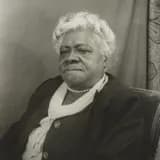
Mary McLeod Bethune died on May 18, 1955, in Daytona Beach, Florida, after a life of education, activism, and public service.
Mary McLeod Bethune died on May 18, 1955. Her death marked the end of a life that had transformed Black education, women’s organizing, and federal public service in the United States. She died after decades of work that carried her from rural South Carolina to the forefront of national and international affairs.
Her passing came after a career defined by institution-building under the harsh conditions of segregation and gender discrimination. Bethune had founded schools, trained nurses, led major organizations, advised presidents, and represented Black women in spaces from Washington to San Francisco and Liberia. In an era when Black women were often denied authority, she built a public life that demanded it.
The historical significance of her death lies not only in the end of her personal story but in the durability of what she left behind. Bethune-Cookman University, the National Council of Negro Women, and the wider network of institutions and leaders influenced by her example continued her mission. Her legacy remains central to the history of Black women’s leadership in the twentieth century.