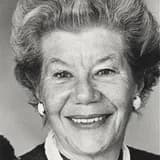
McGrory won the 1975 Pulitzer Prize for Commentary for her coverage of the Watergate scandal and hearings.
On April 18, 1975, Mary McGrory was awarded the Pulitzer Prize for Commentary, one of American journalism's highest honors, for her incisive and morally clear columns covering the Watergate scandal and the subsequent Senate hearings that led to President Richard Nixon's resignation.
McGrory's Watergate coverage was distinguished by her narrative flair and her ability to distill complex political testimony into vivid, accessible prose for everyday readers. Unlike straight news reporters, McGrory infused her columns with sharp moral judgment and literary style, making her one of the most quoted commentators of the scandal.
This Pulitzer made her one of the relatively few women to receive journalism's top prize at a time when the profession—especially political commentary—remained overwhelmingly male. It cemented her reputation as a preeminent political columnist and validated decades of work that had begun with theater reviews and evolved into hard-hitting political analysis.
The award was a landmark moment not just for McGrory personally, but for women in opinion journalism broadly, demonstrating that a woman's political commentary could be recognized as the gold standard of the industry. It came notably years after Nixon had placed her on his notorious 'enemies list,' a fact she considered validating rather than punitive.