← All women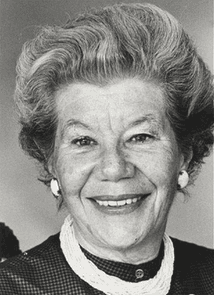
American · Literature
Mary McGrory
August 22, 1918 – April 21, 2004
Early Life and Background
Mary McGrory was born on August 22, 1918, in Boston, Massachusetts. Raised in a family of Irish descent, Mary was encouraged to pursue education and intellectual development from a young age. She attended the Girls' Latin School and later graduated from Emmanuel College in 1939. Her upbringing in a fervent Catholic environment, coupled with the culturally vibrant and politically charged atmosphere of Boston, greatly influenced her perspectives.
Career Beginnings and Development
McGrory's journalism career commenced at the Boston Herald, but she quickly found her voice and calling in Washington, D.C. In 1947, she joined the Washington Star where she initially wrote book reviews. Her transition into political commentary marked a significant shift, coinciding with the political turbulence of the McCarthy era and the unfolding of Camelot under President John F. Kennedy.
Major Works and Accomplishments
Mary became one of the most prominent voices in American journalism, revered for her poignant analyses and eloquent prose. She gained substantial recognition during the Army–McCarthy hearings and later covered every major political event, from Nixon's Watergate scandal to the Vietnam War and the Clinton era. Renowned for her sharp commentary and liberal viewpoints, her columns in The Washington Post spoke truth to power.
In 1975, she won the Pulitzer Prize for Commentary, becoming the first woman to achieve this honor for her trenchant critiques and narrative style that resonated deeply across the nation. McGrory's reporting was characterized by a depth of empathy and clarity of expression rare in her time.
Awards, Honors, and Recognition
Aside from the Pulitzer, McGrory's contributions earned her frequent accolades. She was a trailblazer and an exemplar for women in journalism, opening doors for future generations. Her work was recognized with numerous journalism awards over the decades, solidifying her legacy as a cornerstone of thoughtful commentary.
Personal Life
Mary remained a private individual, never marrying nor having children. Her life was dedicated to her work, where she found both her passion and purpose. Known for her strong sense of social justice and advocacy, Mary was respected both within and outside journalistic circles.
Legacy and Historical Impact
Mary McGrory's legacy is marked by her fearless and insightful commentary that shaped public discourse during pivotal moments in American history. Her ability to convey complex political realities with clarity and empathy made her an indelible part of American journalism. She paved the way for women in media, challenging gender norms of her time with grace and tenacity.
Later Life and Death
Continuing to write well into her 80s, McGrory's career spanned over five decades. She passed away on April 21, 2004, in Washington, D.C., leaving behind a storied legacy as one of the most revered columnists of the 20th century.
Dated achievements
3 indexed.
- Aug221918Literature
Born in Boston, Massachusetts
Mary McGrory was born on August 22, 1918, in Boston, Massachusetts, to Irish Catholic parents.
View details Mary McGrory - Wikipedia - Apr181975Literature
Awarded the Pulitzer Prize for Commentary
McGrory won the 1975 Pulitzer Prize for Commentary for her coverage of the Watergate scandal and hearings.