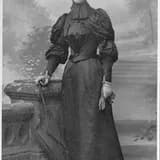
Kingsley departed for her first independent expedition to West Africa in August 1893, beginning her career as an explorer and ethnographer.
In August 1893, Mary Kingsley set sail for West Africa aboard the cargo steamer Lagos, embarking on the first of two major expeditions that would define her legacy. Traveling largely alone—highly unusual and dangerous for a European woman of the era—she journeyed to Sierra Leone, the Gold Coast (modern Ghana), and Nigeria, immersing herself in local customs, languages, and trade practices.
Kingsley financed her travels partly through trading goods with local communities, adopting the practices of local traders rather than the paternalistic approach of most European visitors. She lived among and studied various West African peoples, including the Igbo and Fang, and collected specimens of fish and insects for the British Museum, several of which were previously unknown to European science.
This first voyage was pivotal: it transformed her from a sheltered Victorian spinster into a serious field researcher. She rejected the conventional trappings of colonial exploration, refusing porters' excessive assistance and often traveling by canoe through mangrove swamps and dense forest. Her observations, later published in Travels in West Africa (1897), offered one of the first sympathetic, ethnographically grounded European accounts of West African life, challenging prevailing racist and missionary-driven narratives of the era.