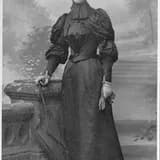
Mary Kingsley died of typhoid fever on 3 June 1900 in Simon's Town, South Africa, while nursing Boer prisoners of war; buried at sea per her wishes.
Mary Kingsley died on 3 June 1900 in Simon's Town (Simonstown), near Cape Town, South Africa, at the age of thirty-seven. She had traveled to South Africa during the Second Boer War to volunteer as a nurse, caring for Boer prisoners of war held at the Palace Barracks hospital—a role she took on despite her earlier reputation as an explorer rather than a caregiver, reflecting her deep sense of humanitarian duty.
While nursing the sick and wounded, Kingsley contracted typhoid fever, an illness rampant in the crowded and unsanitary prison hospital conditions. She died after a short illness, having explicitly requested burial at sea rather than on land. In accordance with her wishes, her body was taken aboard a British warship and buried at sea off Simon's Town with full military honors, a rare tribute for a civilian woman of her era.
Her death at a relatively young age cut short what many contemporaries believed would have been further groundbreaking expeditions and writings. She left behind an unfinished second travel book on West Africa's Islamic populations. Kingsley's death was widely mourned in Britain, and obituaries in geographical and scientific journals praised her contributions to ethnography and natural science. Her legacy was subsequently carried forward by the founding of the African Society (later the Royal African Society) in 1901, established partly in her memory to continue serious, respectful study of African peoples and cultures.