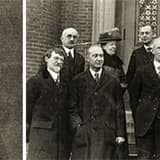
Calkins became the first woman elected president of the American Psychological Association in 1898.
In 1898, Mary Whiton Calkins was elected the first woman president of the American Psychological Association (APA), a landmark moment in the history of American science and academia. At the time, the APA was a young but influential organization shaping the professional identity of psychology as a scientific discipline in the United States.
Calkins's election was a direct rebuke to the systemic barriers women faced in academic psychology. Despite having completed all requirements for a Ph.D. at Harvard, including a dissertation her examiners praised as one of the best they had encountered, she had been denied the actual degree solely because of her gender. Yet her scholarly contributions, particularly her research on memory, association, and her emerging theory of self-psychology, were undeniable to her professional peers, who elected her to lead their national organization.
This achievement made her a trailblazer, opening a path for future generations of women in psychology and demonstrating that rigorous scholarship could not be permanently suppressed by institutional prejudice. Her presidency gave her a national platform to advocate for a more integrative and philosophically grounded approach to psychological science.
Calkins's election as APA president in 1898 remains one of the most cited milestones in the history of women in American science, symbolizing both the resistance she overcame and the eventual, if incomplete, recognition of women's contributions to the discipline.