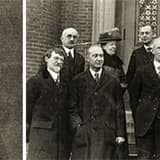
Calkins expanded her paired-associate research methodology in 1896, refining her earlier association studies.
Building on her earlier 1894 research, Mary Whiton Calkins published additional experimental studies on association in 1896, further refining the methodology that would later be formally termed the paired-associate paradigm in memory research.
This continued body of work deepened the field's understanding of how associations between stimuli are formed, strengthened, and recalled. Calkins's meticulous experimental design and her careful statistical treatment of results reflected the rigorous standards of the emerging discipline of experimental psychology, and her contributions in this area were internationally recognized among contemporary psychologists.
Her sustained focus on association studies throughout the 1890s demonstrates her commitment to establishing herself as a serious experimentalist, not merely a theorist, in a field still working to define its scientific legitimacy. This work bridged the associationist psychology of the nineteenth century with the more cognitively oriented memory research that would flourish in the twentieth century.
The paired-associate method Calkins helped pioneer remains a staple experimental technique in cognitive and educational psychology, used to this day in laboratory studies of learning and memory. Her sustained productivity in this area, achieved despite the many institutional barriers she faced as a woman scholar, cemented her scientific legacy independent of her later leadership achievements.