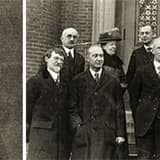
In 1908, Calkins was ranked twelfth on a list of the top 50 psychologists in the United States.
In 1908, Mary Whiton Calkins was ranked twelfth on a widely circulated list of the top fifty psychologists in the United States, a survey-based ranking compiled by peer evaluation among leading American academics and researchers in the field. This placement was a remarkable achievement given the substantial institutional barriers she faced throughout her career.
Calkins achieved this ranking despite never having been granted the Ph.D. she had rightfully earned at Harvard, and despite spending her career at a women's college (Wellesley) rather than at one of the major research universities where most of her male counterparts were based. Her position on the list reflected the genuine esteem in which her research on memory, association, and self-psychology was held by her professional peers, who recognized her scholarly output and theoretical contributions as comparable to, or exceeding, those of many male psychologists with greater institutional support.
This ranking is frequently cited by historians of psychology as evidence that Calkins was regarded, in her own time, as one of the leading psychological minds in the country, not merely as a token or symbolic figure. It stands alongside her APA presidency as proof of the substantive respect she commanded from the scientific community.
Her inclusion so high on this list, as one of the very few women represented, remains a significant marker of the recognition women scientists could achieve even while being formally denied full institutional inclusion.