← All women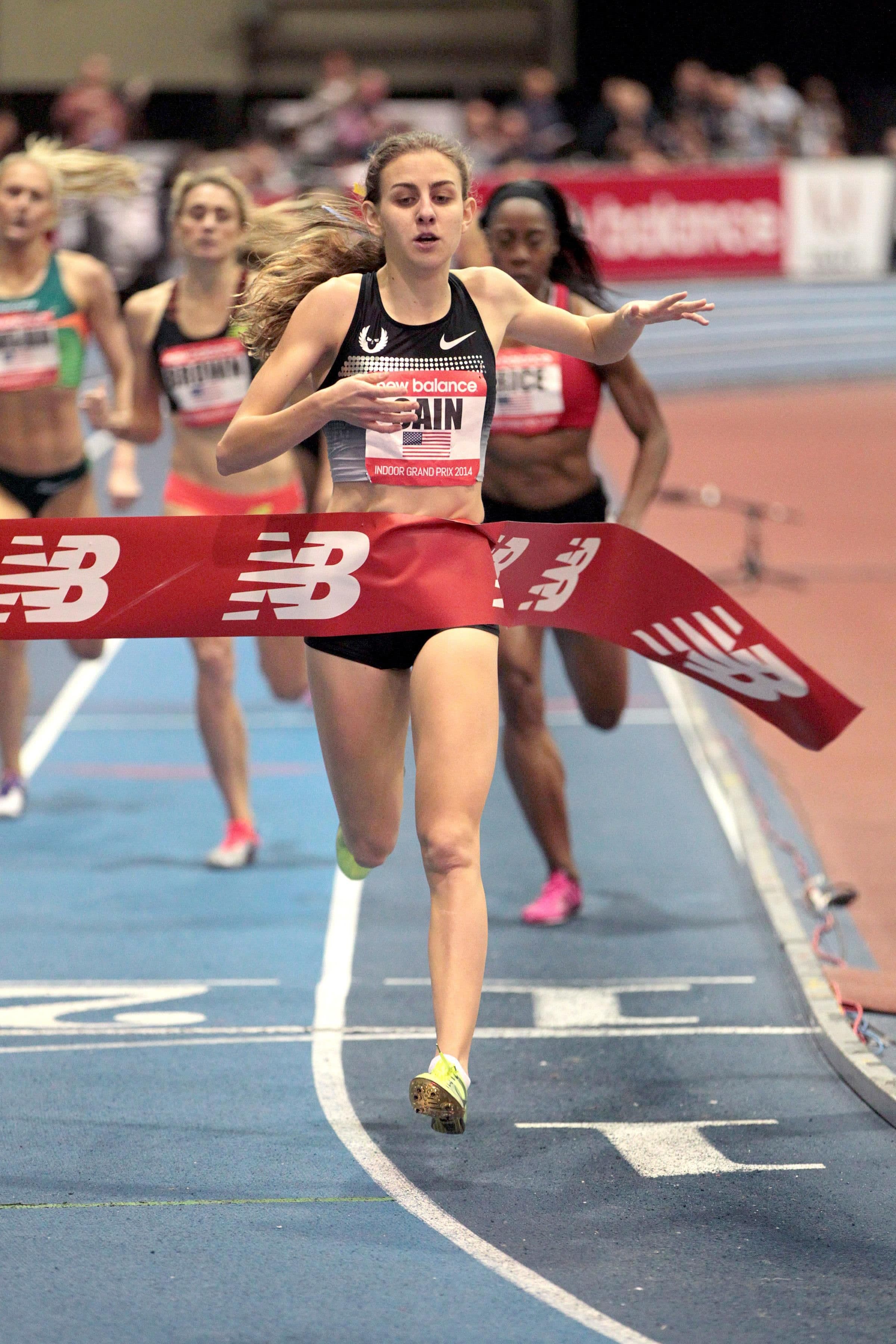
American · Sports · Activism
Mary Cain
May 3, 1996 – present
Early life and family
Mary Cecilia Cain was born on May 3, 1996, in New York City and grew up in Bronxville, New York. She was raised in a family that supported her athletic development; contemporary biographies identify her parents as Charles and Mary E. Cain and note that she has three sisters, Aine, Catherine, and Mairead. Cain’s Irish-American background and upbringing in Westchester County formed the setting in which she began running competitively at a young age.
Cain attended Bronxville High School, where she quickly became one of the most closely watched young distance runners in the United States. By her early teens she was already collecting major youth and high school victories, and she soon drew attention for her rare combination of speed, strength, and racing range. Sources describe her as a standout on the New York scholastic scene before she became known nationally. Her rapid rise made her one of the most visible teenage athletes in American track and field.
Rise through youth and high school running
Cain’s early career unfolded during a period when U.S. girls’ distance running was receiving growing attention, but still faced old assumptions about female endurance and the development of young athletes. She broke through with performances across cross country and track that established her as an exceptional prospect. By 2013 she had become a nationally prominent high school runner, and contemporary coverage described her as a record-setting teenage athlete whose results were already historic in the American context.
Among the milestones commonly associated with her high school career was becoming the first American high school girl to run under two minutes for 800 meters, a barrier-breaking mark that highlighted both her speed and the expanding possibilities for girls’ middle-distance running. She also represented the United States in the 2012 Olympic Trials and continued to improve across multiple distances, drawing major media attention while still a student. Her performances established her as one of the most promising middle-distance runners of her generation.
World Championships debut and international breakthrough
Cain’s career reached a major public milestone on August 10, 2013, when she competed in the 1500 meters at the World Championships in Moscow. At 17, she became the youngest female athlete ever to represent the United States at a World Championships meet. That appearance was widely interpreted as a historic breakthrough for an American teenage woman in elite track and field. It also confirmed that Cain’s talent had outgrown the junior ranks and placed her among the top competitors in the world.
The 2013 season was pivotal for her. Media accounts noted that she had already set multiple high school records, and her international debut only intensified the spotlight. The same year, she signed with the Nike Oregon Project, a professional training group led by Alberto Salazar. At the time, the move was presented as a chance for a prodigy to develop under an elite system, but it later became central to the public controversy surrounding her treatment in professional sport.
World junior champion and senior-level success
Cain’s strongest competitive results came over the next two years. On July 24, 2014, she won the women’s 3000 meters at the World Junior Championships, becoming a World U20 champion. That title confirmed her international standing and showed that her Moscow appearance had been the beginning of a genuine elite career rather than a one-off breakthrough. The victory reinforced the idea that she could compete successfully against the best young runners in the world.
Her success continued in domestic competition. On March 1, 2015, she won a national indoor title in the 3000 meters, and on June 25, 2015, she earned silver at the NACAC U23 Championships. She added another national indoor title on February 14, 2016. These results documented a career that, at least on paper, had all the hallmarks of an athlete moving steadily toward senior international prominence. Her profile on World Athletics records her as a two-time national indoor champion and a medalist in U23 competition.
Cain also competed in road-mile racing and other events that demonstrated her versatility. Profiles and athlete records describe her as a young runner whose performances ranged from the 800 meters to the 3000 meters and mile, with the road-mile performance on October 2, 2014 among the notable marks from this period. Her competitive range helped make her a uniquely marketable and closely followed young athlete in an era when teen running stars were increasingly visible in social media and sports coverage.
Professional career and the Nike Oregon Project
Cain turned professional while still in high school and joined the Nike Oregon Project, one of the best-known distance-running programs in the world. Her decision reflected both her extraordinary promise and the growing commercialization of elite youth sport. The transition, however, placed her in an adult professional environment at a very young age. Later reporting would show that this setting became deeply harmful to her physical and mental health.
By the late 2010s, Cain’s career had become as much a story about the system around her as about her performances. In 2019, she publicly described abusive treatment she said she had experienced under Alberto Salazar’s coaching, including body-shaming, pressure to lose weight, and training and dietary practices that damaged her well-being. Her testimony was significant because it forced a wider reckoning with the culture of elite running, especially the treatment of young women whose bodies and performances were intensely scrutinized. Coverage at the time described her account as a catalyst for a broader conversation about abuse in sport and athlete mental health.
Advocacy, public testimony, and Atalanta NYC
After speaking publicly in 2019, Cain became more than a former elite runner; she emerged as an advocate for athlete welfare and gender equity. She founded Atalanta NYC, a nonprofit that mentors girls through running and uses sport as a vehicle for confidence, leadership, and support. Her work extended the meaning of her career beyond medals and records and placed her in a new role as an organizer and public voice for safer sports culture.
Cain has also been associated with organizations focused on survivor support and accountability in athletics. Public profiles note that she works part-time with New York Road Runners and serves on the board of The Army of Survivors, a nonprofit centered on preventing sexual violence in sport. Her advocacy has been widely covered in interviews and long-form profiles, which often frame her as a figure who transformed a painful athletic history into a platform for reform.
Recognition and historical significance
Cain’s significance in women’s sports rests on both her competitive accomplishments and the public impact of her testimony. On the track, she was a teenage record-setter, a world junior champion, a senior national champion, and a medalist at the U23 level. Off the track, she became one of the most visible American athletes to speak publicly about the harms of abusive coaching practices in elite youth and professional sport.
Her career helped expose the vulnerabilities of young women who enter professional systems before they are fully protected by institutional safeguards. That impact has made Cain part of the broader history of women athletes who challenged not only competitive limits but also the structures surrounding their sport. The relevance of her story has continued into the 2020s through memoir coverage, interviews, and renewed discussion of athlete health, coaching ethics, and the cost of early specialization.
Personal life
Reliable public sources focus primarily on Cain’s athletic career and activism rather than on marriage or children, and no widely documented public record in the supplied sources indicates that she has been married or has children. Her public identity has centered on running, advocacy, and nonprofit work. She has described her experiences in elite sport as formative and painful, and later reporting has emphasized the resilience she developed in response to those years.
Later career and ongoing legacy
Cain’s later public role has increasingly emphasized voice, accountability, and support for younger athletes. Interviews and features in the 2020s have revisited her teenage achievements alongside her critique of the systems that shaped them. She has continued to be presented as a professional middle-distance runner and as the founder of Atalanta NYC, reinforcing the dual legacy of competitive excellence and reform-minded activism.
In the history of women’s athletics, Mary Cain stands out as a case study in both promise and warning. She was one of the most gifted American teenage runners of her era, but her career also became central to a larger reckoning about how institutions treat young women in high-performance sport. Her story remains historically important because it connects record-breaking performance with the insistence that athletic success must not come at the expense of health, dignity, or safety.
Dated achievements
7 indexed.
- May031996Sports
Birth of Mary Cain
Mary Cain was born on May 3, 1996, marking the beginning of a future in professional sports.
View details Famous Birthdays: Mary Cain - Aug102013Sports
Youngest U.S. woman at World Championships
Cain became the youngest U.S. woman to compete in the World Championships on Aug 10, 2013.
View details