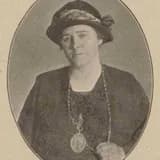
Barbour was elected Labour councillor for Fairfield ward, becoming one of the first women elected to Glasgow Town Council.
In November 1920, Mary Barbour was elected as a Labour Party councillor for the Fairfield ward on Glasgow Town Council (Glasgow Corporation), becoming one of the very first women to hold such office in the city.
Her election came shortly after some British women gained the right to vote and stand for office (the Representation of the People Act 1918, and further extensions in 1928). Barbour's political career built directly on the reputation and networks she had established through the 1915 Rent Strikes and her subsequent work in the Independent Labour Party and Women's Peace Crusade during the First World War.
As a councillor, Barbour used her position to advocate for practical improvements to working-class life: she campaigned for and helped establish municipal wash-houses, child welfare clinics, and pioneered the introduction of the first female sanitary inspectors and police officers in Glasgow. She was also instrumental in the creation of Glasgow's first family planning clinic, opened in 1926, providing information on birth control to working-class women at a time this was highly controversial.
Barbour's tenure on the council represented a critical breakthrough for women's participation in British municipal government and demonstrated that the grassroots organising skills of the rent strikes could translate into lasting institutional change and policy reform benefiting women and children specifically.