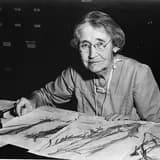
Mary Agnes Chase left for a major, largely self-funded grass-collecting expedition in Brazil after being denied official support.
On 15 October 1920, Mary Agnes Chase departed for Brazil on a major, largely self-funded botanical collecting expedition focusing on grasses.[12][15] Denied official travel support from the U.S. Department of Agriculture—often on the grounds that sending a woman alone into remote regions was inappropriate—she used personal resources and informal networks to finance her journey.[12]
Once in Brazil, Chase undertook arduous fieldwork under challenging conditions, traveling by train, boat, and on foot to collect thousands of specimens in diverse habitats.[12] Her collections and subsequent taxonomic studies led to the description and clarification of numerous Brazilian grass species, dramatically enriching knowledge of South American Gramineae. The expedition also strengthened her collaborations with Latin American botanists and institutions, helping to integrate Brazilian material into global herbaria.
This departure is historically significant for both science and gender history. At a time when field expeditions were considered unsuitable for women, Chase’s decision to go anyway asserted women’s right to participate fully in exploration and scientific discovery.[2][12] Her Brazilian work later underpinned key publications and contributed to an annotated index of 80,000 grass specimens.[12] The 1920 expedition thus marks a turning point in her career, demonstrating her independence from institutional constraints and her commitment to documenting grass diversity across the Americas.