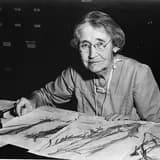
Mary Agnes Chase died in Bethesda, Maryland, aged 94, after nearly seventy years of work in grass taxonomy and women’s suffrage activism.
On 24 September 1963, Mary Agnes Chase died at age ninety-four in a nursing home in Bethesda, Maryland, after nearly seven decades in botanical research and activism.[7][8] Her death marked the end of a career that began in the late nineteenth century as a self-taught illustrator and culminated in international honors, including an honorary doctorate, a Botanical Society of America Certificate of Merit, and honorary membership in the Linnean Society.[5][7][11]
Chase left behind an extraordinary scientific legacy: more than 70 publications, landmark monographs on tropical and Caribbean grasses, the widely read "First Book of Grasses," and an annotated index of roughly 80,000 grass specimens that continues to underpin herbarium taxonomy.[1][4][12] She had collected and described thousands of species across North and South America, helping to define the modern field of agrostology. Her suffrage activism, including arrest and imprisonment in 1913, added a political dimension to her scientific life, demonstrating that women scientists could also be public advocates for social change.[2][15]
Her passing prompted colleagues to reflect on the breadth of her influence—as a mentor to younger botanists, especially women; as a builder of institutional collections at the USDA and Smithsonian; and as a pioneer who worked largely outside formal academic structures.[3][8][12] The date stands as a sentinel in women’s history, closing the life of a figure whose work "held the earth together" through the study of grasses and whose activism helped expand the horizons of what women could do in science and public life.