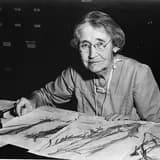
While a USDA botanist, Mary Agnes Chase was arrested and jailed for eight days for taking part in a women’s suffrage protest in Washington, D.C.
On 14 June 1913, while employed as a botanist with the U.S. Department of Agriculture, Mary Agnes Chase was arrested in Washington, D.C. for participating in a National Woman’s Party suffrage protest and imprisoned for eight days.[2][15] She joined other women in picketing and public demonstrations demanding a federal amendment for women’s voting rights at a time when such activism was widely condemned as unseemly and disruptive.
Her imprisonment was especially risky because she was a civil servant; senior USDA officials warned that her activism could cost her job, and she faced pressure to abandon political work.[2] Instead, Chase refused to recant, continuing to support suffrage campaigns and using her scientific stature to legitimize women’s claims to political citizenship. Her willingness to risk her livelihood highlighted the intersection of gender discrimination in science and in civic life: she fought exclusion both in the laboratory and in the voting booth.
This incident became a defining episode in her public identity. Historical accounts of Chase regularly note her arrest as evidence of her uncompromising commitment to social justice and her solidarity with other suffragists.[2][15] In the broader context of the pre–19th Amendment struggle, the eight-day imprisonment of an established government scientist underscored the breadth of support for suffrage and helped normalize professional women’s involvement in militant political action. It remains a key moment in the history of scientists as activists and of federal employees challenging their own government’s policies on gender equality.[2][12]