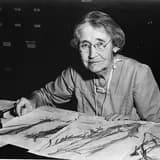
The University of Illinois awarded Mary Agnes Chase an honorary doctorate for her lifetime contributions to grass taxonomy.
On 15 June 1958, the University of Illinois conferred an honorary doctorate on Mary Agnes Chase, recognizing her lifetime contributions to the study of grasses and her influence on American botany.[5][7][10] For a woman who had never completed formal college training and had built her career through self-education, illustration work, and government positions, the degree represented a powerful institutional acknowledgment.
By the late 1950s, Chase’s research had helped define the taxonomy of numerous grass genera, and her publications—including "First Book of Grasses" and major monographs on Panicum and West Indian grasses—were widely cited.[1][4][12] Her field expeditions in North and South America had yielded thousands of specimens, many of them new or poorly understood species, and she was regarded as a foremost authority in agrostology.[2][12] The honorary doctorate signaled that universities increasingly recognized non-traditional paths into science and the importance of government and museum research.
The award also carried symbolic weight for women in science. At a time when female botanists still struggled for faculty appointments and tenure, seeing a self-taught woman honored by a major land-grant institution offered an inspiring model.[2][5] The University of Illinois degree thus stands as both a personal milestone for Chase and a broader marker of changing attitudes toward women’s scientific work and alternative educational trajectories.