← All women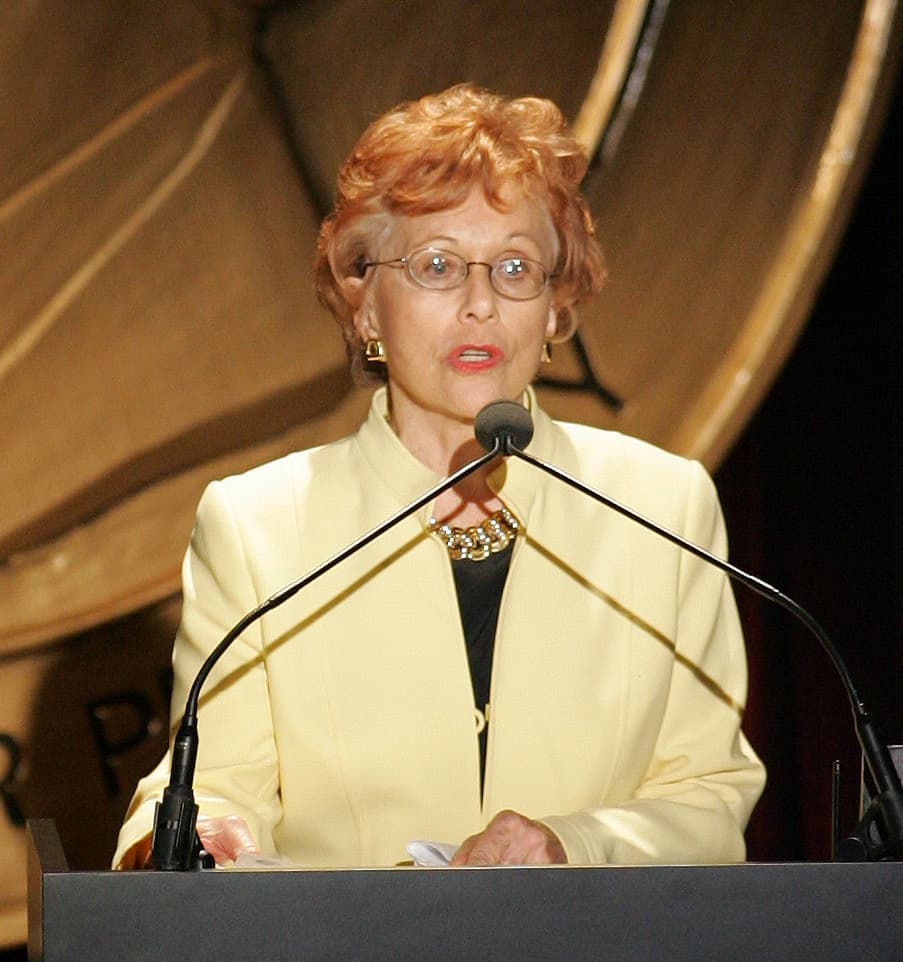
American · Arts · Activism
Marlene Sanders
January 10, 1931 – July 14, 2015
Early Life and Background
Marlene Sanders (January 10, 1931 – July 14, 2015) was an American television news correspondent, anchor, producer, executive, author, and educator who became one of the most important pioneers for women in U.S. broadcast journalism.[1][2][6]
Sanders was born on January 10, 1931, in Cleveland, Ohio, to Mac Sanders and Evelyn (Menitoff) Sanders.[1][2] She grew up in a Jewish family in the industrial Midwest, a setting that exposed her early to the social and economic upheavals of the Great Depression and World War II. These formative experiences, combined with an interest in theater and public performance, helped shape her later commitment to serious public‑interest journalism.[3][6]
After completing high school, Sanders attended Ohio State University from 1948 to 1950, where she studied liberal arts and became involved in theater and student activities.[2][8] In 1950 she continued her education at the Sorbonne in Paris, immersing herself in European culture and intellectual life during the postwar reconstruction period.[2] The combination of Midwestern roots and international study gave her a broad perspective that would inform her approach to global news coverage.
Career Beginnings in Media
Sanders moved to New York in the early 1950s and initially pursued acting, appearing in stage productions and live television drama.[3][10] Her work in theater and early television exposed her to the technical and narrative possibilities of the medium, but she soon became more interested in the journalistic potential of broadcast.
By the mid‑1950s she had transitioned into news production. Around 1955 she began working for journalist Mike Wallace in New York, producing programs that combined interviews and investigative segments at a time when television news was still defining itself.[4][10] This apprenticeship under Wallace provided crucial training in story selection, interviewing, and the mechanics of live and recorded television.
In the early 1960s Sanders joined WNEW-TV and WNEW Radio in New York, serving as a writer, reporter, and producer.[4][10] At WNEW Radio she became assistant news director in 1962, a significant editorial position for a woman at that time.[4] Her responsibilities included shaping coverage in a major media market and managing newsroom operations, experiences that would later support her transition into network‑level leadership.
Breaking into Network Television: ABC News
Sanders’ national breakthrough came when she joined ABC News as a correspondent in 1964.[1][2][6] Shortly after arriving, she was given a five‑minute afternoon television segment titled "News with the Woman’s Touch", one of the earliest regular network news programs anchored by a woman.[1][6] Although the title reflected the era’s gendered marketing, the segment allowed Sanders to address substantive stories, broadening the idea of what constituted "women’s" news.
That same year she achieved a landmark first. When evening news anchor Ron Cochran fell ill, ABC tapped Sanders to substitute. Her appearance on the evening broadcast made her the first woman to anchor an evening network newscast in the United States.[1][2][4][10] At a time when network anchors were widely regarded as authoritative voices of national events, placing a woman in that role challenged deep‑seated assumptions about gender and credibility in hard news.
Sanders continued to build her reputation at ABC through the mid‑1960s, reporting on politics, social issues, and eventually foreign conflict. She was among the first female reporters visible on national television in serious news roles, and her calm, analytical style contrasted with the tokenism often associated with women in broadcasting.[1][10]
Vietnam and War Reporting
In 1966, Sanders reached another milestone when she traveled to Vietnam as a correspondent for ABC News.[2][4][6][11] She is widely credited as the first woman network television correspondent to report on the Vietnam War from the field, and one of the first television newswomen to cover a major war on location.[2][4][6][11]
Reporting from Vietnam required navigating military bureaucracy, security risks, and skepticism about whether a woman should be in a war zone. Sanders filed dispatches that brought into American living rooms vivid images and accounts of combat, military life, and civilian suffering—contributing to the growing public understanding of the conflict’s human toll.[10][12] Her work demonstrated that women journalists could operate effectively under the same demanding conditions as their male counterparts.
Her Vietnam assignment had symbolic and practical implications. Symbolically, it broke with the expectation that women in television should be confined to domestic or "soft" features. Practically, it set a precedent that opened the way for later generations of women war correspondents, from conflicts in Latin America and the Middle East to the Balkans and Afghanistan. Sanders herself later reflected that the women’s movement gave her the "power and focus" to contribute to the country’s awareness of women’s status, including in relation to such high‑risk assignments.[6]
Documentary Work and the Women’s Movement
Parallel to her reporting, Sanders became deeply engaged in documenting the emerging women’s movement. In the late 1960s and 1970s, she produced and reported a remarkable series of documentaries that explored feminism, religion, politics, and social policy.[6][8]
Among her notable works were "Women’s Liberation" (1970), "Feminism in the Church" (1971), "Feminism in the Temple" (1972), "Women & Catholicism" (1972), "The Hand That Rocks the Ballot Box" (1972), "Population: Boom or Doom?" (1973), "Woman’s Place" (1973), and "Women’s Health: A Question of Survival" (1976).[6]
These documentaries were among the first sustained television efforts to analyze women’s changing roles in public and private life. They examined subjects such as reproductive rights, religious authority, political representation, and health care, often featuring feminist activists, scholars, and ordinary women. Sanders’ work helped translate complex social debates into accessible narratives for national audiences, thereby amplifying feminist ideas beyond activist circles.
Her documentary reporting on women’s issues was not a side assignment but central to her journalistic identity. She understood television as a powerful tool for reshaping public understanding of gender inequality and used long‑form programming to explore structural questions seldom addressed in daily news reports.[6][10][11]
Activism and the National Organization for Women
Sanders’ engagement with the women’s movement extended beyond reporting. In 1966, feminist author Betty Friedan asked her to help plan the publicity strategy for the newly forming National Organization for Women (NOW).[6] Sanders’ media expertise was crucial for crafting messages that could attract attention and sympathy in a skeptical press environment.
She subsequently founded New York NOW, the organization’s first chapter.[6] This role placed her at the organizational heart of second‑wave feminism, where she assisted in building the infrastructure for campaigns addressing employment discrimination, reproductive rights, education, and political representation.
Sanders occupied a distinctive position as both journalist and activist. While she maintained professional standards in her reporting, her involvement in NOW reflects a conviction that journalists, especially those facing discrimination, could legitimately participate in movements for social change. Her dual roles highlight the porous boundaries between media and activism in the history of feminism.
Executive Leadership at ABC News
In 1976, ABC News promoted Sanders to vice president and director of documentaries, making her the first woman vice president in the ABC News division and one of the first women to reach upper management in American network television news.[1][2][4][12]
As vice president, Sanders oversaw the network’s documentary unit, guiding editorial priorities, greenlighting projects, and managing budgets and staff. Her leadership assured that public‑affairs programming would continue to tackle complex topics—ranging from the women’s movement and health care to population and ethical questions such as the right to die.[10][12]
This promotion was significant beyond her individual career. Television news leadership had historically been a male preserve, with decisions about what constituted "serious" news often reflecting male perspectives. Sanders’ presence in an executive role changed the internal dynamics, demonstrating that women could not only report the news but also shape its institutional framework. The appointment helped chip away at the glass ceiling in network management and offered a crucial precedent for later women executives in broadcast and cable news.[4][6]
Transition to CBS News and Continued Documentary Work
In 1978, Sanders left ABC and joined CBS News.[1][6][10] At CBS she continued to write, produce, and report documentaries, with particular emphasis on the women’s movement and broader social issues. Her programs contributed to a tradition of long‑form journalism that characterized CBS public‑affairs programming in the late 1970s and 1980s.
During her time at CBS, Sanders’ documentary work earned her three Emmy Awards, recognizing excellence in broadcast journalism.[1][4][10][12] Specific dates for these awards are not consistently documented in publicly available sources, but they typically fall in the late 1970s and 1980s. The Emmys affirmed her status as a leading practitioner of serious television reporting and underscored the high professional standards she brought to coverage of controversial topics.
Sanders’ CBS work continued the themes she had developed at ABC—systemic inequality, political change, and the interplay between personal lives and public policy—while also expanding into issues such as overpopulation and ethical dilemmas around end‑of‑life choices.[12] Her documentaries combined careful research, balanced interviewing, and accessible storytelling, making complex subjects understandable to broad audiences.
Author and Historian of Women in Television News
In 1988, Sanders co‑authored the book "Waiting for Prime Time: The Women of Television News" with journalist and academic Marcia Rock.[6][7][10] The volume, published by the University of Illinois Press, offered one of the first comprehensive histories of women in broadcast journalism, examining their struggles to break into reporting, anchoring, and management roles.
The book combined historical narrative, interviews, and analysis to trace how women had been marginalized in television news and how they had gradually carved out space in the profession. Sanders and Rock documented patterns of discrimination, tokenism, and stereotyping, as well as the strategies women used to negotiate obstacles and claim authority on screen.
"Waiting for Prime Time" quickly became a reference point for scholars, journalists, and students studying media and gender. It extended Sanders’ influence beyond her own career achievements by providing a framework for understanding the broader history of women in television news. An updated edition was later issued in the 1990s, reflecting ongoing developments in the industry.[4]
Teaching, Mentorship, and Later Career
From the 1990s onward, Sanders increasingly devoted herself to teaching and mentoring. She served as an adjunct professor of journalism at New York University, where she taught courses such as Advanced TV Reporting and guided students through the demands of writing, producing, and appearing on camera.[6][8][10]
Through her academic work, Sanders transmitted decades of professional experience to a new generation of journalists. Former students and colleagues recall her as rigorous but supportive, insisting on careful research, ethical practice, and clarity of presentation. She also taught at Columbia University’s Graduate School of Journalism, further broadening her influence within journalism education.[6]
Outside the classroom, Sanders engaged in professional organizations and advocacy work. She served as the first board chair of Women’s eNews, an online news service focused on coverage of women and gender issues, helping shepherd it through its early development.[11] She also remained connected to feminist organizations and journalism groups, frequently speaking about the continuing need to address gender inequality in media workplaces.
Personal Life
On May 27, 1958, Sanders married Jerome Toobin, a producer who would later work for New York public television.[2][8] The couple had two sons: Jeffrey Toobin, who became a well‑known lawyer, author, and television legal analyst, and Mark Toobin
Balancing a demanding career with family responsibilities was challenging, particularly in an era when women professionals were often expected to prioritize domestic life or leave the workforce. Sanders’ ability to pursue groundbreaking assignments, travel for reporting, and hold executive roles while raising children contributed to the broader redefinition of motherhood and professional identity for women in the mid‑ and late‑20th century. Later in life Sanders married Samuel (Buddy) Kahn, a relationship noted in biographical sources.[5][9] Throughout her personal life she maintained close ties to friends, colleagues, and former students, forming a network that celebrated her achievements and supported her advocacy for women in media. Over the course of her career, Sanders received numerous professional honors. She won three Emmy Awards for documentary work, reflecting sustained excellence in long‑form reporting and production.[1][4][10][12] She also received recognition from journalism organizations for her contributions to television news and her pioneering role in opening doors for women. Obituaries and tributes from outlets such as NPR, the Los Angeles Times, and women’s organizations emphasize her reputation as a "pioneer" and a "tough cookie" whose achievements came without the benefit of formal affirmative‑action policies and in the face of institutional resistance.[10][11][12] Veteran Feminists of America identified her as a movement pioneer, noting both her journalism and her organizational work with NOW.[6] In addition to formal awards, Sanders’ enduring recognition lies in the voices of colleagues and students who credit her with mentorship, advocacy, and an insistence on serious, substantive coverage of women’s issues. She became a role model for women who sought careers in the upper tiers of broadcast news, whether on camera or in management. Marlene Sanders’ legacy is multifaceted. As a journalist, she helped establish the role of women in serious television news by anchoring an evening newscast, reporting from Vietnam, and producing documentaries on complex policy and ethical issues.[1][2][10][11] As an executive, she demonstrated that women could successfully lead major news units and influence institutional priorities.[1][4][6] Her work on the women’s movement—both through documentaries and her involvement with NOW—contributed to the broader public understanding of second‑wave feminism and the structural nature of gender inequality.[6][8] By integrating feminist topics into mainstream television and serving as a bridge between activists and audiences, she helped normalize discussion of issues such as reproductive rights, workplace discrimination, and women’s health. Sanders also left a lasting mark as an author and historian of women in news. "Waiting for Prime Time" remains a key resource for understanding the trajectory of women in television journalism, documenting how they moved from marginal roles to central positions in reporting and anchoring.[6][7] The book’s analysis continues to inform scholarly work on media and gender. Finally, her decades of teaching and mentorship ensured that her influence extended well beyond her own career. Many younger journalists—women and men—learned from her example that serious reporting requires both technical skill and ethical commitment. Her insistence that women belong at the center of newsrooms has become part of the professional culture in journalism schools and media organizations. In her later years, Sanders remained active in teaching, writing, and speaking, even as she stepped back from full‑time broadcasting. She continued to be sought out for interviews and retrospectives on the history of television news, including an in‑depth oral history conducted by the Television Academy Foundation, where she recounted her life and career.[3] Sanders died of cancer on July 14, 2015, in New York City, at the age of 84.[1][10][12] News of her death prompted widespread tributes. NPR highlighted her role as a "pioneer for women in broadcast news" who had managed to do serious reporting and later become a vice president at ABC News.[10] The Los Angeles Times and women’s organizations underscored her firsts: the first woman to anchor an evening network newscast, to report from Vietnam for a U.S. network, and to serve as a news division vice president.[11][12] In reflecting on her career, Sanders herself emphasized the importance of the women’s movement in giving her "power and focus" to help the country understand the status of women.[6] Her death marked the passing of a figure whose professional life intertwined with some of the most important social transformations of the 20th century, from the rise of television as a central medium to the remaking of gender roles in public life. Today, Marlene Sanders is remembered not only for the barriers she broke but for the quiet, determined way she did so—insisting on competence, seriousness, and fairness, and proving through example that women could be trusted with the most demanding and influential roles in television news.Awards, Honors, and Recognition
Legacy and Historical Impact
Later Life and Death
Dated achievements
8 indexed.
- Jan101931Arts
Birth of Marlene Sanders
Birth of Marlene Sanders in Cleveland, Ohio, a future pioneer of women in U.S. television news.
View details Marlene Sanders – Wikipedia - May271958Arts
Marriage to Jerome Toobin
Marriage of Marlene Sanders and Jerome Toobin, marking a family partnership rooted in media and journalism.