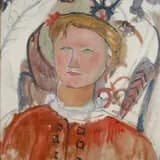
Marie Vassilieff died on May 14, 1957, in Nogent-sur-Marne, near Paris, largely forgotten by the art world she had helped shape.
Marie Vassilieff died on May 14, 1957, in Nogent-sur-Marne, a suburb southeast of Paris, at the age of 73. By the time of her death, she had lived long enough to see the Montparnasse avant-garde she once nourished pass into legend, even as her own contributions were increasingly overlooked by art historians focused on her more famous male peers.
Her death marked the end of a life that had spanned some of the most turbulent and creatively fertile decades in modern European history — from the pre-World War I ferment of Cubism and Fauvism in Paris, through two world wars, to the postwar reconstruction of French cultural life. Vassilieff had witnessed and actively participated in the birth of modernism, running her famous canteen for starving artists during World War I and painting throughout her long career.
In the decades following her death, renewed scholarly and market interest — including retrospective exhibitions and the eventual establishment of the Musée du Montparnasse in her former studio and canteen space at 21 Avenue du Maine — helped restore recognition of her historical importance as both an artist and a facilitator of the avant-garde community. Auction houses and museums have since re-examined her work, cementing her legacy as an essential, if long underrated, figure of early twentieth-century art.