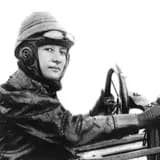
Marie Marvingt completes her first solo flight as a balloon pilot, assuming full responsibility for navigation and safety.
On 24 September 1909, Marie Marvingt made her first solo flight as a balloon pilot, flying without another pilot on board. After several years of experience as both passenger and pilot, this solo ascent marked her full assumption of responsibility for navigation, altitude control, and safety.
Solo ballooning at the time involved substantial risk: pilots relied on barometers, ballast, and careful observation of weather conditions, with no engine and limited means of steering. For a woman to undertake such a flight in 1909 France, where aviation was dominated by male experimenters and showmen, was a striking assertion of competence and independence.
This milestone prepared Marvingt for her more celebrated crossing from the Continent to England in October 1909. It demonstrated to both the ballooning community and the wider public that she could conduct demanding flights alone, manage equipment, and respond to unpredictable atmospheric conditions. In the broader history of women in aviation, her 24 September solo flight is an important intermediate step: it shows how women like Marvingt built expertise incrementally and used technical mastery to push open the doors of a field that was not yet ready to welcome them.