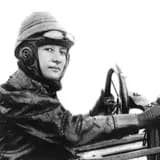
Marvingt flies 53 minutes over 42 km, establishing the first officially recognized women’s aviation records for time aloft and distance flown.
On 27 November 1910, Marie Marvingt set the world’s first officially recognized women’s aviation records for time aloft and distance flown. In a single flight she remained airborne for 53 minutes and covered 42 kilometers, feats formally recorded and recognized as women’s records.
At a time when aviation records were a tool for demonstrating the reliability and potential of aircraft, having separate, officially acknowledged women’s records was significant. It established an institutional framework within which women could be measured as pilots, not merely as curiosities. Marvingt’s performance required precise aircraft handling, endurance, and comfort with prolonged flight in rudimentary machines, underscoring her technical competence.
These records strengthened her status as a serious aviator and helped legitimize women’s participation in competitive and record‑setting flying. They also intersected with her broader campaign to integrate aviation into social and medical life, including her advocacy of air‑ambulance services. The 27 November 1910 flight thus represents both a personal triumph and a structural milestone: it is one of the earliest instances where a woman’s achievements in aviation were formally quantified and recognized by governing bodies, laying groundwork for later women record‑holders and professional pilots.