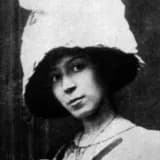
Marie Laurencin died in Paris on 8 June 1956, closing out a career that helped define the visual language of French modernism.
Marie Laurencin died in Paris on 8 June 1956, at the age of seventy-two, bringing to a close a career that had spanned more than five decades and witnessed the birth and maturation of Cubism, the interwar flourishing of the École de Paris, and the postwar continuation of French modern art.
By the time of her death, Laurencin had long been recognized as one of the defining painters associated with the early Cubist milieu, even though her own style—characterized by soft, pastel-toned palettes, decorative elegance, and an emphasis on graceful, elongated female figures and animals—remained distinct from the geometric abstraction of Picasso and Braque. She had also built an important secondary legacy as a book illustrator, illustrating works by André Gide, Alice in Wonderland, and poems by her former companion Guillaume Apollinaire, as well as designing sets and costumes for the Ballets Russes and other theatrical productions.
Her death was noted in major biographical and art-historical references, including Encyclopaedia Britannica, which record her passing as marking the end of a life that had helped legitimize women's central participation in the modernist avant-garde. Today, her paintings are held in major museum collections including the Musée de l'Orangerie and the Centre Pompidou in Paris, and she is remembered as one of the few women whose work was celebrated as equal in vision, if distinct in style, to her male Cubist contemporaries.